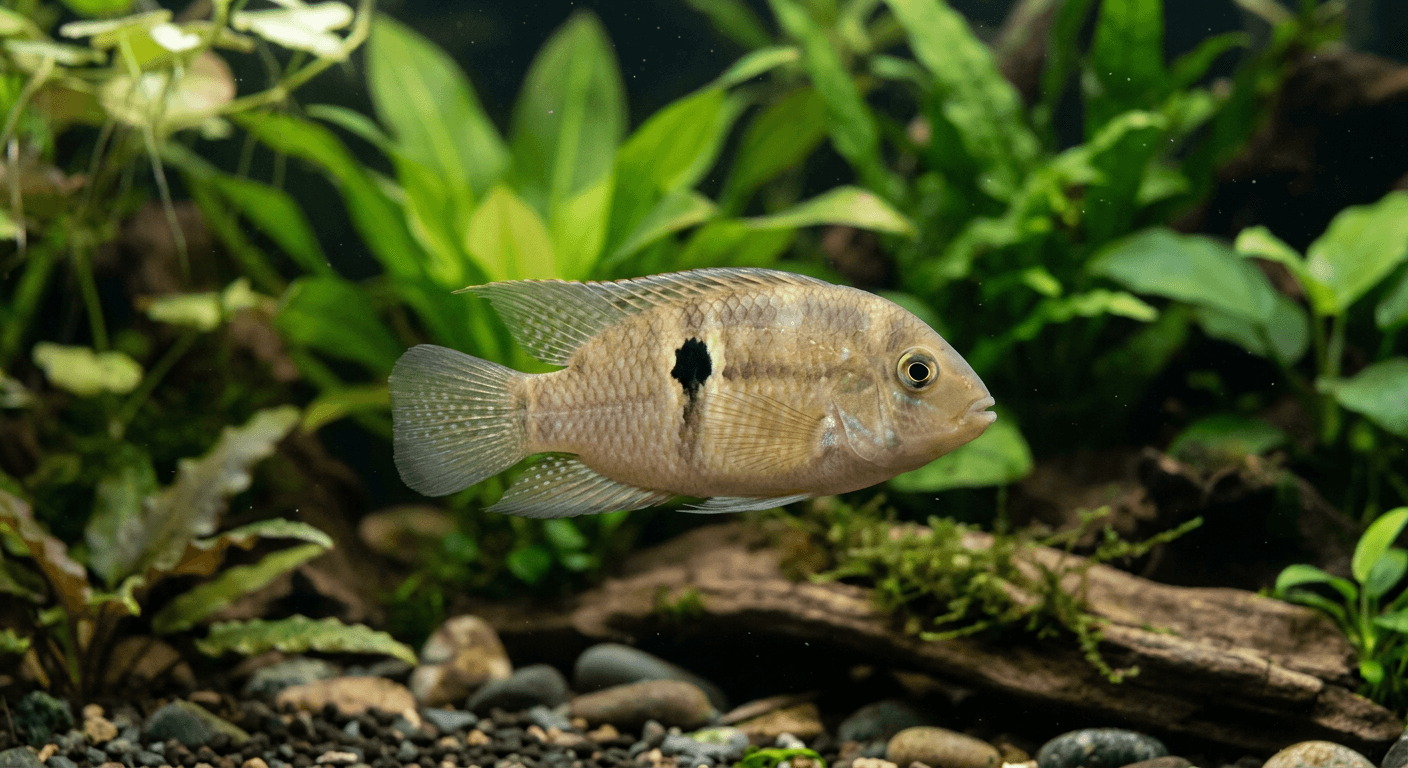
Keyhole Cichlid
Cleithracara maronii
Overview
The Keyhole Cichlid breaks every stereotype people have about cichlids. It is gentle, shy, and does not tear up plants or terrorize tankmates. Named for the dark keyhole-shaped marking on its upper body, this small South American cichlid from Guyana and Suriname tops out at about 3 inches and fits comfortably in a 20-gallon community tank. Its personality is closer to a corydoras than a convict — it would rather hide behind a piece of driftwood than pick a fight. For anyone who wants cichlid intelligence and personality without cichlid aggression, this is the species to look at.
Tank Setup
A 20-gallon tank is suitable for a single fish or a pair. Dense planting with plenty of hiding spots is key because Keyhole Cichlids are shy fish that feel vulnerable in open tanks. Use driftwood, coconut shells, clay pots, and lots of plants like java fern, anubias, and vallisneria. They will not uproot or eat plants, which sets them apart from many cichlids. A dark substrate helps them feel secure and brings out subtle color variations in their body. Use a gentle filter — they come from slow-moving streams and do not appreciate strong current.
Water Parameters
Keyhole Cichlids prefer slightly acidic to neutral water with a pH between 6.0 and 7.5. Temperature should stay between 72 and 78 degrees Fahrenheit. They come from soft water habitats and do best in lower hardness, though they adapt to moderately hard water over time. Weekly 25% water changes keep conditions stable. They are sensitive to sudden parameter swings, so avoid large, infrequent water changes in favor of smaller, more regular ones. They do not tolerate high nitrate levels well — keep nitrates below 20 ppm.
Diet & Feeding
These omnivores eat a wide variety of foods. High-quality cichlid pellets sized for small mouths work as the staple. Supplement with frozen bloodworms, brine shrimp, daphnia, and blanched vegetables. They also pick at biofilm and algae on surfaces, though they are not dedicated algae eaters. Feed twice daily in small amounts. They are deliberate, somewhat slow eaters that may get outcompeted by faster tankmates, so watch to make sure food reaches them. Sinking pellets help since they tend to feed in the lower half of the tank.
Behavior & Temperament
Keyhole Cichlids are famously peaceful. They are shy fish that retreat behind cover when startled and rarely show aggression even toward their own species. A mated pair may establish a small territory around a cave or flat rock, but their idea of defending it is to gently nudge intruders away, not attack them. They change color based on mood — stressed fish pale out dramatically, while comfortable fish show deeper body tones and a more defined keyhole marking. Watching the keyhole marking darken or lighten is a useful mood indicator.
Compatible Tankmates
Keyhole Cichlids are compatible with a wide range of peaceful community fish. Small tetras, rasboras, livebearers, gouramis, corydoras, and other peaceful dwarf cichlids all work well. They can be kept with cherry shrimp and snails without issue since they do not hunt invertebrates. Avoid aggressive cichlids, fin nippers, and boisterous species that would stress them out. Tiger barbs and serpae tetras are poor choices because the nipping will cause the Keyhole to hide permanently. A peaceful, well-planted community tank is the ideal environment.
Common Health Issues
Keyhole Cichlids are moderately hardy but stress easily. Chronic stress from aggressive tankmates, poor water quality, or lack of hiding spots is the biggest health risk and leads to loss of color, appetite, and immune function. Ich can appear after temperature swings. Hole-in-the-head disease sometimes develops in cichlids kept in high-nitrate environments with a poor diet lacking variety. Bacterial infections are uncommon in clean, well-maintained tanks. Their biggest vulnerability is behavioral — they shut down in hostile environments before getting physically sick.
Breeding
Breeding Keyhole Cichlids is achievable in a home aquarium. They form monogamous pairs and lay eggs on flat surfaces like rocks, driftwood, or broad leaves. Both parents guard the eggs and fan them. Eggs hatch in 3-4 days, and the parents continue to protect the fry, herding them around the tank. Fry are large enough to eat baby brine shrimp and crushed flake immediately. The parents are gentle guardians that rarely eat their own fry. A pair in a well-planted 30-gallon tank with stable water conditions may spawn regularly without much intervention.
Tankmates to Avoid
These species don't mix well with Keyhole Cichlid. Tap a name for the full breakdown.
Frequently Asked Questions
Quick Stats
What You Need for Keyhole Cichlid
Gear that works well for this species, based on what experienced keepers actually use.