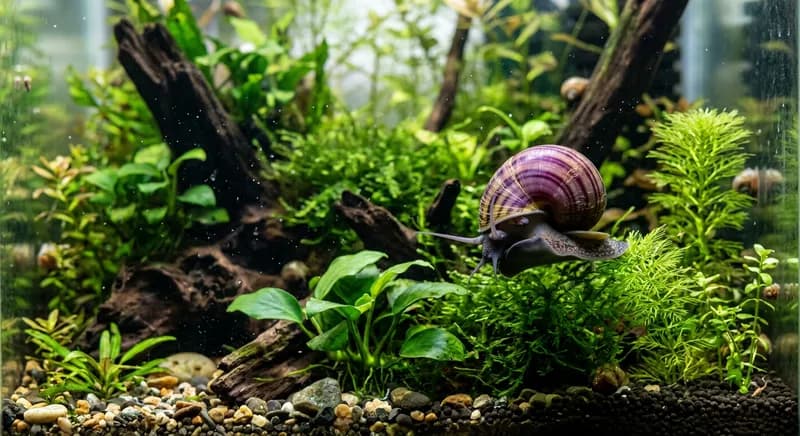
Mystery Snail
Pomacea bridgesii
Overview
Mystery snails are the cleanup crew everyone should have. They cruise around the tank eating algae, leftover food, and decaying plant matter, all while looking surprisingly beautiful. They come in gold, blue, purple, ivory, and wild-type brown, with some breeders producing jade and magenta varieties. Unlike pest snails, mystery snails lay their eggs above the waterline in a visible pink clutch, making population control easy. They are peaceful, impossible to overfeed, and entertaining to watch as they extend their siphon to the surface to breathe. One of the easiest creatures in the freshwater hobby.
Tank Setup
A 5-gallon tank can house 1-2 mystery snails. Each additional snail needs about 3-5 gallons since they produce a fair amount of waste. They graze on every surface, so the more surface area, the better. Live plants are compatible because mystery snails generally leave healthy plants alone, preferring algae and dead leaves. Some hobbyists report them nibbling on softer plants, but this is usually a sign the snail is underfed. Provide a gap of 2-3 inches between the water surface and the tank lid. Mystery snails lay egg clutches above the waterline, and without this space, females will try to escape to find somewhere to lay. A lid is essential because they will crawl out. Substrate can be sand or gravel, both work fine. Avoid copper in any form since it is toxic to all invertebrates.
Water Parameters
Mystery snails prefer slightly alkaline water with a pH of 7.0-8.0. This is important because acidic water dissolves their shells over time, leading to thin, pitted shells and early death. Calcium is critical for shell health. If your water is soft, supplement with a cuttlebone (sold for birds, just drop a piece in the tank), crushed coral in the filter, or a calcium supplement like SaltyShrimp GH+. Temperature between 68-82 degrees works, with 76 being a good target. Warmer water increases their metabolism and shortens their lifespan, while cooler water slows them down but they live longer. Weekly 25% water changes, and always use a water conditioner that neutralizes chlorine and heavy metals, especially copper.
Diet & Feeding
Mystery snails eat algae, biofilm, decaying plant material, leftover fish food, and supplemental vegetables. They are not efficient enough algae eaters to rely on as your primary algae solution, but they help. Drop in a blanched zucchini slice, a piece of cucumber, or canned green beans (no salt) 2-3 times per week. They also love calcium-rich foods like blanched kale and spinach. An algae wafer every couple of days is appreciated, especially in clean tanks with limited natural algae. If you keep mystery snails with fish, they will scavenge uneaten food from the substrate. Do not rely solely on leftover fish food though. A well-fed mystery snail has a firm, rounded body extending from its shell. A skinny snail retracting deep into its shell is not getting enough food.
Behavior & Temperament
Mystery snails are completely peaceful and cannot harm any tankmate. They spend their time gliding along glass, substrate, plants, and decorations, leaving a clean trail behind them. They breathe air through a siphon tube, so you will regularly see them extend a fleshy tube to the surface to take a breath. This looks strange the first time but is normal biology. They are most active at night and during feeding times. If a mystery snail floats, it does not necessarily mean it is dead. They sometimes trap air in their shell and float for hours or even days. Gently pick it up and smell it. If there is no foul odor, it is fine. A dead snail produces an unmistakable rotting smell within hours.
Compatible Tankmates
Mystery snails are compatible with virtually every peaceful freshwater species. Bettas, tetras, guppies, corydoras, plecos, shrimp, and other snails all work. The only real threats to mystery snails are fish that actively eat snails. Puffer fish, large cichlids, and assassin snails will kill and eat them. Loaches like clown loaches and yoyo loaches may nip at their antennae. Kuhli loaches are small enough to be safe. Crayfish are a definite no, as they will catch and eat snails. In a standard peaceful community tank, mystery snails are one of the safest additions you can make.
Common Health Issues
Shell erosion is the number one problem, caused by soft, acidic water. Shells develop thin spots, pits, and white patches where the top layers dissolve. Prevention is straightforward: maintain pH above 7.0 and supplement calcium. A cuttlebone fragment floating in the tank slowly dissolves and provides calcium continuously. Shell damage cannot be fully repaired, but new shell growth will be healthy once conditions improve. Deep retraction (the snail stays pulled into its shell for days) can indicate poor water quality, starvation, or copper exposure. Check parameters and offer food. Parasitic infections are rare in captive-bred specimens but possible in wild-caught ones. If a snail produces unusual amounts of mucus or behaves erratically, quarantine it and observe.
Breeding
Mystery snails breed readily in aquariums. Unlike pest snails, they require a male and a female (they are not hermaphroditic) and lay eggs above the waterline in a pink or white clutch the size of a raspberry. A single clutch contains 50-200 eggs. If you do not want babies, simply remove the clutch within a day or two and discard it. If you want babies, leave the clutch in place. Keep it moist but not submerged. The eggs hatch in 2-4 weeks depending on humidity and temperature. Baby snails are fully formed miniatures that drop into the water and immediately start grazing. They grow quickly with adequate food and calcium. Sexing mystery snails is possible by looking at the shell opening: males have a visible penile sheath on the right side under the shell edge.
Tankmates to Avoid
These species don't mix well with Mystery Snail. Tap a name for the full breakdown.
Frequently Asked Questions
Quick Stats
Compare
What You Need for Mystery Snail
Gear that works well for this species, based on what experienced keepers actually use.
Drop a piece in the tank and it slowly dissolves, providing the calcium mystery snails need for shell health. Available at any pet store in the bird aisle for a fraction of aquarium-branded calcium products.
Mystery snails love these. The wafers sink to the bottom where snails can find them and graze for hours. Good supplemental food when natural algae is limited.
Neutralizes chlorine, chloramine, and heavy metals including copper, which is lethal to snails. Concentrated formula lasts ages. Essential for any invertebrate tank.
Calcium availability depends on water hardness. This kit tests both general and carbonate hardness so you know if your snails are getting the minerals they need for shell growth.