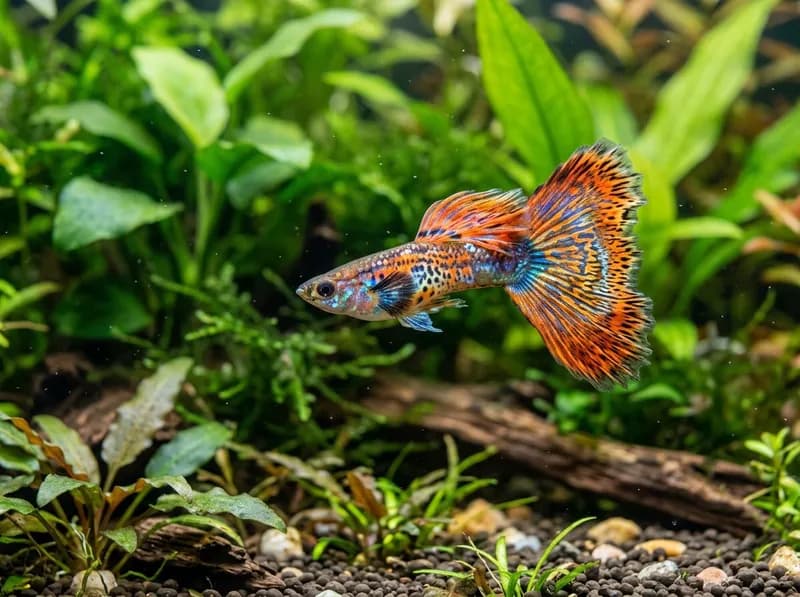
Guppy
Poecilia reticulata
Comparing options?
Betta vs Guppy: tank size, temperament, and best choice
Both are beginner favorites, but they suit very different setups. Compare solo betta care with keeping an active guppy group.
Overview
Guppies are the classic beginner fish, and for good reason. Males are brilliantly colored with flowing tails, they are active and fun to watch, and they adapt to a wide range of water conditions. The catch? They breed like crazy. A single female can produce 20-50 fry every 30 days, and she can store sperm for months after a single mating. If you keep males and females together, you will have a population explosion within weeks. This is the number one thing new guppy keepers underestimate. Plan for it. Keep only males for a colorful display without the babies, or be prepared with a plan for the fry.
Tank Setup
A 10-gallon tank works for a small group of 6-8 guppies. If you are keeping both sexes and expect fry, go with 20 gallons or more since you will need the space. Guppies are active swimmers and appreciate open swimming areas in the middle and top of the tank. Add some plants (live or silk) for cover, especially if you have females that need a break from male attention. A standard hang-on-back filter works well. Guppies tolerate a range of currents but prefer moderate flow.
Water Parameters
Guppies are among the most adaptable freshwater fish. Temperature should be 72-82 degrees Fahrenheit, with 76 being a comfortable middle ground. pH between 6.8 and 7.8. They actually do well in harder water, which is great if your tap water is naturally hard. Weekly 25% water changes keep everything stable. Guppies can tolerate minor parameter fluctuations better than many species, but consistent maintenance is still the foundation of healthy fish.
Diet & Feeding
Guppies are omnivores and will eat almost anything. A quality tropical flake or micro pellet is a good staple. Supplement with frozen or freeze-dried bloodworms, brine shrimp, and daphnia. They also nibble on algae, so they help keep your tank cleaner. Feed small amounts 1-2 times daily. With guppies, overfeeding leads to water quality issues fast since their bioload in a breeding colony adds up quickly. If you have fry in the tank, crush flakes into a fine powder for them.
Behavior & Temperament
Guppies are peaceful, social fish. Males spend most of their time displaying for females, flaring their colorful tails and chasing each other in a non-aggressive way. If you keep multiple males, they may spar briefly but rarely cause harm. Males will relentlessly pursue females, which is why a ratio of at least 2 females per male is recommended to spread out the attention. Guppies are top and mid-level swimmers and are almost always in motion. They are confident fish that rarely hide.
Compatible Tankmates
Guppies are great community fish. They coexist peacefully with neon tetras, bronze corydoras, cherry shrimp, platies, mollies, and other small peaceful species. Avoid keeping them with bettas since male guppies' flowing tails can trigger aggression. Also avoid large or predatory fish like cichlids or large gouramis that might eat them. Endler's livebearers are close relatives and will interbreed with guppies, so keep them separate unless you want hybrids.
Common Health Issues
Guppies are prone to a few specific issues. Fin rot is common, especially in overcrowded tanks with declining water quality. You will see ragged, disintegrating fins. Clean water usually resolves early cases. Ich appears as white spots and is treated with raised temperature and medication. Guppy disease (Protozoan infection) causes the tail to clamp and the fish to shimmy in place. Treat with aquarium salt and antiparasitic medication. Curved spines in fry can indicate inbreeding or tuberculosis. Introducing new bloodlines periodically helps prevent genetic issues in a breeding colony.
Breeding
Guppies are livebearers, meaning females give birth to free-swimming fry instead of laying eggs. Breeding is essentially automatic if you have males and females together. Gestation is about 28-30 days. A pregnant female develops a dark gravid spot near her anal fin that grows darker as birth approaches. She can drop 20-50 fry per batch. Adults will eat fry if given the chance, so dense plant cover (java moss, guppy grass) gives fry hiding spots. If you want to save most of the fry, move the pregnant female to a separate tank and return her after she gives birth. Do not use breeding traps for extended periods since they stress the mother.
Tankmates to Avoid
These species don't mix well with Guppy. Tap a name for the full breakdown.
Frequently Asked Questions
Quick Stats
Related Guides
Compare
What You Need for Guppy
Gear that works well for this species, based on what experienced keepers actually use.
Handles the higher bioload that breeding guppies produce. Adjustable flow and excellent filtration capacity.
Adjustable submersible heater with thickened quartz glass. Multiple wattage options (25W-300W) so you can size it to whatever tank your guppies are in.
Insect-based protein formula that guppies go after. Small granules work for adults, and they crumble easily into powder for feeding fry.
Supports the live plants that guppy fry need for hiding. Also looks clean and natural.