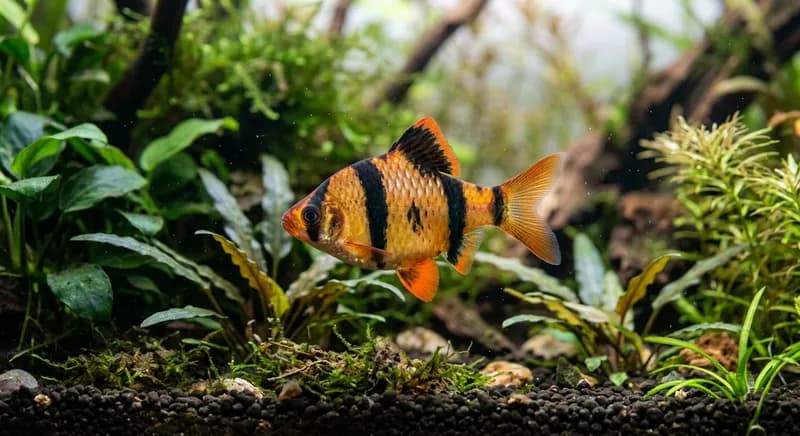
Tiger Barb
Puntigrus tetrazona
Overview
Tiger barbs are one of the most recognizable freshwater fish: gold body, four black vertical stripes, red-tipped fins. They are active, bold, and fun to watch as a school. But they come with a reputation, and it is well-earned. Tiger barbs are notorious fin nippers. In a small group of 3-4, the nipping is constant and often directed at tankmates, especially anything with flowing fins. The solution is simple but non-negotiable: keep them in groups of 8 or more. In a large school, the nipping behavior stays mostly within the group. They establish a pecking order, chase each other, and leave other fish alone. A school of 8-10 tiger barbs in a 30-gallon tank is a genuinely entertaining setup. Just do not put them with bettas, angelfish, or any long-finned species. That combination always ends badly.
Tank Setup
A 20-gallon tank is the bare minimum for a school of 6, but 30 gallons is where things get comfortable, especially for 8-10 fish. Tiger barbs are fast, active swimmers that use the full length of the tank, so longer tanks are better than tall ones. Moderate planting around the edges gives them places to chase through without limiting open swimming space. They are not plant destroyers but they do not care about plants either. Use a filter rated for the full tank volume because a school of barbs produces a decent bioload. A hang-on-back or canister filter with moderate flow works well. These fish do not mind current and will actually swim into it.
Water Parameters
Temperature between 74-79 degrees Fahrenheit, with 76 as a good target. pH of 6.0 to 7.0, on the slightly acidic side. They are adaptable to moderate water hardness. Weekly 25-30% water changes are standard. Tiger barbs are hardy and will tolerate some fluctuation, but consistent parameters lead to the best coloring and behavior. Ammonia and nitrite must be zero. Nitrates under 20 ppm is ideal. These fish are not particularly sensitive, making them forgiving for beginners who are still getting the hang of water maintenance.
Diet & Feeding
Tiger barbs eat aggressively and will take anything you offer. A quality flake or pellet is the everyday base. Supplement with frozen bloodworms, brine shrimp, and daphnia 2-3 times per week. They also accept blanched peas and zucchini. Feed twice daily, enough that everything is consumed within 2 minutes. In a school of 8+, make sure food spreads across the tank so the dominant fish do not monopolize it all. Tiger barbs have fast metabolisms and will become more nippy when underfed, so consistent feeding helps manage behavior.
Behavior & Temperament
Tiger barbs are the rowdy kids of the aquarium hobby. They are active, fast, and spend most of their time chasing each other. In a properly sized school (8+), this chasing is mostly play and dominance displays within the group. Males will spar and flare at each other, and there is a clear pecking order. The problem comes when they are kept in small groups of 2-5. Without enough of their own kind to interact with, they redirect that energy at tankmates, nipping fins relentlessly. Slow-moving and long-finned fish suffer the worst. If you see a tiger barb repeatedly targeting a tankmate, the fix is almost always adding more barbs, not removing the offender. They are diurnal and most active during the day. Expect them to use every inch of the tank, top to bottom.
Compatible Tankmates
Tiger barbs work with other fast, short-finned, robust fish. Cherry barbs, zebra danios, platys, and swordtails are solid choices. Corydoras and bristlenose plecos handle the bottom level. Clown loaches are a classic pairing and actually calm tiger barbs down in some setups. Avoid anything with long fins: bettas, angelfish, guppies, endlers, and all gouramis are off the table. Slow swimmers like discus are also a bad match. The rule is simple: if a fish has flowing fins or moves slowly, tiger barbs will nip it. Other barb species (cherry barbs, rosy barbs) usually coexist fine since they speak the same behavioral language.
Common Health Issues
Tiger barbs are tough fish that rarely get sick when water quality is maintained. Ich is the most common ailment, showing as white spots. Raise the temperature to 82 degrees and treat with ich medication. Fin rot occurs if water quality drops, presenting as fraying or discolored fin edges. Clean water typically resolves mild cases. Bacterial infections can happen from injuries sustained during the constant chasing within the school, but these heal quickly in clean water. Swim bladder problems occasionally appear from overfeeding. If a barb is swimming oddly or floating, fast for 2-3 days.
Breeding
Tiger barbs scatter eggs and will eat them immediately if given the chance. Set up a separate 10-20 gallon breeding tank with marbles or a spawning mop on the bottom to catch eggs where adults cannot reach them. Condition a pair or small group with frozen foods for a week. Spawning usually happens in the morning. The female scatters 200-300 eggs while the male fertilizes them. Remove all adults immediately after spawning. Eggs hatch in about 36 hours. Fry become free-swimming 5 days after hatching and can eat baby brine shrimp or crushed flake. Keep the breeding tank dimly lit because the eggs are light-sensitive.
Tankmates to Avoid
These species don't mix well with Tiger Barb. Tap a name for the full breakdown.
Frequently Asked Questions
Quick Stats
Compare
What You Need for Tiger Barb
Gear that works well for this species, based on what experienced keepers actually use.
Handles the bioload of a school of 8-10 barbs. Adjustable flow and large media basket for customization.
Whole fish protein, no fillers. Breaks into pieces that spread across the tank so the whole school gets food.
Reliable and adjustable. 100W covers a 20-30 gallon tank. Keeps temperature stable at 76 degrees.
Concentrated dechlorinator that also detoxifies ammonia and nitrite. One bottle lasts months. Works with any tap water.