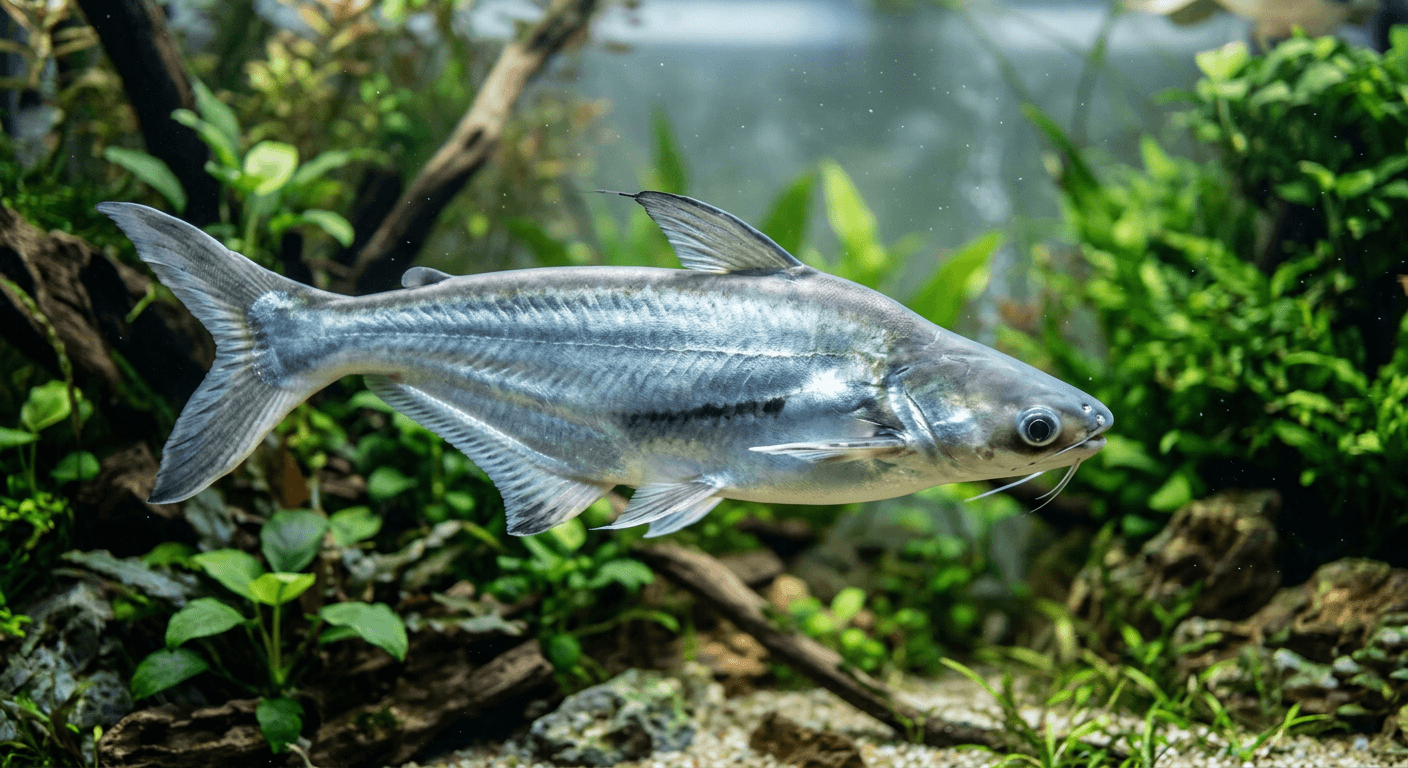
Iridescent Shark
Pangasianodon hypophthalmus
Overview
The Iridescent Shark is not a shark at all. It is a massive catfish from the Mekong River basin in Southeast Asia that can reach 3 feet in captivity and over 4 feet in the wild. Pet stores sell them at 3-4 inches, which gives buyers absolutely no sense of what they are signing up for. These fish need tanks measured in hundreds of gallons, and most home aquariums cannot realistically house them long-term. They are sold far more often than they should be, and most end up stunted in tanks that are way too small.
Tank Setup
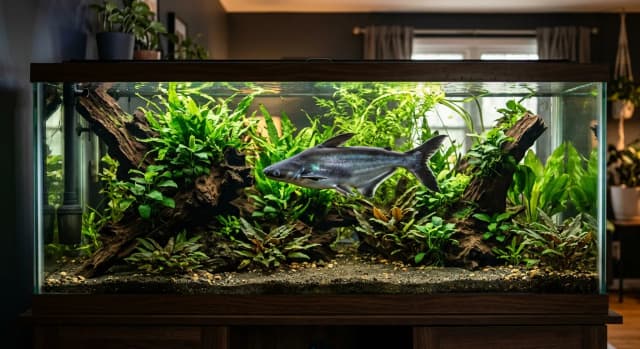
A well-setup aquarium suited to Iridescent Shark
A 300-gallon tank is the bare minimum for a single adult, and a group needs 500 gallons or more. The tank must be long — at least 8 feet — because these fish are fast, nervous swimmers. Keep decor to an absolute minimum. Iridescent Sharks panic easily and will smash into anything in their path, injuring themselves and destroying equipment. No sharp edges, no delicate heaters, no glass thermometers. Use an inline heater and a heavy-duty canister filter or sump system. The lid must be extremely secure since these fish jump, and a 20-pound fish jumping out of a tank is a serious problem.
Water Parameters
Water chemistry is straightforward. They tolerate a pH between 6.5 and 7.5 and temperatures between 72 and 82 degrees Fahrenheit. The challenge is not chemistry but volume and filtration. A fish this size produces an enormous amount of waste. You need filtration that turns over the tank volume at least 4 times per hour, and large water changes of 30-50% weekly. Ammonia and nitrite spikes happen fast in undertreated systems. A sump filter is the most practical option for tanks this large.
Diet & Feeding

Quality nutrition supports Iridescent Shark health and color
Juveniles eat pellets, flakes, frozen bloodworms, and brine shrimp. Adults eat large cichlid pellets, raw shrimp, fish fillets, and vegetables. They are omnivores that become less picky as they grow. Feed once daily for adults, twice for juveniles. Be careful not to overfeed — leftover food in a tank this large can foul water quickly. They have poor eyesight and rely partly on their barbels to find food, so sinking pellets work better than floating food for adults.
Behavior & Temperament
Iridescent Sharks are skittish, nervous fish that panic at sudden movement, loud sounds, and changes in lighting. A spooked fish thrashes violently and can injure itself badly against the glass or decor. They calm down somewhat in groups of three or more, but even settled fish remain flighty. They are not aggressive toward tankmates but will eat anything small enough to swallow, which for an adult means anything under 4-5 inches. Juveniles are especially nervous and may refuse food for days after being moved to a new tank.
Compatible Tankmates
Only large, robust fish belong in a tank with Iridescent Sharks. Tinfoil barbs, bala sharks, large plecos, oscars, silver dollars, and severum cichlids can hold their own. Anything under 4 inches will eventually be eaten. Anything delicate will be stressed by the constant nervous energy. Tankmates also need to tolerate the same high-flow, minimal-decor environment. Avoid aggressive species that might corner or harass the shark — it will injure itself trying to flee.
Common Health Issues
The most common health issue is physical injury from panicking. Bruised noses, split skin, and damaged barbels happen regularly, especially in tanks that are too small or have hard decor. Ich can appear after temperature changes. Bacterial infections are common in undertreated water. Iridescent Sharks are also prone to stress-related diseases because they never fully relax in captivity. Cloudy eyes and fin erosion are signs that something in the environment needs to change — usually tank size or water quality.
Breeding
Breeding Iridescent Sharks in home aquariums does not happen. They are migratory spawners that travel hundreds of miles upriver in the wild to reach spawning grounds. Commercial breeding is done in large ponds in Thailand and Vietnam, often with hormone injections. There is no realistic way to replicate these conditions in a home setup. All fish in the hobby are commercially bred.
Tankmates to Avoid
These species don't mix well with Iridescent Shark. Tap a name for the full breakdown.
Frequently Asked Questions
Quick Stats
What You Need for Iridescent Shark
Gear that works well for this species, based on what experienced keepers actually use.