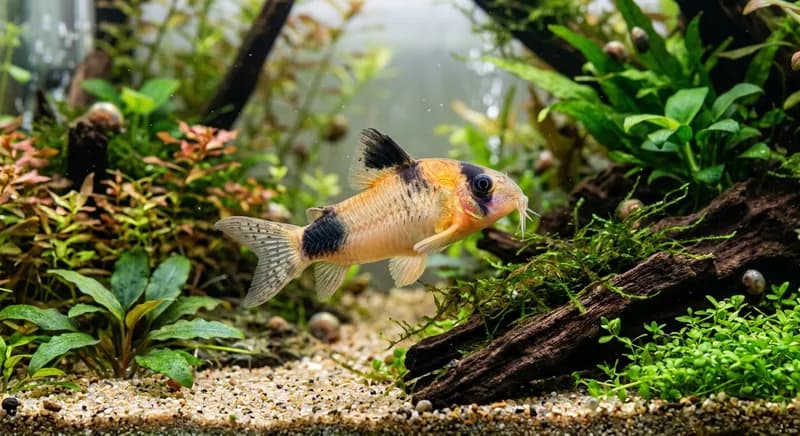
Panda Corydoras
Corydoras panda
Overview
Panda corydoras look exactly how they sound: cream-white body with black patches over the eyes, on the dorsal fin, and at the base of the tail. Like a tiny aquatic panda. They are one of the smaller corydoras species, maxing out around 2 inches, and they have the same endearing behavior as their larger relatives. They sift through substrate, wiggle their barbels, and rest in little piles on top of each other. More sensitive to water quality than bronze corydoras, panda corys reward good care with years of entertaining bottom-dwelling antics.
Tank Setup
A 15-gallon tank is the minimum for a group of 6 panda corydoras, with 20 gallons being ideal. They are bottom dwellers, so footprint matters more than height. A 20-gallon long is a better choice than a 20-gallon high. Substrate is critical for corydoras. Use fine sand or very smooth, rounded gravel. Sharp or coarse substrates will damage their sensitive barbels, leading to erosion and infection. Sand is the strong recommendation. Panda corys constantly sift through the substrate with their mouths, and watching them bulldoze through sand is one of the joys of keeping them. Provide some hiding spots with driftwood, caves, or dense plant cover. They like resting in shaded areas during the day. A gentle filter is important. Sponge filters are the gold standard for corydoras tanks since they provide biological filtration without dangerous intake tubes and don't create strong currents near the bottom.
Water Parameters
Panda corydoras are more sensitive to water quality than many common community fish. They come from cooler, well-oxygenated mountain streams in Peru, so they prefer temperatures on the lower end of the tropical range: 68-77 degrees, with 73 being ideal. This is cooler than many tropical fish prefer, so choose tankmates carefully. They need clean water with zero ammonia and nitrite. Even brief ammonia spikes can cause barbel erosion and stress. pH 6.0-7.5 works, with slightly acidic to neutral being preferred. Do 25-30% water changes weekly, and make sure the new water is close in temperature. Corydoras breathe atmospheric air by darting to the surface, which is normal. Frequent trips to the surface can indicate low dissolved oxygen. Increase surface agitation or add an airstone if this happens a lot.
Diet & Feeding
Panda corydoras are not just "cleanup fish" that eat leftovers. That is a myth that leads to starved corydoras in community tanks. They need targeted feeding with sinking foods. High-quality sinking pellets or wafers designed for bottom feeders should be the staple. Feed 2-3 small pellets per fish once or twice daily. Supplement with frozen bloodworms, frozen brine shrimp, and blanched zucchini 2-3 times per week. Drop food after the tank lights go off or when midwater fish are distracted by their own feeding. This gives the corydoras time to find and eat their food without competition. They are nocturnal feeders by nature and are most active at dusk and dawn.
Behavior & Temperament
Panda corydoras are social, gentle fish that must be kept in groups. A minimum of 6 is the standard recommendation, and more is better. In a group, they display natural behaviors: foraging together in a line, resting in piles, and occasionally darting to the surface for a gulp of air (this is normal, not a sign of distress). Solitary corydoras become stressed, hide constantly, and have shorter lifespans. They are completely peaceful toward all tankmates and spend their time on the substrate and lowest water level. You will rarely see them in the mid or upper water column except during air-breathing dashes. One of their most charming behaviors is the "cory wiggle," where the whole group shuffles through the sand together, kicking up little clouds of substrate as they search for food.
Compatible Tankmates
Panda corydoras are compatible with virtually any peaceful community fish. Tetras, rasboras, small livebearers, cherry shrimp, and bettas are all excellent companions. They occupy the bottom of the tank and stay out of everyone else's way. Avoid aggressive bottom dwellers that would compete for territory, and avoid large cichlids that might bully or eat them. Tiger barbs can harass corydoras, nipping at their barbels. Mollies prefer warmer, harder water that doesn't align well with panda cory preferences. One thing to keep in mind: corydoras have mildly venomous spines in their pectoral and dorsal fins. This rarely affects tankmates, but it can make a predator spit them out. It's a defense mechanism, not something to worry about in a community setup.
Common Health Issues
Barbel erosion is the most common problem with panda corydoras, caused by sharp substrate, dirty substrate, or poor water quality. The barbels (whiskers) around the mouth wear down, shorten, and can become infected. Prevention: use sand, keep the substrate clean, and maintain water quality. If barbels are already damaged, clean water and sand substrate will allow them to regrow over several weeks. Red blotch disease is a bacterial infection that presents as red sores on the belly, often triggered by poor substrate conditions. Treat with antibiotics and address the underlying cause. Ich can affect panda corys but treat carefully because they are sensitive to salt and many medications. Use half-dose treatments and raise temperature only to 78, since higher temps stress them.
Breeding
Panda corydoras can be bred in captivity with some effort. They are egg depositors. To trigger spawning, perform a large (50%) water change with water that is a few degrees cooler than the tank. This simulates the rainy season and often triggers breeding within 24-48 hours. The classic "T position" is the mating sign: the female cups her ventral fins to hold eggs while the male fertilizes them. She then places the adhesive eggs on the glass, plant leaves, or other smooth surfaces. A single spawning can produce 20-40 eggs. Remove the eggs to a separate container with gentle aeration and a drop of methylene blue to prevent fungus. Eggs hatch in 3-5 days. Feed fry microworms or baby brine shrimp. Fry are delicate and need pristine water quality. Keep the grow-out tank scrupulously clean with daily partial water changes.
Tankmates to Avoid
These species don't mix well with Panda Corydoras. Tap a name for the full breakdown.
Frequently Asked Questions
Quick Stats
What You Need for Panda Corydoras
Gear that works well for this species, based on what experienced keepers actually use.
Fine, smooth sand that is safe for corydoras barbels. Light color shows off panda cory markings and lets you watch them sift. Doesn't alter water chemistry.
Dense sinking wafers that hold their shape long enough for corydoras to find and eat them. Good nutritional balance for bottom feeders.
Sponge filters are the go-to for corydoras tanks. No intake to trap fish, gentle bottom-level flow, and the sponge surface grows bacteria that keeps water clean.
Accurate thermostat that holds the lower temperatures panda corys prefer. Flat design stays out of the way. The 50W handles a 15-20 gallon tank perfectly.