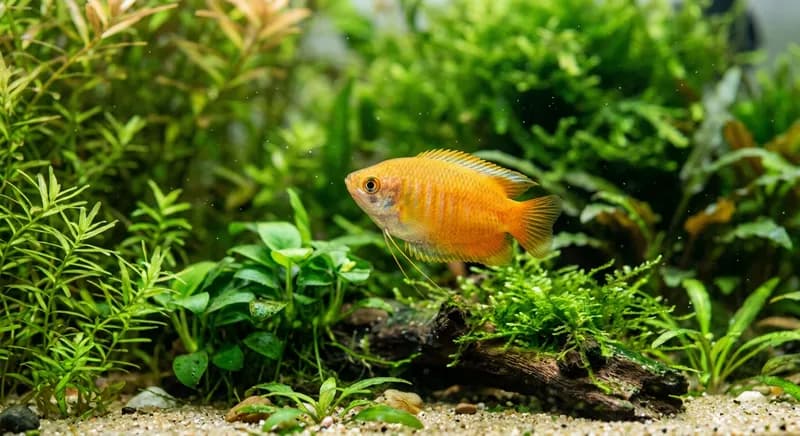
Honey Gourami
Trichogaster chuna
Overview
If you want a gourami but the DGIV risk of dwarf gouramis scares you (and it should give you pause), the honey gourami is your answer. They are smaller, hardier, and far less prone to the diseases that plague their dwarf cousins. Males display a warm honey-gold coloration that deepens to a rich amber-orange during breeding. Females are more muted, a silvery-tan with a brown lateral stripe. Honeys are shy fish, especially for the first few weeks in a new tank. Give them dense plant cover and they will gradually come out and become a calm, personable centerpiece. They lack the flashy blues and reds of dwarf gouramis, but their understated look and peaceful nature make them a better fit for most community setups.
Tank Setup
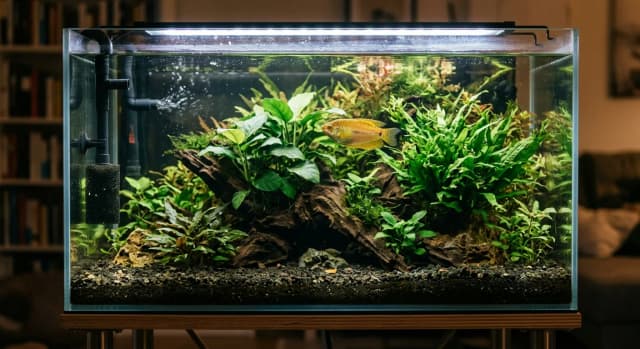
A well-setup aquarium suited to Honey Gourami
A 10-gallon tank is enough for a single honey gourami or a pair. A 20-gallon long gives them more horizontal swimming space and room for a small community. These fish are timid, so they need lots of cover. Floating plants like frogbit, red root floaters, or water lettuce are practically mandatory because they dim the lighting and give the gourami a sense of security at the surface where it breathes. Tall stem plants, java fern clumps, and driftwood all help break sightlines. Use a gentle filter. A sponge filter is ideal, or an HOB with the flow turned down. Honeys are not strong swimmers and will avoid areas with current.
Water Parameters
Temperature should sit between 72-82 degrees Fahrenheit with an ideal around 77. They are tolerant of a pH range from 6.0 to 7.5. Most municipal tap water works after dechlorination. Like all labyrinth fish, honeys need access to the surface to gulp air, so make sure floating plants do not completely seal off the water surface. Leave some gaps. Weekly 25% water changes keep things stable. These fish are hardier than dwarf gouramis when it comes to water quality, but that is not an excuse to slack on maintenance.
Diet & Feeding
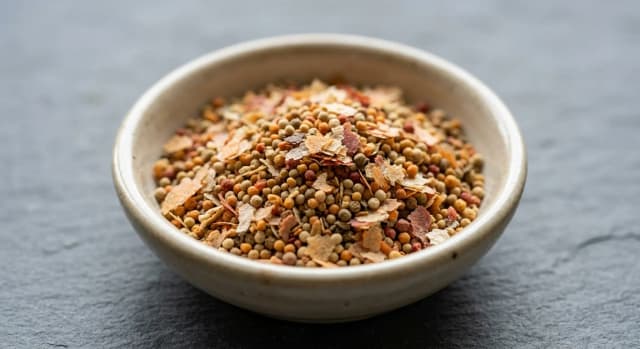
Quality nutrition supports Honey Gourami health and color
Honey gouramis accept flakes, micro pellets, and frozen foods without fuss. A high-quality micro pellet as the daily staple works well. Supplement with frozen bloodworms, daphnia, or baby brine shrimp 2-3 times per week. They are slow eaters and will lose out to faster fish at feeding time, so watch that they actually get food. Dropping food near their usual spot or using a feeding ring helps. Feed a small amount twice daily, roughly what they can finish in 60-90 seconds. They will also graze on biofilm and soft algae throughout the day.
Behavior & Temperament
Honeys are among the most peaceful gouramis you can keep. Males may display at each other with spread fins and darkened coloring, but actual aggression is rare. They are slow-moving and spend a lot of time hovering in one spot or gently exploring plant cover. New honeys often hide for the first 1-2 weeks. This is normal, not a sign of illness. Once settled, they become bolder and will start coming to the front of the tank. They use their modified pelvic fins as feelers, tapping at surfaces and food. Breeding males undergo a striking color change, turning deep orange-amber with a dark throat and belly.
Compatible Tankmates
Honeys are compatible with nearly any small, peaceful fish. Ember tetras, harlequin rasboras, and cardinal tetras are all excellent choices. Bottom dwellers like corydoras (panda, pygmy, or bronze), kuhli loaches, and otocinclus work perfectly because they occupy different levels. Cherry shrimp and snails are safe. Avoid keeping honeys with bettas because they compete for surface space. Tiger barbs and other nippy fish will terrorize them. Do not mix honey gouramis with dwarf gouramis because the dwarf will bully the honey. In general, if a fish is aggressive or fast-moving, it is a poor match for this shy species.
Common Health Issues
Honey gouramis are relatively robust compared to dwarf gouramis. They are not commonly affected by DGIV, which is a major selling point. The usual freshwater diseases apply: ich shows up as white spots and responds to raised temperature (82 degrees) plus ich medication. Fin rot from poor water quality is treatable with clean water and, if severe, antibacterial medication. Bacterial infections can occur if they are stressed by aggressive tankmates or poor conditions. Velvet (a gold dusting on the body) is less common but treatable with copper-based meds. Keep the water clean and the tank peaceful, and health problems are rare.
Breeding
Males build bubble nests at the surface, usually under a floating leaf or in a corner. Condition a pair with protein-rich foods for 1-2 weeks. Move them to a separate breeding tank (10 gallons, shallow water, floating plants, gentle filtration). The male wraps around the female and catches the eggs, placing them in the nest. He turns very dark during this process. Remove the female after spawning because the male becomes protective and may chase her. Eggs hatch in 24-36 hours. Fry need infusoria or liquid fry food for the first 5-7 days, then can take baby brine shrimp. Remove the male once the fry are swimming on their own.
Tankmates to Avoid
These species don't mix well with Honey Gourami. Tap a name for the full breakdown.
Frequently Asked Questions
Quick Stats
Related Guides
Compare
What You Need for Honey Gourami
Gear that works well for this species, based on what experienced keepers actually use.
Gentle flow is a must for these shy fish. Sponge filters also grow beneficial bacteria and pose zero risk of trapping small fish.
Supports the dense plant growth that honey gouramis need for cover. Slightly lowers pH, which suits their preferred range.
Small pellets that sink slowly, giving these mid-level feeders time to grab food before it hits the bottom.
Adjustable dial lets you set 77 degrees precisely. Compact enough for 10-20 gallon setups.