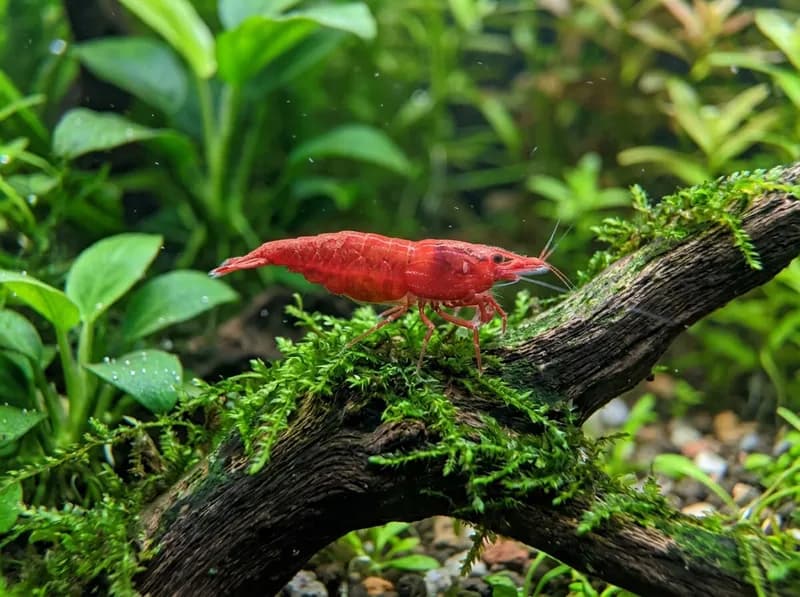
Cherry Shrimp
Neocaridina davidi
Overview
Cherry shrimp are tiny, colorful, and endlessly fascinating to watch. They spend their entire day grazing on algae, biofilm, and any organic debris they find, making them one of the best natural cleaners in the hobby. A colony of bright red cherry shrimp moving across a green planted tank is genuinely beautiful. They range in color from pale pink (lower grade) to deep blood red (higher grade), with females generally being more intensely colored than males. Starting with a colony of 10 or more gives them the best chance of thriving and breeding. They are not difficult to keep, but they are sensitive to copper and sudden parameter changes, which bumps them to a difficulty rating of 2.
Tank Setup
A 5-gallon tank is enough to start a colony, though 10 gallons provides more stable parameters and room for the colony to grow. Cherry shrimp love planted tanks. Java moss, java fern, and moss balls are ideal because they grow biofilm that shrimp graze on constantly. Driftwood and rocks covered in algae are also excellent. Use a sponge filter exclusively since hang-on-back filters and canisters will suck up baby shrimp. A sponge filter provides gentle circulation, great biological filtration, and the sponge surface becomes a grazing spot for the shrimp. Dark substrate makes their red coloring stand out dramatically.
Water Parameters
Cherry shrimp tolerate a wide temperature range of 65-80 degrees Fahrenheit, making them suitable for unheated tanks in some climates. A heater is still recommended for consistency. pH between 6.5 and 8.0 works, though they prefer 7.0-7.5. The critical parameters for shrimp are GH (general hardness) between 6-8 dGH and KH (carbonate hardness) between 2-5 dKH. These minerals are essential for molting since shrimp shed their exoskeleton as they grow. If your water is too soft, supplement with a shrimp-specific mineral additive. Never use copper-based medications in a shrimp tank. Copper is toxic to invertebrates even in small amounts. Always check medication ingredients before dosing.
Diet & Feeding
Cherry shrimp are primarily algae and biofilm grazers. In a well-established planted tank, they find most of their food naturally. Supplement with a shrimp-specific pellet 2-3 times per week. Blanched vegetables are a great treat: zucchini, spinach, and cucumber slices work well. Remove uneaten vegetables after 24 hours to prevent fouling the water. Shrimp also love Indian almond leaves, which break down slowly and grow biofilm that they graze on for weeks. Avoid overfeeding since shrimp have a very low bioload and excess food will spike ammonia before they can eat it.
Behavior & Temperament
Cherry shrimp are completely peaceful and spend nearly all their time grazing. They pick at every surface in the tank with their tiny front legs, eating algae and biofilm. When they find a particularly good food source, you will see the whole colony converge on it. Molting happens regularly as they grow. You will find translucent empty shells in the tank, which can look alarming at first but is perfectly normal. Leave the shells since other shrimp will eat them for calcium. After molting, females release pheromones that trigger a "breeding frenzy" where males swim frantically around the tank looking for the molted female. This is normal and entertaining to watch.
Compatible Tankmates
The safest setup is a shrimp-only tank. If you want tankmates, stick to very small, peaceful species. Neon tetras, ember tetras, and otocinclus are generally safe with adult shrimp, though tiny babies may still be eaten. Bronze corydoras are bottom dwellers but are gentle enough to coexist with shrimp. Avoid any fish large enough to fit a shrimp in its mouth, which includes most cichlids, goldfish, and larger gouramis. Even "peaceful" fish like angelfish will snack on cherry shrimp. The more hiding spots and plant cover you provide, the better the survival rate for baby shrimp in a community tank.
Common Health Issues
Failed molts are the most common issue, usually caused by incorrect GH/KH levels. The shrimp gets stuck in its old shell and dies. Test your water hardness regularly and supplement minerals if needed. The "white ring of death" is a white band around the shrimp's body where the old and new shells are separating improperly. This is often fatal and indicates mineral deficiency. Bacterial infections can cause opaque or milky coloring in the body. Maintain clean water and avoid sudden parameter changes. Planaria and hydra are tank pests that can prey on baby shrimp. Treat with fenbendazole-based dewormers like No Planaria, which is shrimp-safe. Never use copper-based treatments.
Breeding
Cherry shrimp breed readily in good conditions, which is one of their biggest appeals. Females carry eggs under their abdomen (called being "berried") for about 30 days before releasing fully formed miniature shrimp. A berried female fans her eggs constantly to keep them oxygenated. Baby shrimp are tiny but fully independent from birth, grazing on biofilm immediately. To encourage breeding, keep water parameters stable, provide plenty of biofilm surfaces, and maintain a colony of at least 10. Higher-grade shrimp (deeper red) can be selectively bred by removing lower-grade individuals. A healthy colony in a 10-gallon tank can grow from 10 to 100+ shrimp within 6 months.
Tankmates to Avoid
These species don't mix well with Cherry Shrimp. Tap a name for the full breakdown.
Frequently Asked Questions
Quick Stats
Related Guides
Compare
What You Need for Cherry Shrimp
Gear that works well for this species, based on what experienced keepers actually use.
The only filter type safe for shrimp. Will not suck up babies, and the sponge surface becomes a grazing spot.
Adjustable submersible heater with thickened quartz glass. Dial control keeps temps stable, which is critical for shrimp that are sensitive to temperature swings.
Specifically formulated for dwarf shrimp nutrition. Contains calcium for healthy molting and color-enhancing ingredients.
Buffers pH to a slightly acidic range that shrimp prefer. Dark color makes red cherry shrimp colors pop.