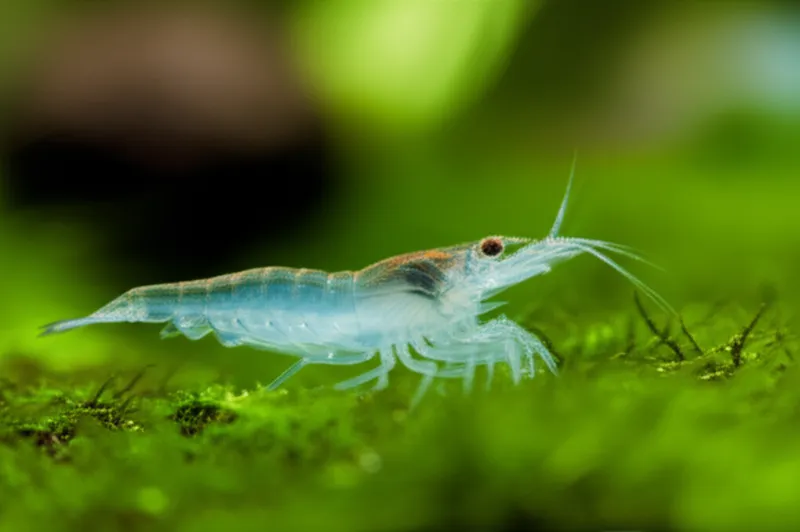
Ghost Shrimp
Palaemonetes paludosus
Overview
Ghost shrimp are the cheapest, most disposable cleanup crew in the hobby. That sounds harsh, but it is the reality. Most pet stores sell them for 30-50 cents each, often from tanks labeled as feeder shrimp. Their completely transparent bodies let you see their internal organs working, which is genuinely fascinating if you take the time to watch. You can see the food moving through their digestive tract in real time. They constantly pick at algae, uneaten food, and dead plant matter, which makes them useful tank janitors. The downside is their short lifespan. Even in perfect conditions, most ghost shrimp live about a year. Some hobbyists see them as disposable, while others keep dedicated ghost shrimp colonies and find real enjoyment in watching them breed and interact. They are a solid first invertebrate for someone who wants to see if shrimp keeping is for them before spending more on cherry or Amano shrimp.
Tank Setup
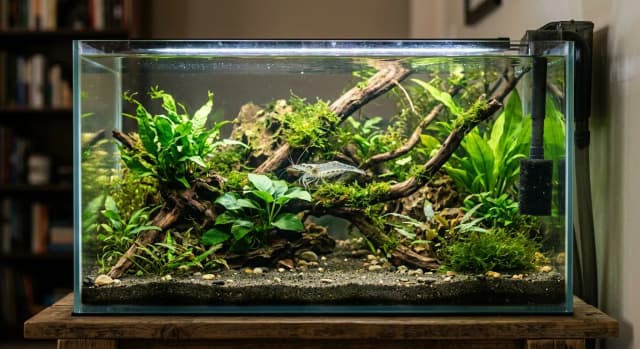
A well-setup aquarium suited to Ghost Shrimp
A 5-gallon tank is fine for a small group of ghost shrimp. A 10-gallon gives you room for a colony and is easier to keep stable. Use any substrate you like since ghost shrimp are not picky. Sand and fine gravel both work. Provide hiding spots with plants, moss, driftwood, or even a pile of smooth rocks. Ghost shrimp molt every few weeks as they grow, and they are extremely vulnerable during and right after molting. Hiding spots can mean the difference between surviving a molt and getting eaten by a curious tankmate. A sponge filter is ideal because it will not suck up babies if you end up breeding them, and the sponge surface collects biofilm they love to graze on. Keep a lid on the tank because ghost shrimp can and do climb out.
Water Parameters
Ghost shrimp tolerate a wide temperature range from 65-80 degrees Fahrenheit, with 72 being a comfortable middle ground. They do not need a heater in most homes. pH should be between 7.0 and 8.0. They prefer slightly harder water because they need minerals (especially calcium) for molting. If you have very soft water, add a small piece of cuttlebone or use a mineral supplement. Ammonia and nitrite must be zero. Nitrates should stay below 20 ppm. Ghost shrimp are sensitive to copper, which is found in many fish medications and some tap water. Always check medication labels before dosing a tank with shrimp. Use a water conditioner that detoxifies heavy metals.
Diet & Feeding
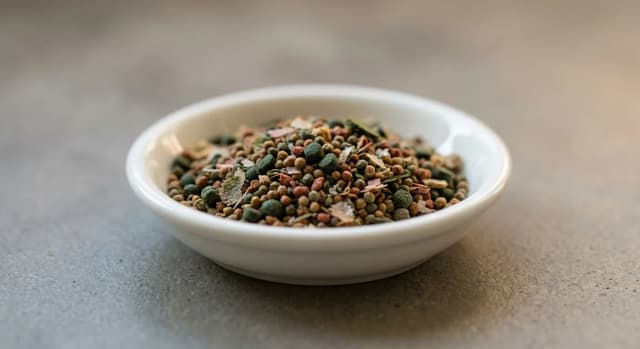
Quality nutrition supports Ghost Shrimp health and color
Ghost shrimp eat almost anything organic. They constantly pick at algae, biofilm, leftover fish food, and decaying plant matter. In a community tank, they often get enough food from scraps alone. In a shrimp-only tank or if your tank is very clean, supplement with blanched vegetables (zucchini, spinach, cucumber), algae wafers broken into small pieces, or shrimp-specific pellets. Feed small amounts every other day in a dedicated shrimp tank. Overfeeding fouls the water fast in a small setup. One blanched zucchini slice for a group of 10 shrimp, removed after a few hours, is plenty. They also eat dead fish and will pick a carcass clean overnight, which is gross but useful.
Behavior & Temperament
Ghost shrimp are active foragers that spend all day picking at surfaces. They are mostly peaceful, but they have a feisty side that surprises people. Larger ghost shrimp can and will catch and eat very small shrimp species, including cherry shrimp fry and even the occasional adult. They also scavenge aggressively and may harass weak or dying fish. Males sometimes spar with each other, grabbing at each other with their front claws. These fights are rarely serious. When they molt, they become reclusive for a day or two until their new shell hardens. You might find empty exoskeletons in the tank and think a shrimp died. Check before panicking. It is almost always just a molt.
Compatible Tankmates
Ghost shrimp work well with small, peaceful fish that will not eat them. Neon tetras, ember tetras, harlequin rasboras, and otocinclus are safe choices. Snails like nerites and mystery snails are great companions. Avoid any fish large enough to eat the shrimp, which includes most cichlids, bettas (who love to hunt shrimp), angelfish, and gouramis. Even some medium fish will snack on ghost shrimp if given the chance. In a species-only shrimp tank, you can keep them with cherry shrimp and Amano shrimp, but watch for aggression from larger ghost shrimp toward smaller cherries. Ghost shrimp are often used deliberately as cheap feeder shrimp for larger predatory fish.
Common Health Issues
Most ghost shrimp health problems trace back to water quality or failed molts. A stuck molt is the most common killer. The shrimp cannot fully shed its exoskeleton and dies trapped inside it. This usually happens in very soft water that lacks calcium and minerals. Adding cuttlebone or crushed coral to the tank helps. Bacterial infections show up as a milky or opaque appearance (healthy ghost shrimp are clear or slightly tinted). Vorticella is a protozoan parasite that appears as white fuzzy growths, especially on the rostrum. Salt dips can treat it. Copper exposure from medications or contaminated water is lethal at very low concentrations. The most honest health advice: ghost shrimp from pet stores have often been kept in poor conditions and shipped roughly. Expect some losses in the first week after purchase. Buying from a local breeder or letting store shrimp settle in a quarantine tank helps.
Breeding
Ghost shrimp breed readily in home aquariums. Females carry green or yellow eggs visible through their transparent bodies, held under their tails for about 2-3 weeks until hatching. The larvae are tiny and go through a free-swimming planktonic stage before settling as miniature shrimp. This larval stage is why breeding ghost shrimp to adulthood is harder than breeding cherry shrimp, whose babies are born as tiny copies of the adults. The larvae need very fine food like infusoria, green water, or powdered spirulina. Many get sucked into filters or eaten by tankmates. A dedicated breeding tank with a sponge filter, some moss, and no fish gives the best survival rate. Even under good conditions, raising larvae takes patience. Most casual keepers let nature take its course and accept that a few will survive in a planted tank.
Tankmates to Avoid
These species don't mix well with Ghost Shrimp. Tap a name for the full breakdown.
Frequently Asked Questions
Quick Stats
Related Guides
What You Need for Ghost Shrimp
Gear that works well for this species, based on what experienced keepers actually use.
Shrimp-safe filtration with no intake to suck up babies or adults. The sponge surface grows biofilm that ghost shrimp love to graze on.
Sinking pellets sized for shrimp with plant and protein mix. Breaks apart slowly so multiple shrimp can feed without fighting over a single pellet.
Liquid test kit that is accurate enough to catch the small ammonia spikes that kill shrimp. Test strips miss too many readings to trust with invertebrates.