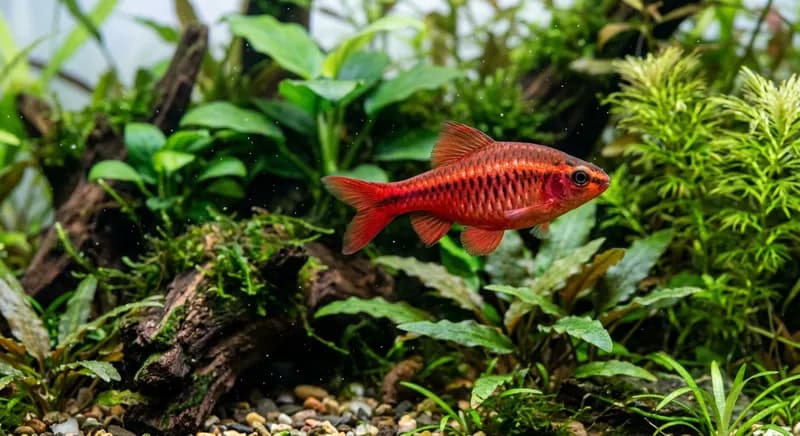
Cherry Barb
Puntius titteya
Overview
Cherry barbs break the barb reputation. While tiger barbs and rosy barbs are notorious fin nippers, cherry barbs are gentle, shy fish that happen to turn one of the most vivid reds in the freshwater hobby. Males flush deep crimson when competing for females or feeling confident in their environment. Females stay a warm tan with a dark lateral stripe. They are hardy, easy to feed, and peaceful enough for any community tank. An underrated species that deserves more attention.
Tank Setup
Cherry barbs do best in a 15-20 gallon tank with dense planting and shaded areas. In the wild, they live in heavily shaded forest streams in Sri Lanka, so bright, open tanks make them nervous. Plant the background and sides with java fern, cryptocoryne, or similar low-light plants. Add floating plants to dim the light. Driftwood and leaf litter complete the natural look. Cherry barbs need some open swimming space in the front and center, but the key is having plenty of visual cover they can retreat to. Males will establish small display territories among the plants. Use a gentle filter. A sponge filter or small hang-on-back works perfectly. Sand or fine gravel for substrate. Dark substrates bring out their color better, but it's not critical.
Water Parameters
Cherry barbs are adaptable. pH 6.0-7.5 covers their range, and they handle moderate hardness without complaint. Temperature 73-81 degrees, targeting 77. They come from tropical streams, so a heater is necessary. They are not as sensitive to water chemistry as cardinal or rummy nose tetras, which makes them a better choice if your tap water is middle-of-the-road. The usual rules apply: cycled tank, zero ammonia and nitrite, weekly 25% water changes. Cherry barbs are forgiving of minor fluctuations but don't take that as an excuse to skip maintenance.
Diet & Feeding
Cherry barbs accept all standard aquarium foods. A good tropical flake or micro pellet forms the base diet. They particularly enjoy frozen or live foods like bloodworms, brine shrimp, and daphnia. Feeding protein-rich foods 2-3 times per week helps males maintain their deep red coloration. They also graze on soft algae and biofilm in the tank, which supplements their diet naturally. Feed a small pinch twice daily. Cherry barbs are mid to bottom feeders that will pick food off leaves and the substrate. They are moderate eaters and not as aggressive at feeding time as livebearers.
Behavior & Temperament
Cherry barbs are shy, especially when first added to a tank or kept in small numbers. A group of 6 or more is essential. In proper numbers with good cover, they gain confidence and spend more time out in the open. Males turn their brightest red when displaying to females or competing with other males. This display behavior involves flaring fins and swimming alongside a rival, but it never escalates to actual fighting. Females are less colorful but equally peaceful. Cherry barbs are active during the day, spending time in the middle and lower water levels. They don't form tight schools like tetras but stay in a loose group, drifting together through the plants.
Compatible Tankmates
Cherry barbs fit into almost any peaceful community. Tetras (neon, cardinal, rummy nose), rasboras, corydoras, small livebearers like platies and endlers, and cherry shrimp are all great companions. They are sometimes recommended as betta tankmates, and while this can work in a 20+ gallon tank with plenty of cover, the male cherry barb's red color may trigger some bettas. Test the combination carefully. Avoid aggressive species entirely. Tiger barbs will bully cherry barbs despite being related. Large cichlids like angelfish will intimidate them into permanent hiding. Cherry barbs thrive in a calm, planted community where nothing is chasing them.
Common Health Issues
Cherry barbs are one of the hardier community fish and don't have species-specific disease concerns. Ich is the standard risk, particularly when new fish are introduced. Treat with elevated temperature (82 degrees) and ich medication. Fin rot and bacterial infections are uncommon but can appear in neglected tanks. Cherry barbs are susceptible to internal parasites from live foods, presenting as white stringy feces or slow wasting. Treat with medicated food containing praziquantel. Their biggest health risk is stress from inadequate hiding places or aggressive tankmates, which suppresses their immune system and makes them vulnerable to opportunistic infections.
Breeding
Cherry barbs are egg scatterers and relatively easy to breed compared to many tropical fish. Set up a separate 10-gallon breeding tank with fine-leaved plants like java moss or spawning mops. Water should be slightly acidic (pH 6.0-6.5) and warm (79-80 degrees). Condition a pair with frozen bloodworms and brine shrimp for a week. The male will intensify his red coloration and begin chasing the female through the plants. She scatters small, adhesive eggs among the leaves. Remove both parents after spawning since they will eat the eggs. Eggs hatch in 24-48 hours. Fry are tiny and need infusoria or liquid fry food for the first week, then baby brine shrimp. A single spawn can produce 100-200 eggs, though not all will be fertile. Cherry barbs are listed as vulnerable in the wild due to habitat loss in Sri Lanka, so captive breeding is genuinely valuable for the species.
Tankmates to Avoid
These species don't mix well with Cherry Barb. Tap a name for the full breakdown.
Frequently Asked Questions
Quick Stats
Related Guides
Compare
What You Need for Cherry Barb
Gear that works well for this species, based on what experienced keepers actually use.
Dark substrate that makes cherry barb reds pop. Porous clay gravel that supports live plant growth without altering water chemistry.
Color-enhancing formula with natural ingredients like salmon and whole shrimp. Slowly sinking pellets match cherry barbs' mid-to-bottom feeding style.
Gentle flow that shy cherry barbs prefer. Excellent biological filtration and no risk of sucking up fry if your barbs breed.
Dimmable with sunrise/sunset cycle. Cherry barbs look best under moderate lighting. Too bright and they hide. This light lets you find the sweet spot.