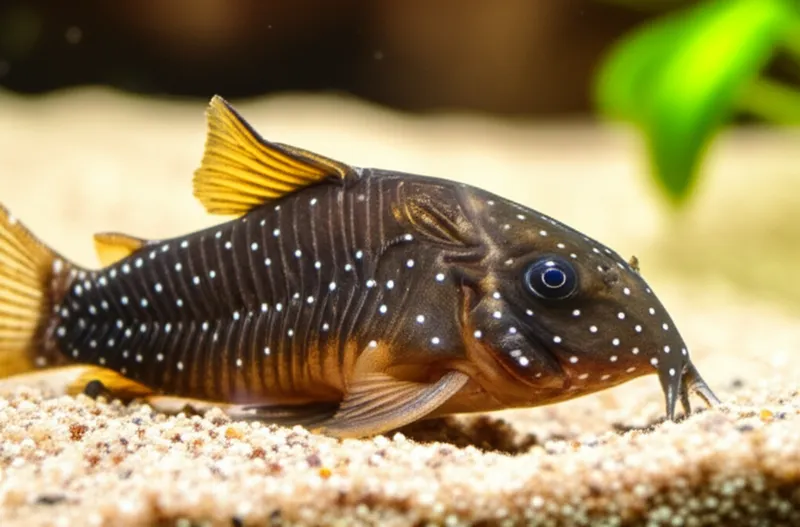
Sterbai Corydoras
Corydoras sterbai
Overview
Sterbai Corydoras are the go-to bottom dweller for warm water tanks. Most corydoras species prefer temperatures in the low to mid 70s, which makes them incompatible with heat-loving fish like discus, German blue rams, and bettas. Sterbai break that rule. They thrive at 78-82 degrees, which makes them one of the only corydoras you can comfortably pair with tropical species that need warmer water. They are a striking fish too. Dark brown to black bodies covered in white spots, with bright orange pectoral fins that really pop against a dark substrate. Like all corydoras, they need to be kept in groups of at least 6. A single sterbai or a pair will be stressed and hide constantly. Get them a proper school and they will be active, social, and constantly foraging across the bottom of the tank.
Tank Setup
A 20-gallon tank is the minimum for a school of 6, but 30 gallons gives them more foraging space and lets you keep a larger group. Sand substrate is strongly recommended. Corydoras feed by sifting through the substrate with their barbels, and gravel can wear these down or damage them over time. Pool filter sand or play sand works great and costs very little. Provide some cover with driftwood, rocks, or low-growing plants like Java fern and Anubias. Sterbai appreciate shaded resting spots but will spend most of their time out in the open if they feel safe (which means being in a proper school). Filtration should be reliable but flow does not need to be intense. A sponge filter or gentle hang-on-back works fine.
Water Parameters
Temperature should stay between 75-82 degrees Fahrenheit, with 79 being ideal. This heat tolerance is the main reason people choose sterbai over other corydoras species. pH can range from 6.0 to 7.5. Like all corydoras, sterbai are sensitive to ammonia and nitrite, so the tank must be fully cycled before adding them. Weekly 25% water changes keep nitrates manageable. One thing to watch: corydoras will occasionally dart to the surface to gulp air. This is normal behavior since they have a modified intestine that can absorb atmospheric oxygen. If they are doing it constantly, though, check your dissolved oxygen levels because something may be off.
Diet & Feeding
Sterbai are omnivores that primarily scavenge along the bottom. Sinking wafers and pellets should be the staple. Hikari sinking wafers, Repashy gel food, or Bug Bites bottom feeder formula all work well. Supplement with frozen bloodworms and brine shrimp 2-3 times per week. Drop food after lights out if faster-swimming tankmates are stealing everything before it reaches the bottom. A common misconception is that corydoras will survive on leftover food from other fish. They will not. They need their own dedicated feeding. A group of 6 should get 2-3 sinking wafers or a pinch of pellets daily.
Behavior & Temperament
Sterbai are peaceful, social fish that completely ignore their tankmates. They spend their time foraging across the substrate in loose groups, occasionally resting together in a shaded spot. In a proper school of 6 or more, you will see synchronized swimming behavior where the whole group moves together like they are on a mission. They are mostly active during dawn and dusk but will come out throughout the day once they settle into a tank. You will sometimes see them "winking" at you. That is actually the fish rolling its eye down to look at the substrate while foraging. Corydoras are also known for their armored bodies. Those pectoral fin spines are sharp and mildly venomous, so use a container rather than a net when moving them. The sting is not dangerous but it hurts.
Compatible Tankmates
Sterbai are compatible with almost any peaceful community fish. Their heat tolerance makes them especially good companions for German blue rams, discus, cardinal tetras, and bettas. They also work well with harlequin rasboras, cherry barbs, and other corydoras species. Cherry shrimp and nerite snails are safe with them. Avoid keeping sterbai with aggressive bottom dwellers or large cichlids that might bully them. They are too slow and docile to compete with aggressive fish for food or territory. In a larger tank (55+ gallons), they coexist nicely with Electric Blue Acaras, though the acaras may occasionally chase them away from a claimed territory.
Common Health Issues
Barbel erosion is the most common problem, almost always caused by sharp gravel substrate or dirty substrate conditions. Switching to sand and keeping the bottom clean usually resolves it. Ich is another risk, but be careful with treatment since corydoras are scaleless and sensitive to many medications. Use half doses of ich medication or raise the temperature to 82-84 degrees and add aquarium salt at half the normal concentration. Red blotch disease appears as red patches on the belly or fins and is usually triggered by poor water quality. Internal parasites can show up as weight loss despite eating normally. Quarantine new fish for 2-3 weeks before adding them to an established tank.
Breeding
Sterbai corydoras can be bred in captivity but are trickier than some other corydoras species. A large water change with slightly cooler water (2-3 degrees below normal) often triggers spawning, simulating the rainy season. The female holds 2-4 eggs between her pelvic fins in the classic "T-position" while the male fertilizes them, then she sticks them to glass, plants, or hardscape. A single spawning can produce 50-200 eggs. Eggs hatch in 3-5 days at 79 degrees. Remove the eggs to a separate container with matching water parameters because adults will eat them. Feed fry microworms or baby brine shrimp. Breeding pairs tend to produce more reliably once they have spawned a few times.
Frequently Asked Questions
Quick Stats
Related Guides
What You Need for Sterbai Corydoras
Gear that works well for this species, based on what experienced keepers actually use.
Sinks quickly to reach bottom dwellers before mid-water fish can steal them. Balanced nutrition for corydoras with the right ratio of plant and animal protein.
Smooth, fine-grained sand that will not damage corydoras barbels. Natural color looks clean and lets you see waste for easier maintenance.
Gentle flow that will not push lightweight corydoras around. Safe for fry if you end up breeding. Reliable biological filtration.
Liquid test kit for ammonia, nitrite, nitrate, and pH. Corydoras are sensitive to water quality, and test strips are not accurate enough to catch small ammonia spikes.