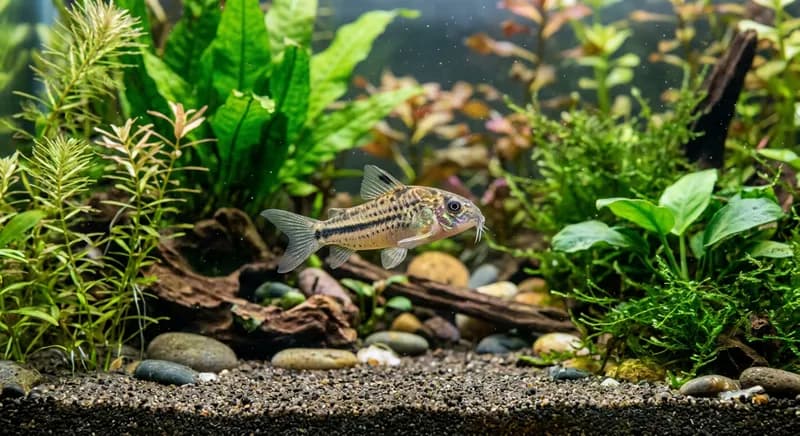
Pygmy Corydoras
Corydoras pygmaeus
Overview
Pygmy corydoras break every rule you think you know about cories. Instead of hugging the bottom, these tiny fish hover in the middle of the water column in tight little clusters, darting around like miniature silver darts. At just 1 inch fully grown, they are one of the smallest corydoras species available and absolutely need a group of 8 or more to feel secure. Watch a school of 12+ pygmies shoaling together and you will understand why people get obsessed with these fish.
Tank Setup
A 10-gallon tank works for a group of 8-10, but a 20-gallon long is better if you want a proper school of 12-15. These fish spend time at all levels, not just the bottom, so horizontal swimming space matters more than height. Use fine sand substrate since they do occasionally sift through it and gravel can damage their delicate barbels. Add plenty of plants, especially low-growing ones like dwarf hairgrass or java moss, which give them places to rest and hide. Driftwood and small rocks provide additional cover. Filtration should be gentle. A sponge filter is ideal, or if you use a hang-on-back, baffle the outflow. These are tiny fish and strong currents will exhaust them.
Water Parameters
Keep the temperature between 72-79 degrees Fahrenheit, with 75 being the sweet spot. pH can range from 6.4 to 7.4, so most tap water works fine after conditioning. They prefer softer water but adapt to moderate hardness. Weekly 25% water changes are a must. Because they are small fish in groups, the bioload adds up faster than you might expect from their size. Use a liquid test kit (not strips) and keep ammonia and nitrite at zero, nitrates below 20 ppm.
Diet & Feeding
Pygmy cories eat anything small enough to fit in their mouths, which is not much. Crush flakes into powder or use micro pellets designed for small fish. Hikari Micro Pellets work well. Supplement with baby brine shrimp, frozen cyclops, and frozen daphnia 2-3 times per week. Feed a small pinch twice daily. Because they hover mid-water, they often catch food as it sinks rather than scavenging off the bottom like their larger cousins. Do not rely on them to clean up leftover food from other fish. They need their own dedicated feeding.
Behavior & Temperament
This is where pygmy cories really stand out. Unlike bronze or panda cories that stick to the substrate, pygmies form mid-water schools and actively swim together throughout the day. They will rest on broad leaves, perch on driftwood, and occasionally zip down to the sand to forage. In groups under 6, they tend to hide constantly and you will barely see them. Get 10 or more and their confidence transforms. They become active, playful, and genuinely entertaining. They are completely peaceful and will not bother any tankmate.
Compatible Tankmates
Pygmy cories are perfect community fish for nano and small tank setups. They do well with neon tetras, ember tetras, and other small peaceful species. Cherry shrimp and amano shrimp make great companions since there is zero conflict. Otocinclus share similar water preferences and temperament. A calm betta can work in a 10+ gallon tank, but watch for aggression. Avoid anything large enough to eat them, which includes adult angelfish and most cichlids. Even a german blue ram might harass or eat pygmies since the size difference is significant.
Common Health Issues
Pygmy cories are generally hardy once established, but they can be sensitive during the first 2 weeks after purchase. Many are wild-caught and stressed from shipping. Acclimate slowly using the drip method over 30-45 minutes. Ich is the most common disease, showing up as white spots, usually triggered by temperature swings. Raise the temp to 82 degrees and treat with ich medication. Bacterial infections can occur if water quality slips, presenting as red patches on the belly or eroded barbels. Keep the substrate clean and maintain consistent water changes. Internal parasites are possible with wild-caught specimens. If fish are eating but losing weight, consider treating with a deworming medication like PraziPro.
Breeding
Pygmy cories will breed in a well-maintained tank without much intervention. A drop in temperature during a water change (2-3 degrees cooler than tank temp) often triggers spawning. The female carries 1-2 eggs at a time between her pelvic fins and places them on plant leaves, glass, or other smooth surfaces. Eggs are tiny and clear, easy to miss. They hatch in 3-4 days. The adults will eat the eggs and fry if they find them, so dense plant cover like java moss helps fry survival. Fry are extremely small and need infusoria or powdered fry food for the first week before moving to baby brine shrimp.
Tankmates to Avoid
These species don't mix well with Pygmy Corydoras. Tap a name for the full breakdown.
Frequently Asked Questions
Quick Stats
Related Guides
What You Need for Pygmy Corydoras
Gear that works well for this species, based on what experienced keepers actually use.
Sized perfectly for tiny mouths. Sinks slowly so pygmy cories can grab them mid-water. High protein content without fillers.
Gentle flow that will not push tiny cories around. No intake slots to trap small fish. Biological filtration surface area is excellent for the price.
Ultra-fine sand that is safe for delicate barbels. Smooth texture lets cories sift naturally without injury.
Liquid tests are far more accurate than strips. Covers ammonia, nitrite, nitrate, and pH. Essential for keeping sensitive small fish healthy.