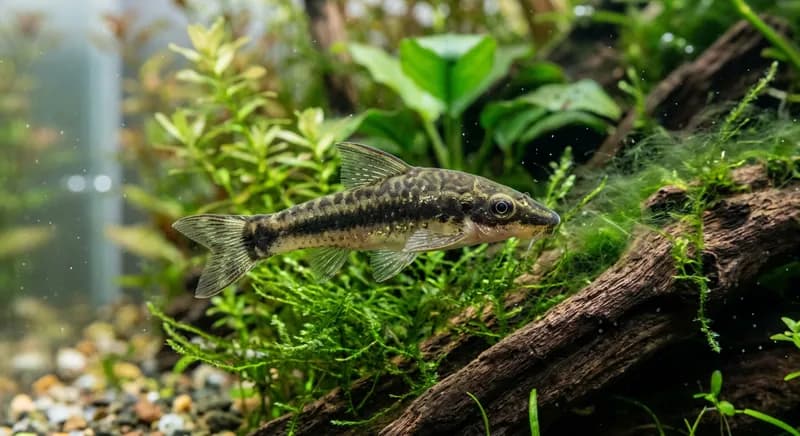
Otocinclus
Otocinclus vestitus
Overview
Otocinclus are the tiny algae-eating machines of the freshwater hobby. At under 2 inches, a group of 6 will methodically graze every surface in your tank, targeting diatoms and soft green algae without touching your plants. The catch? They are notorious for dying in the first 2 weeks after purchase. Most otos are wild-caught, starved during shipping, and already weakened by the time they hit store tanks. Get them through that initial period in a mature, established tank and they become hardy little workers that live for years.
Tank Setup
A 10-gallon tank is the minimum for a group of 6, but 20 gallons gives them more grazing surface and more stable water. This is critical: otos need an established tank with existing biofilm and algae growth. Do not add them to a newly cycled tank. The tank should be running for at least 3 months with live plants, driftwood, and rocks that have developed a layer of biofilm. Dense planting is ideal since otos graze on leaf surfaces and rest on broad leaves during the day. Driftwood provides additional grazing surface and hiding spots. Filtration should be gentle. Sponge filters or baffled hang-on-backs work well. Otos are small and can get trapped in filter intakes, so cover any exposed intakes with a pre-filter sponge.
Water Parameters
Temperature between 72-79 degrees Fahrenheit, pH from 6.0 to 7.5. Otos prefer clean, well-oxygenated water. Good surface agitation from the filter helps. They are sensitive to ammonia and nitrite, which is another reason to only add them to mature tanks where the biological filter is fully established. Nitrates should stay below 15 ppm. Weekly 25% water changes are standard. When acclimating new otos, use the drip method over 45-60 minutes. Temperature and pH swings hit them harder than most fish because they are typically stressed from transport.
Diet & Feeding
This is the hardest part of keeping otos and where most people fail. They are herbivores that primarily eat biofilm, diatoms, and soft algae. A clean, algae-free tank is actually a bad environment for them. If your tank does not produce enough natural algae (most do not after the initial diatom bloom), you must supplement. Blanched zucchini is the gold standard. Slice a round, blanch it in boiling water for 30 seconds, let it cool, and drop it in the tank at night. Remove uneaten portions after 12 hours. Algae wafers can work, but otos sometimes ignore them in favor of natural surfaces. Repashy Soilent Green gel food is another excellent option that you can smear on rocks and driftwood to mimic natural grazing. Feed supplemental food at least every other day. A starving oto has a visibly sunken belly. If you see that, the fish is in trouble and needs food immediately.
Behavior & Temperament
Otos are completely peaceful, almost to a fault. They will never bother any tankmate and spend their time suctioned to surfaces, slowly grazing in a methodical pattern. In groups of 6+, they become more active and you will see them grazing together on the same piece of driftwood or leaf. Solitary otos tend to hide and eat less. They are not truly nocturnal but are more active in the morning and evening than midday. Otos occasionally dart to the surface to gulp air, which is normal. They can breathe atmospheric air using a modified section of their intestine. Frequent surface dashing (multiple times per minute) can indicate low oxygen levels, so check your surface agitation.
Compatible Tankmates
Otos are ideal community fish for peaceful setups. They coexist perfectly with neon tetras, guppies, cherry shrimp, amano shrimp, pygmy corydoras, and kuhli loaches. A betta can work in a 10+ gallon tank since otos are fast and unobtrusive. Mystery snails and nerite snails share their algae-eating habits without conflict. Avoid large or aggressive fish. Angelfish may harass or eat otos. Any fish that is territorial about bottom space can stress them out. The best oto tank is a well-planted community with other small, peaceful species.
Common Health Issues
The number one issue is death shortly after purchase. This is usually from starvation and stress during shipping, not something you did wrong. Buy otos from a store where they have been in stock for at least 2 weeks and are actively grazing on surfaces. Avoid otos with sunken bellies, clamped fins, or pale coloring. Once past the initial 2-week danger zone, otos are reasonably hardy. Ich can occur after stress. Standard treatment works, but be cautious with medication since otos are sensitive to copper and some chemical treatments. Salt baths should be avoided as they are scaleless and sensitive. If disease treatment is needed, use half-doses initially and watch for adverse reactions.
Breeding
Otocinclus rarely breed in home aquariums, but it does happen. Spawning usually follows a large cool water change that simulates the rainy season. The male chases the female, and she deposits small adhesive eggs (2-3 at a time) on plant leaves and glass. A single spawn might produce 30-60 eggs. Eggs hatch in 3-5 days. Fry are tiny and need biofilm-rich surfaces to graze on. Raising fry requires a mature tank with plenty of algae and biofilm. Most successful oto breeding happens almost accidentally in well-established, heavily planted tanks with stable populations. Do not expect to breed them on purpose without significant effort and a bit of luck.
Tankmates to Avoid
These species don't mix well with Otocinclus. Tap a name for the full breakdown.
Frequently Asked Questions
Quick Stats
Related Guides
Compare
What You Need for Otocinclus
Gear that works well for this species, based on what experienced keepers actually use.
Mix with water, microwave, and smear on rocks or driftwood. Mimics natural biofilm and otos graze on it eagerly. The best supplemental food for keeping otos fed in clean tanks.
Gentle flow safe for tiny otos. No intake to trap small fish. Sponge surface actually grows biofilm that otos will graze on, so the filter doubles as a food source.
If you use a hang-on-back or canister filter, cover the intake with this sponge. Otos are small enough to get sucked against bare intakes, which can injure or kill them.
Holds blanched zucchini against the glass where otos can find and graze on it easily. Simple tool that makes supplemental feeding much less messy.