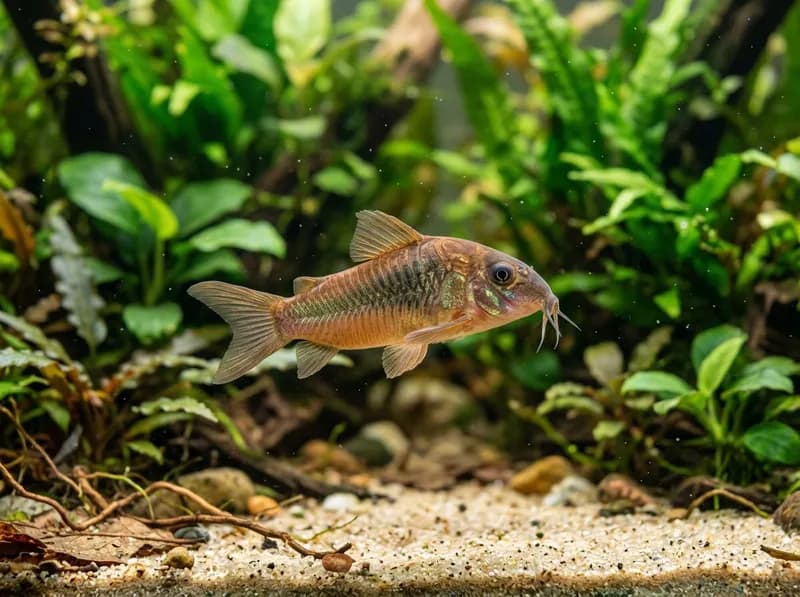
Bronze Corydoras
Corydoras aeneus
Overview
Bronze corydoras are the ultimate bottom-dwelling community fish. They are peaceful, hardy, entertaining to watch, and they help keep your substrate clean by sifting through it for leftover food. A group of cories scooting around the bottom of the tank, whiskers twitching, is genuinely endearing. They are one of the most forgiving species for beginners, tolerating a wide range of water conditions. The most critical thing to get right is substrate. Cories have delicate barbels (whiskers) that they use to forage, and rough gravel will damage and erode them over time. Sand substrate is the right choice.
Tank Setup
A 20-gallon tank is the minimum for a group of 6 bronze cories. They need floor space more than height, so a longer, shallower tank is better than a tall one. Sand substrate is essential. Play sand, pool filter sand, or aquarium-specific sand all work fine. Avoid sharp gravel or crushed coral since it will wear down their barbels, leading to infections and reduced foraging ability. Add driftwood, rocks, and plants to create shaded resting spots. Cories appreciate some open sandy areas for foraging and a few hiding spots for when they want to rest. A gentle filter current along the bottom is fine.
Water Parameters
Bronze cories tolerate a wide range of parameters, which is part of why they are great for beginners. Temperature between 72-79 degrees Fahrenheit, pH between 6.0 and 8.0. They handle harder water without issues. Keep ammonia and nitrite at 0 ppm and nitrate below 40 ppm, though lower is always better. Weekly 25% water changes are the standard. Cories sometimes dart to the surface and gulp air, which is normal. They have a modified intestine that can extract oxygen from swallowed air. Frequent surface dashing, though, can indicate low oxygen levels in the water.
Diet & Feeding
Do not assume cories will survive on leftover food that falls to the bottom. This is a common misconception. They need their own dedicated feedings. Sinking pellets or wafers should be the staple. Hikari sinking wafers or Repashy gel food work great. Supplement with frozen bloodworms and brine shrimp. Feed after the tank lights go off since cories are most active at dawn and dusk. Drop food directly to the bottom near their favorite hangout spots. In a community tank, make sure your cories are actually getting food before the mid-level fish eat it all.
Behavior & Temperament
Cories are social fish that must be kept in groups of at least 6. A lone cory will be stressed, inactive, and often hide all day. In a proper group, they forage together, rest in adorable piles, and occasionally zoom around the tank in synchronized dashes. They are completely peaceful and will never bother other fish. The occasional darting to the surface for air gulps is normal and actually kind of funny to watch. Cories have a mild venomous spine in their dorsal and pectoral fins, which can prick you if you handle them. It is not dangerous but can sting, so use a container instead of a net when moving them.
Compatible Tankmates
Bronze cories are compatible with almost everything peaceful. They do well with bettas, neon tetras, guppies, cherry shrimp, rasboras, platies, and mollies. Since they stick to the bottom, they rarely compete with mid-level or surface-dwelling fish for space or food. Avoid keeping them with large aggressive cichlids or anything big enough to eat them. They are one of the safest additions to any peaceful community tank.
Common Health Issues
Barbel erosion is the most common issue, caused by rough substrate or dirty conditions. You will notice the whiskers getting shorter or disappearing. Switch to sand and improve water quality to prevent further damage. Cories can get ich like any fish, presenting as white spots. Treat with half-dose medication since cories are scaleless and sensitive to full-strength treatments. Red blotch disease shows as red patches on the belly, usually from bacterial infection due to poor substrate conditions. Maintain clean sand and good water quality to prevent most health problems.
Breeding
Bronze cories are one of the easier species to breed in captivity. A large water change with slightly cooler water (2-3 degrees below normal) can trigger spawning. The female holds eggs between her pelvic fins in a "T position" while the male fertilizes them, then she deposits the sticky eggs on the glass, plant leaves, or filter intakes. A single spawning can produce 100-200 eggs. Adults will eat eggs, so either move the eggs to a separate container with an airstone or remove the adults. Eggs hatch in 3-5 days, and fry can eat crushed flake food or baby brine shrimp immediately.
Tankmates to Avoid
These species don't mix well with Bronze Corydoras. Tap a name for the full breakdown.
Frequently Asked Questions
Quick Stats
Related Guides
Compare
What You Need for Bronze Corydoras
Gear that works well for this species, based on what experienced keepers actually use.
Good filtration capacity for a 20-30 gallon cory tank. Adjustable flow prevents blasting sand around the bottom.
Has over-temperature protection and auto power-off if it leaves the water during a water change. Good safety features for the 20-30 gallon tanks cories need.
Sinks right to the bottom where cories feed. Holds together well so it does not cloud the water.
Smooth and safe for cory barbels. Inexpensive and available at any hardware store. Just rinse well before use.