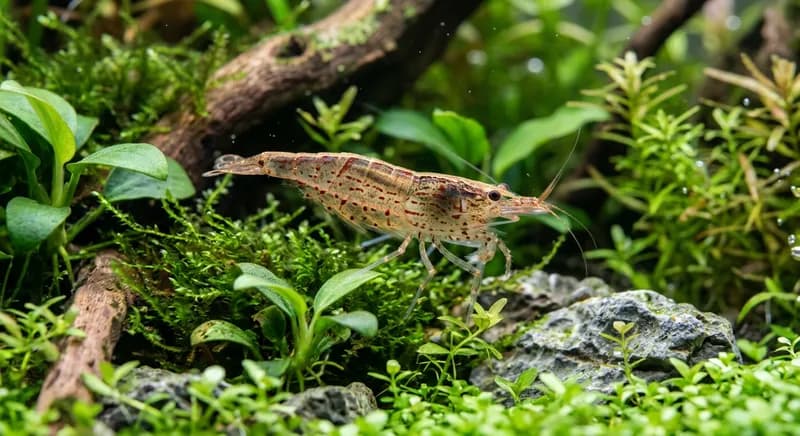
Amano Shrimp
Caridina multidentata
Overview
Amano shrimp are the undisputed champions of algae control in the freshwater hobby. Named after the legendary aquascaper Takashi Amano, who popularized their use in planted tanks, these shrimp eat hair algae, brush algae, and film algae more effectively than any fish or snail. At 2 inches, they are significantly larger than cherry shrimp, which makes them less likely to end up as lunch for curious tankmates. They are transparent with a line of dots along their sides and have a frantic, constantly-busy energy that makes them entertaining to watch. If you have an algae problem, a squad of 6 amanos is the first thing to try.
Tank Setup
A 10-gallon tank works for a group of 6 amano shrimp. In a planted tank, they will explore every surface, picking at algae on leaves, hardscape, and glass. Like all freshwater shrimp, they are extremely sensitive to copper, so check that any fertilizers, medications, or water conditioners you use are copper-free. Live plants are ideal because they provide grazing surfaces and hiding spots during molting. Amanos molt every 4-6 weeks, shedding their exoskeleton to grow. They are vulnerable during this period and need places to hide. Driftwood, rocks, and dense plant cover all provide shelter. Java moss and other fine-leaved plants are particularly good. Filtration should be shrimp-safe with covered intakes. Sponge filters are the gold standard, but any filter with a pre-filter sponge works.
Water Parameters
Temperature between 70-80 degrees Fahrenheit, with 74 being the sweet spot. pH from 6.5 to 7.5. Amanos are more tolerant of parameter variation than cherry shrimp, which is one reason they are recommended for community tanks. That said, they are very sensitive to ammonia and nitrite. Both must read zero at all times. Nitrates below 20 ppm. Copper at any detectable level is lethal. If you dose liquid fertilizers in a planted tank, check the ingredients for copper. Most shrimp-safe fertilizers exclude it, but not all. Weekly water changes of 25% are standard. Always match temperature when adding new water and use a conditioner that neutralizes heavy metals.
Diet & Feeding
Amanos are constantly foraging, picking at every surface in the tank. In a planted tank with moderate algae, they may need minimal supplemental feeding. But do not assume they are eating enough just because they look busy. They need protein too. Feed a high-quality shrimp pellet or algae wafer 2-3 times per week. Blanched vegetables like zucchini, spinach, and cucumber are eagerly consumed. Amanos are bold feeders and will snatch food away from fish, other shrimp, and even each other. You will see them grab an algae wafer and swim off with it, fending off competitors with their claws. It is hilarious. If you keep them with fish, make sure enough food reaches the bottom. Drop in a wafer after lights-out when the shrimp are most active.
Behavior & Temperament
Amanos are bold, active, and surprisingly entertaining. They are the most assertive freshwater shrimp commonly available, regularly stealing food from fish and wrestling each other over choice morsels. They swim openly throughout the tank, climbing plants, hanging off filter sponges, and investigating everything. After a water change or lights-out, you may see the 'amano dance' where the shrimp swim erratically through the water column. This is normal feeding behavior, not distress. Molting happens every few weeks, and the shed exoskeletons look exactly like a dead shrimp. Do not remove them since the other shrimp will eat them for the calcium. Amanos are peaceful toward other species but can bully smaller shrimp like cherries when competing for food.
Compatible Tankmates
Amano shrimp work well with most small to medium peaceful fish. Neon tetras, guppies, pygmy corydoras, otocinclus, kuhli loaches, and bristlenose plecos are all safe companions. Bettas can work in a 10+ gallon tank since amanos are fast and large enough that most bettas leave them alone. Cherry shrimp coexist fine, though amanos will outcompete them for food. Mystery snails and nerite snails share the cleanup crew role without conflict. Avoid large fish that can eat them. Adult angelfish will absolutely eat amano shrimp. German blue rams may hunt them. Any cichlid with a big enough mouth is a risk. The rule is simple: if the shrimp fits in the mouth, it is food.
Common Health Issues
The biggest killer of amano shrimp is copper exposure from medications, fertilizers, or contaminated water. Always check product labels before adding anything to a shrimp tank. Failed molts are the second most common issue, where the shrimp cannot fully shed its old exoskeleton. This is usually caused by mineral deficiency. Ensure adequate calcium and magnesium through proper GH levels (6-8 dGH is ideal) or mineral supplements. If a shrimp turns white or milky, it is preparing to molt, which is normal. Pink or opaque coloring that persists can indicate a bacterial infection. Infected shrimp should be removed to prevent spread. Vorticella (a white fuzzy parasite) sometimes appears on shrimp antennae and can be treated with aquarium salt dips (1 tablespoon per gallon, 30-second dip, return to freshwater).
Breeding
Amano shrimp are nearly impossible to breed in a home aquarium, which is why they remain relatively expensive compared to cherry shrimp that breed like rabbits. Females carry eggs (visible as dark masses under their tail) for 5-6 weeks, but the larvae require brackish water to survive. In freshwater, the larvae die within days of hatching. Successfully raising amano larvae involves moving berried females to a separate brackish setup (15-17 ppt salinity), allowing the larvae to hatch, feeding them with phytoplankton, and very gradually transitioning juveniles back to freshwater over several weeks. It has been done by dedicated hobbyists, but it is a complex multi-week project. For most people, buying new amanos is far more practical than breeding them.
Tankmates to Avoid
These species don't mix well with Amano Shrimp. Tap a name for the full breakdown.
Frequently Asked Questions
Quick Stats
Related Guides
Compare
What You Need for Amano Shrimp
Gear that works well for this species, based on what experienced keepers actually use.
Fine powder food that feeds biofilm-producing microorganisms, creating a natural food source for shrimp. Excellent supplement for planted tanks between algae wafer feedings.
Shrimp-safe filtration with no intake to trap or injure shrimp. The sponge surface grows biofilm that amanos actively graze on. Dual sponges provide excellent biological filtration.
Remineralizer for RO or soft water that provides the calcium and magnesium shrimp need for healthy molting. Prevents failed molts, which is the most common non-copper cause of shrimp death.
Neutralizes chlorine, chloramine, and heavy metals including copper on contact. Concentrated formula is economical. The most important single product for keeping shrimp alive in tap water.