Pearl Gourami
Trichopodus leerii
Overview
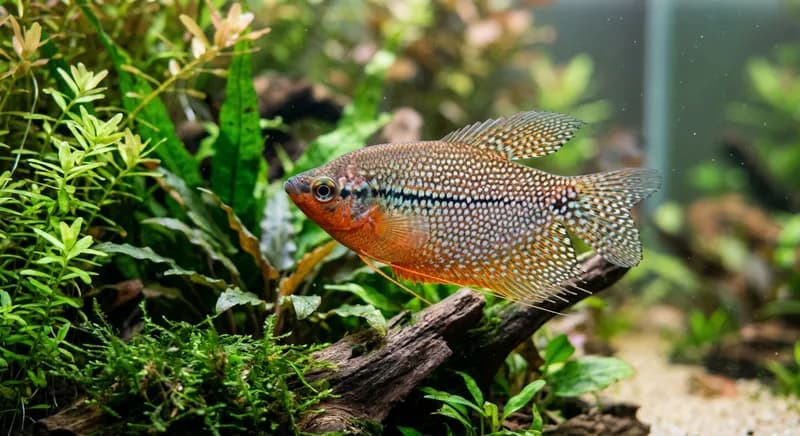
Pearl gouramis are one of the most attractive freshwater fish you can keep, and one of the easiest large gouramis to care for. Their bodies are covered in tiny white spots that look like scattered pearls across a brownish-silver base, with a dark horizontal line running from snout to tail. Males develop a red-orange chest that intensifies during breeding. At 4-5 inches, they are bigger than dwarf or honey gouramis and need a bigger tank, but they make up for it with a calm temperament that works in most community setups. They are labyrinth breathers like all gouramis, occasionally surfacing to gulp air. If you have a 30+ gallon tank and want a peaceful centerpiece with genuine beauty, pearls are hard to beat.
Tank Setup
A 30-gallon tank is the minimum for a single pearl gourami or a pair. If you want a small group of one male and two females, go with a 40-55 gallon. These are larger fish that need horizontal swimming space, so a long tank is better than a tall one. Plant the tank generously with java fern, anubias, vallisneria, and some floating plants. Pearls appreciate shaded areas but do not need the heavy cover that honey gouramis require. A moderate filter is fine since they can handle more flow than smaller gouramis. Driftwood and broad-leafed plants give them resting spots near the surface. Use a secure lid because they can and will jump.
Water Parameters
Temperature should stay between 77-82 degrees Fahrenheit with 79 as a good target. They accept a wide pH range from 6.0 to 8.0, making them adaptable to most tap water. Slightly soft to moderately hard water is ideal. Weekly 25% water changes keep nitrates in check. Pearl gouramis are fairly forgiving of minor fluctuations, which is part of what makes them a good choice for intermediate keepers. As labyrinth fish, they need surface access for air breathing, so make sure your floating plants leave some open patches.
Diet & Feeding
Pearl gouramis eat almost everything you offer. Use a quality flake or pellet as the daily base. Supplement with frozen bloodworms, brine shrimp, and daphnia 2-3 times per week. They will also eat blanched vegetables like zucchini slices and will pick at algae on tank surfaces. Feed twice daily, an amount they finish within 2 minutes. These fish are not aggressive feeders but they are large enough that they rarely get outcompeted. They occasionally hunt small invertebrates and may eat baby shrimp, so keep that in mind if you have a cherry shrimp colony in the same tank.
Behavior & Temperament
Pearl gouramis are genuinely peaceful fish for their size. Males will sometimes display at each other by spreading their fins and deepening their color, but actual fighting is uncommon unless the tank is too small. They swim at a relaxed pace through the mid to upper levels. You will see them use their thread-like pelvic fins to touch and explore their environment. Pearls are social and do well in pairs or small groups (one male, two females). A solo pearl gourami is fine too but tends to be slightly shyer. They are not aggressive toward other species and will generally retreat from conflict rather than escalate it.
Compatible Tankmates
Pearl gouramis work with a wide range of community fish. Corydoras, kuhli loaches, and bristlenose plecos are great bottom dwellers. Schooling fish like harlequin rasboras, cherry barbs, cardinal tetras, and neon tetras add movement without causing problems. Mystery snails and nerite snails are safe. Avoid tiger barbs and serpae tetras because they nip fins. Bettas and pearl gouramis should not be mixed. Angelfish can work in a large enough tank (55+ gallons) but there is some risk of territorial disputes. Other gourami species are generally a bad idea in the same tank because males of different species may fight.
Common Health Issues
Pearl gouramis are hardy fish with fewer disease concerns than dwarf gouramis. Ich is the most common issue, showing up as white spots and treatable by raising the temperature to 82-84 degrees and adding ich medication. Bacterial infections can occur from poor water quality, presenting as fin rot, body sores, or cloudy eyes. Keep the water clean and these are easily prevented. Velvet disease (a gold-dust appearance on the skin) is less common but responds to copper-based medication and darkening the tank. Pearl gouramis occasionally develop hole-in-the-head if kept in chronically poor conditions with a vitamin-deficient diet.
Breeding
Males build large bubble nests, often 6 inches or more across, usually under floating plants. Condition a pair with high-quality frozen foods for 1-2 weeks. A separate breeding tank of 20+ gallons with shallow water (6-8 inches), warm temperature (82 degrees), and plenty of floating plants works best. The male embraces the female and collects the floating eggs into the nest. He guards the nest aggressively after spawning, so remove the female. Eggs hatch within 24-48 hours. Fry are tiny and need infusoria or commercial liquid fry food for the first few days, then baby brine shrimp. Remove the male when the fry are free-swimming, usually 3-4 days after hatching.
Tankmates to Avoid
These species don't mix well with Pearl Gourami. Tap a name for the full breakdown.
Frequently Asked Questions
Quick Stats
What You Need for Pearl Gourami
Gear that works well for this species, based on what experienced keepers actually use.
Handles 30-45 gallon tanks efficiently with adjustable flow. Quiet operation and solid biological filtration capacity.
Reliable adjustable heater that handles 30-45 gallon tanks. Accurate temperature control to maintain 79 degrees.
Whole salmon and halibut as the first ingredients. No fillers or meals. Large enough flakes for a 4-inch gourami.
Liquid tests beat strips for accuracy. Tests ammonia, nitrite, nitrate, and pH, which covers everything you need.