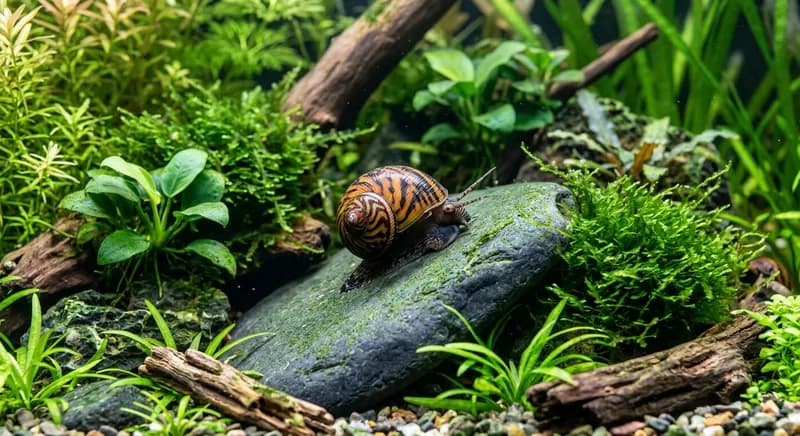
Nerite Snail
Neritina natalensis
Overview
Nerite snails are the best algae eaters in the freshwater hobby, full stop. A single nerite will systematically clean every surface in a 10-gallon tank, eating green spot algae, diatoms, and soft film algae that other creatures ignore. They come in a variety of stunning shell patterns: zebra, tiger, olive, horned, and red racer, among others. The best part? They cannot reproduce in freshwater. Their larvae need brackish water to survive, so you never have to worry about a population explosion. The only downside is they lay small white eggs on hard surfaces that do not hatch but can be annoying to look at.
Tank Setup
A 5-gallon tank is enough for 1-2 nerites. In larger tanks, stock roughly 1 nerite per 5 gallons for effective algae control without running out of food. They graze on glass, rocks, driftwood, plant leaves, and any hard surface. Like all freshwater invertebrates, nerites are sensitive to copper, so avoid any products containing it. A lid is recommended because nerites occasionally climb out of the water, especially when water quality declines. Many hobbyists find them on the floor. Substrate does not matter much since nerites spend most of their time on vertical and hard surfaces rather than the bottom. Keep the tank established with some algae growth before adding nerites. A spotless new tank will not provide enough food.
Water Parameters
Nerites prefer harder, more alkaline water than most tropical fish. pH of 7.0-8.5 is ideal, with higher pH actually being better for their shells. Like mystery snails, they need calcium to maintain shell health. Acidic water below 6.5 will erode their shells over time. If your water is soft, add a cuttlebone fragment or crushed coral to the filter. Temperature between 72-80 degrees is fine. Weekly water changes of 25% keep conditions stable. Nerites are fairly tolerant of varying parameters but sensitive to ammonia and nitrite spikes. They do best in fully cycled, established tanks.
Diet & Feeding
Nerites are dedicated herbivores that eat algae and biofilm almost exclusively. They graze constantly, moving methodically across surfaces and leaving clean trails. In a tank with moderate algae growth, supplemental feeding may not be needed at all. If your tank is very clean or you have multiple nerites, supplement with algae wafers or blanched vegetables like zucchini. Nerites can be picky eaters compared to mystery snails and may ignore prepared foods in favor of natural algae. If a nerite stops moving or stays retracted for days, starvation is the first thing to check. In a clean tank with no algae, nerites will slowly starve.
Behavior & Temperament
Nerites are peaceful grazers with zero impact on tankmates. They move slowly across surfaces, eating algae as they go. Their grazing patterns often leave visible clean streaks on the glass, which is satisfying to watch. They are more active at night but move around during the day too. Nerites sometimes flip onto their backs and struggle to right themselves, especially on flat substrate. If you see one upside down, flip it over. Some nerites right themselves fine, others are hopeless at it. They will occasionally climb above the waterline, sit on the lid, or try to escape. This usually indicates an issue with water quality, but some nerites are just explorers. A tight-fitting lid prevents midnight floor adventures.
Compatible Tankmates
Nerites coexist with everything peaceful. Bettas, tetras, guppies, corydoras, bristlenose plecos, other snails, and shrimp are all fine. The same threats that apply to mystery snails apply here: avoid puffer fish, large cichlids, assassin snails, crayfish, and larger loaches that eat snails. In a standard community tank, nerites are virtually invisible in terms of social dynamics. They do not interact with fish and fish do not bother them. The hard shell provides protection from mildly curious fish, though persistent nippy species can damage their antennae.
Common Health Issues
Shell erosion from acidic water is the primary concern. Keep pH above 7.0 and provide calcium. A healthy nerite has a smooth, well-patterned shell with no white patches or pitting. Existing shell damage is permanent but new growth will be healthy once conditions improve. Starvation is the second most common problem, especially in clean tanks or overstocked snail tanks. One nerite per 5 gallons of moderate algae growth is a safe stocking guideline. If a nerite has not moved in several days, gently pick it up and check for a bad smell. Nerites occasionally die for no apparent reason, which can happen when they are stressed from shipping or kept in unsuitable water at the store.
Breeding
Nerite snails cannot breed in freshwater. Females will lay small, hard white eggs on driftwood, rocks, glass, and equipment, but these eggs will never hatch without brackish or saltwater conditions for the larvae. The eggs are the most common complaint about nerites. They are about 1mm, hard, white, and stick firmly to surfaces. Removing them requires scraping with a razor blade or credit card. Some nerites lay more eggs than others, and there is no reliable way to prevent it without keeping only males (which are nearly impossible to sex). If the eggs bother you, consider a single nerite or accept them as part of the deal. Many keepers barely notice them after the first few weeks.
Tankmates to Avoid
These species don't mix well with Nerite Snail. Tap a name for the full breakdown.
Frequently Asked Questions
Quick Stats
Related Guides
Compare
What You Need for Nerite Snail
Gear that works well for this species, based on what experienced keepers actually use.
Cheap and effective calcium supplement for shell health. Break off a piece and let it float or wedge it between rocks. Dissolves slowly over weeks.
Supplemental food for tanks that do not produce enough natural algae. Not all nerites accept prepared foods, but these are the most consistently eaten wafer brand across hobbyists.
Monitors water hardness, which directly affects shell quality. Low GH and KH mean poor calcium availability. This kit tells you if you need to supplement.
For removing nerite eggs from glass. A flat razor blade on a handle lets you scrape off the hard white eggs without scratching the tank. Also great for spot-cleaning algae the nerites missed.