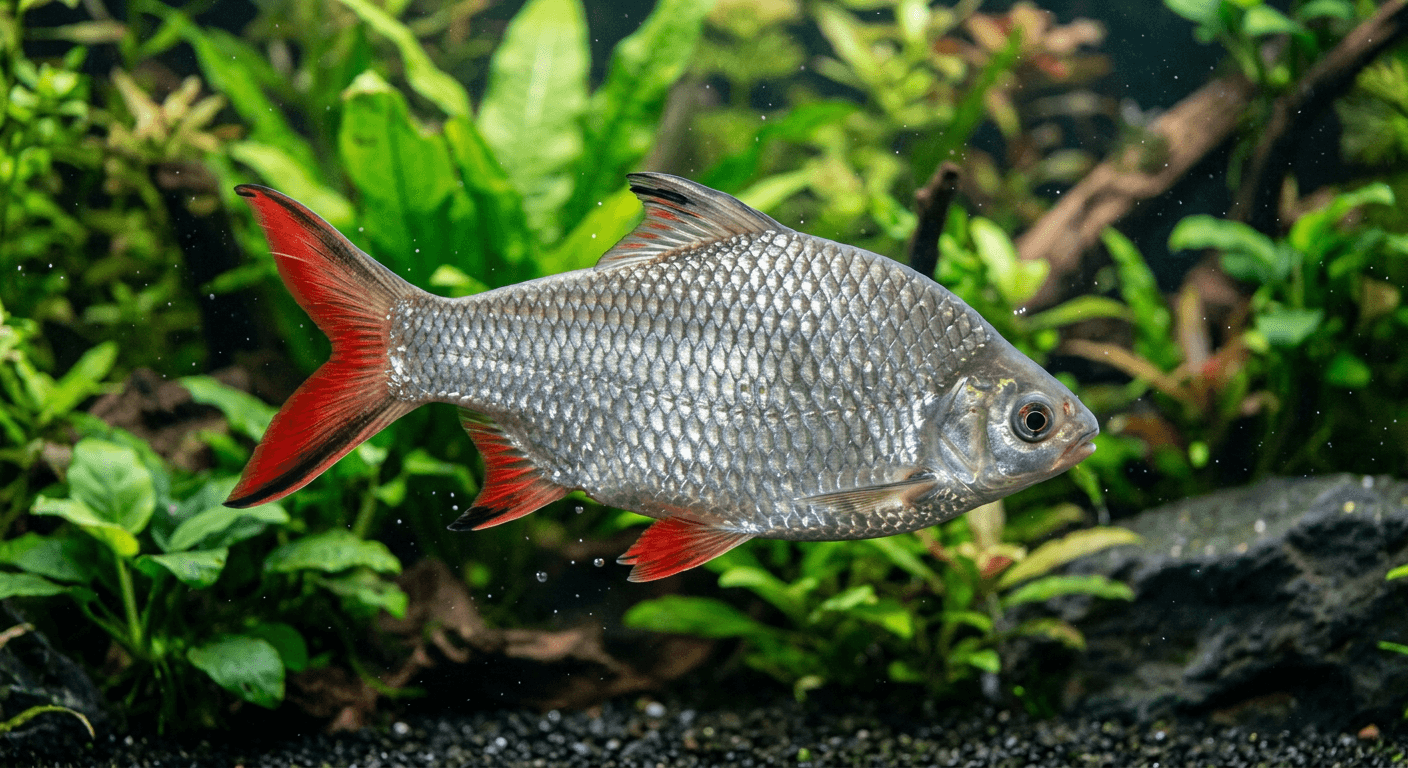
Tinfoil Barb
Barbonymus schwanenfeldii
Overview
The Tinfoil Barb is one of those fish that looks perfectly manageable at the pet store and then grows into a 14-inch monster. Juveniles are sold at 2-3 inches with bright silver scales and red-tipped fins, which makes them appealing. But these fish get big fast, and a school of five adults needs a tank measured in feet, not inches. For keepers with the space, they are impressive, active fish with a long lifespan. For anyone without at least a 75-gallon long tank, there are better choices.
Tank Setup
A 75-gallon tank is the absolute minimum for a small group, and a 125-gallon or larger is more appropriate for adults. The tank needs to be at least 6 feet long to give them room to swim. Use a powerful canister filter since these fish produce a lot of waste. Keep decor minimal because Tinfoil Barbs are clumsy and will knock over anything that is not secured. Skip live plants entirely — they will eat or uproot every plant in the tank. Smooth gravel or sand substrate works fine. A secure, heavy lid is mandatory because they jump.
Water Parameters
Tinfoil Barbs are not fussy about water chemistry. They prefer a pH between 6.5 and 7.5 and temperatures between 72 and 77 degrees Fahrenheit. What matters more is water volume and filtration turnover. With the bioload of five large barbs, you need a filter rated for at least twice the tank volume, and weekly 30-40% water changes are non-negotiable. Ammonia and nitrite must stay at zero. Nitrates should remain below 40 ppm, though lower is always better.
Diet & Feeding
These are true omnivores with large appetites. They eat flakes, pellets, vegetables, fruit, and anything else that fits in their mouth. Feed a high-quality cichlid pellet as the staple. Supplement with blanched romaine lettuce, zucchini, peas, and occasional treats of frozen bloodworms or shrimp. They eat quickly and aggressively, so slower tankmates may need to be fed separately. Feed once or twice daily. Overfeeding is a real risk given how eagerly they eat.
Behavior & Temperament
Tinfoil Barbs are peaceful for their size but will swallow anything small enough to fit in their mouth. They are not predatory or aggressive — they just do not distinguish between food and a small fish. In a school of five or more they are active and entertaining, constantly cruising back and forth. They startle easily and can injure themselves thrashing against the glass or lid when spooked. Position the tank away from high-traffic areas and loud noises. A startled school of large barbs can crack a heater or knock a lid off.
Compatible Tankmates
Tankmates need to be too large to eat and tolerant of the Tinfoil Barbs' constant activity. Bala sharks, silver dollars, clown loaches, large plecos, and similarly sized cichlids like severums work well. Oscars can work if the tank is large enough and the barbs are kept in a school. Avoid anything under 3 inches — tetras, small rasboras, shrimp, and small catfish will eventually become snacks. Avoid slow, delicate fish that will get stressed by the barbs' boisterous swimming.
Common Health Issues
Tinfoil Barbs are robust fish that rarely get sick if water quality is maintained. The biggest health risk is physical injury from panicking and crashing into the glass. Ich can occur after sudden temperature drops, especially during water changes. Hole-in-the-head disease sometimes develops in large barbs kept in tanks that are too small with poor water quality. Internal parasites can be an issue with wild-caught specimens. Feed a varied diet and maintain clean water, and these fish usually stay healthy for a decade or more.
Breeding
Breeding Tinfoil Barbs in a home aquarium is impractical. They need enormous tanks, are egg scatterers that produce thousands of eggs, and adults eat the eggs immediately. Commercial breeding is done in large ponds in Southeast Asia. If you somehow have a group spawning in a home tank, the eggs hatch in about 48 hours and fry need infusoria followed by baby brine shrimp. Realistically, breeding this species is a commercial operation, not a home project.
Tankmates to Avoid
These species don't mix well with Tinfoil Barb. Tap a name for the full breakdown.
Frequently Asked Questions
Quick Stats
What You Need for Tinfoil Barb
Gear that works well for this species, based on what experienced keepers actually use.