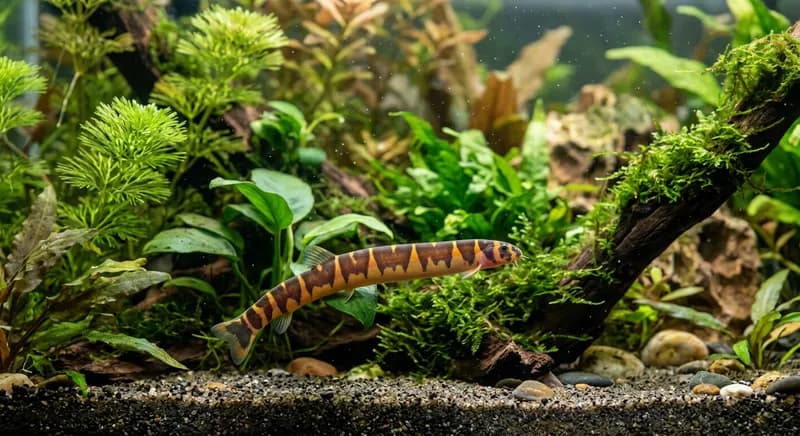
Kuhli Loach
Pangio kuhlii
Overview
Kuhli loaches are the weirdest fish you will fall in love with. They look like tiny striped eels, squeeze into impossible hiding spots, and come out at night to wriggle through the sand looking for food. Most new owners buy 3, never see them, and assume they died. They did not. They are just hiding. Buy 6 or more, give them sand substrate and plenty of cover, and eventually you will see a pile of noodle-like fish tangled together in their favorite corner. They can live over 10 years, making them one of the longest-lived community fish available.
Tank Setup
Sand substrate is non-negotiable for kuhli loaches. They burrow into it, sift through it, and sleep partially buried. Gravel can trap and injure them, and sharp-edged substrates can damage their scaleless skin. Pool filter sand, play sand (rinsed thoroughly), or aquarium sand all work. The tank needs lots of hiding spots: driftwood with crevices, rock caves, dense plant roots, and leaf litter. Kuhlis love to squeeze into tight spaces, so do not be surprised when you find one inside a filter intake, behind a heater, or in a spot you did not think a fish could reach. Cover all filter intakes with pre-filter sponges or foam. A tight-fitting lid is also essential since kuhlis can and will escape through small gaps. A 15-gallon tank is the minimum for a group of 6, but a 20-gallon long gives them more floor space to explore.
Water Parameters
Temperature between 73-86 degrees Fahrenheit, with 78 being comfortable for most setups. This wide range makes kuhlis compatible with both cooler community tanks and warmer setups with rams or bettas. pH from 5.5 to 7.0, with a preference for slightly acidic conditions. Soft to moderate water hardness is ideal. Kuhlis are surprisingly tolerant of different water conditions once acclimated, but they are sensitive to ammonia and nitrite spikes. Weekly 25% water changes are standard. Because they spend so much time in and on the substrate, keeping the sand clean is important. Use a turkey baster or gently hover a gravel vacuum just above the surface to remove debris without disturbing buried kuhlis.
Diet & Feeding
Kuhlis are nocturnal scavengers that eat pretty much anything that sinks. Sinking pellets, wafers, frozen bloodworms, frozen brine shrimp, and live blackworms are all accepted eagerly. The trick is making sure food actually reaches them. In a community tank, daytime feeders often eat everything before the kuhlis come out at night. Drop sinking food in after lights-out, or use a feeding dish placed near their favorite hiding spot. Feed a small amount every evening. Kuhlis are not gluttons, but they do need consistent access to food since they will not compete with aggressive daytime feeders. Blanched veggies like zucchini are occasionally picked at, but protein-based sinking foods are their preference.
Behavior & Temperament
Kuhlis are nocturnal, secretive, and completely peaceful. During the day they hide, sometimes in groups, sometimes individually. At night they come alive, wiggling across the sand, investigating every crevice, and occasionally swimming mid-water in what looks like a joyful loach dance. In groups under 6, they hide almost permanently. Once you have 6-8+, they become dramatically more confident and you will see them out during the day, especially near feeding time. They often pile on top of each other when resting, which looks alarming at first but is totally normal social behavior. Kuhlis ignore every other fish in the tank and are the definition of a peaceful community member.
Compatible Tankmates
Kuhlis are compatible with almost everything peaceful. Tetras, guppies, bettas (in 15+ gallons), pygmy corydoras, otocinclus, bristlenose plecos, cherry shrimp, amano shrimp, and snails are all great companions. German blue rams can work since both appreciate warm soft water, but make sure the ram does not claim the kuhlis' hiding spots. Angelfish are the main fish to avoid since adult angels may harass or try to eat smaller kuhlis, and the size difference creates stress. Any aggressive or large cichlid is a poor match. The ideal kuhli tankmates are calm, mid-water to surface fish that leave the bottom alone.
Common Health Issues
Kuhli loaches are scaleless fish, which makes them more sensitive to medications and salt. Never use copper-based treatments or aquarium salt with kuhlis in the tank. If you need to medicate, use half-doses initially and watch for adverse reactions, or move the kuhlis to a separate tank first. Ich is the most likely disease, showing up as white spots on their striped bodies. Raise temperature to 82-84 degrees and use a scaleless-fish-safe ich treatment. Skinny disease (internal parasites) can affect wild-caught specimens. If a kuhli is eating but getting thinner, treat with a dewormer like PraziPro mixed into food. The most common non-disease issue is simply not seeing them and assuming they are dead. Check your filter, behind decorations, and under the substrate before panicking.
Breeding
Kuhli loaches rarely breed in home aquariums, though it has been documented. They are egg scatterers, and spawning typically happens in groups rather than pairs. Females become visibly plump with green-tinted eggs visible through their translucent bellies. Spawning events are usually triggered by seasonal changes: a period of cooler water followed by warming, combined with heavy feeding of live foods. Eggs are sticky and deposited among plant roots and floating plants. The adults do not guard eggs and will eat them if found, so dense vegetation is key. Fry are tiny and extremely difficult to raise. Most successful kuhli breeding happens accidentally in mature, heavily planted tanks with large groups. If breeding kuhlis is your goal, start with 10+ in a species-only setup and be very patient.
Tankmates to Avoid
These species don't mix well with Kuhli Loach. Tap a name for the full breakdown.
Frequently Asked Questions
Quick Stats
Related Guides
Compare
What You Need for Kuhli Loach
Gear that works well for this species, based on what experienced keepers actually use.
Ultra-fine, smooth sand that kuhlis can safely burrow through. No sharp edges to damage their scaleless skin. Light color makes it easy to spot them when they emerge.
Dense sinking wafers that reach the bottom where kuhlis feed. Will not dissolve too quickly, so nocturnal fish still find intact food hours later.
Kuhlis are notorious for squeezing into filter intakes. A pre-filter sponge prevents this while still allowing flow. Essential safety equipment for any tank with loaches.
Release tannins that soften water and lower pH, matching kuhli loach preferences. Kuhlis love hiding under decomposing leaves, and the biofilm that grows on them becomes a food source.