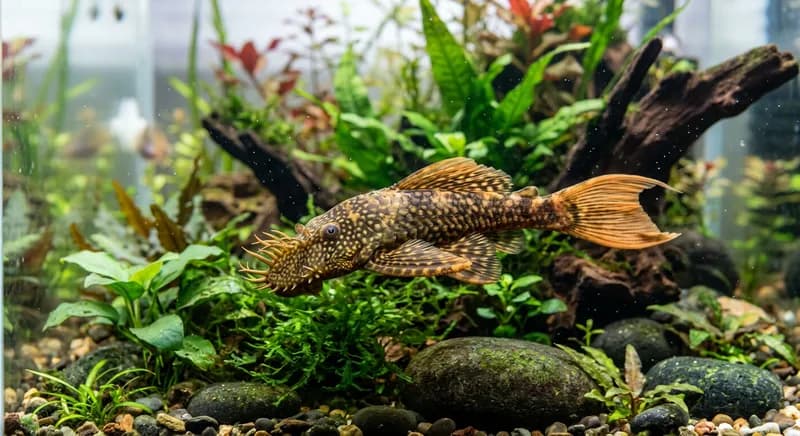
Bristlenose Pleco
Ancistrus sp.
Comparing options?
Bristlenose Pleco vs Common Pleco: size and tank needs
Not all plecos fit the same tank. Compare adult size, bioload, and which one makes sense for most home aquariums.
Overview
The bristlenose pleco is the algae eater that actually earns its keep. Unlike common plecos that grow to 18+ inches and destroy planted tanks, bristlenoses stay at a manageable 4-6 inches and genuinely eat algae throughout their lives. Males develop the distinctive bushy tentacles on their nose that give the species its name. They are tank-bred in huge numbers, incredibly hardy, and compatible with nearly everything. If you want a single addition to help manage algae in a community tank, this is the fish.
Tank Setup
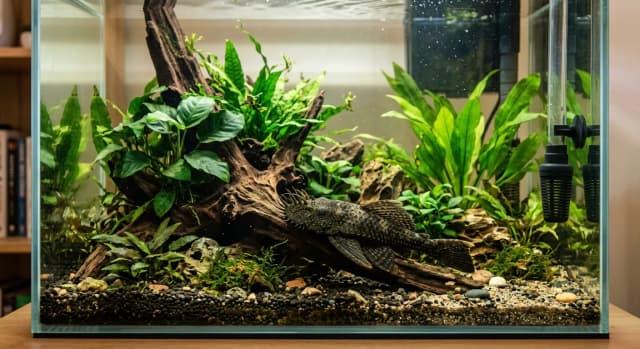
A well-setup aquarium suited to Bristlenose Pleco
A 20-gallon tank is the minimum for one bristlenose. They produce a surprising amount of waste for their size, so larger tanks keep water quality more stable. Provide at least one piece of driftwood since bristlenoses rasp on it and may need the lignin for digestion. Caves and hiding spots are essential, especially if you have more than one. PVC pipes, coconut shells, and aquarium-specific caves all work. They are nocturnal and spend most of the day hiding, coming out at dusk to graze. Sand or gravel substrate is fine. Live plants are compatible since bristlenoses do not eat healthy plants (they prefer algae on the glass and surfaces). Good filtration is important because these fish are messy. A hang-on-back or canister filter rated for your tank size is recommended.
Water Parameters
Bristlenoses are not fussy. Temperature between 73-81 degrees Fahrenheit, pH from 6.5 to 7.5, and moderate hardness. They handle a wider range than these numbers suggest, which is why they are found in so many different community setups. Weekly 25% water changes keep nitrates in check. Because bristlenoses are heavy waste producers, skipping water changes impacts them before it impacts smaller, lighter-feeding fish. If you notice your bristlenose looking pale or inactive, check your nitrate levels first. Keep them below 20 ppm.
Diet & Feeding
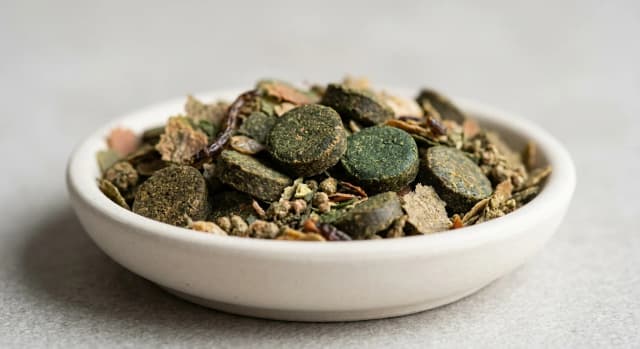
Quality nutrition supports Bristlenose Pleco health and color
This is where new owners get it wrong most often. Bristlenoses will graze algae, but a tank rarely produces enough algae to sustain them. You need to supplement their diet. Algae wafers should be the staple, dropped in after lights-out when the pleco is active. Blanched vegetables are a huge hit: zucchini, cucumber, and canned green beans (no salt added). Clip a slice of zucchini to the glass or weigh it down and leave it overnight, removing any uneaten portions the next morning. Driftwood is not just decoration. Bristlenoses rasp on it regularly and it may contribute to their digestive health. Feed one algae wafer per pleco every evening, plus veggies 3-4 times per week. Occasional protein via sinking pellets or frozen bloodworms keeps them in good condition.
Behavior & Temperament
Bristlenoses are peaceful, reclusive, and largely nocturnal. During the day you will see them suctioned to glass, driftwood, or the underside of decorations. At night they become active grazers, systematically working their way across surfaces. Males can be territorial with other males, especially around caves. Two males in a small tank will squabble, with the dominant one claiming the best hiding spots. This rarely results in injury but can stress the subordinate fish. One male per tank is the simplest approach unless you have a large setup with multiple caves. They are completely peaceful toward other species and will not bother even the smallest tankmates.
Compatible Tankmates
Bristlenose plecos are the ultimate community fish. They coexist peacefully with virtually everything. Bettas, angelfish, guppies, tetras, corydoras, kribensis, german blue rams, shrimp, and snails are all fine. The only potential issue is with other plecos or bottom-dwelling territorial fish in a cramped space. In a 30-gallon or larger tank, even this is rarely a problem. Their armor plating and nocturnal habits mean they avoid conflict naturally. The one species combination to be cautious with is multiple male bristlenoses in a tank under 30 gallons, where cave competition can cause stress.
Common Health Issues
Bristlenoses are extremely hardy. The most common issue is starvation, which sounds strange for a fish in a tank with food, but many owners assume the pleco will survive on tank algae alone. A starving bristlenose has a sunken belly and becomes increasingly pale. Feed algae wafers and vegetables consistently. Ich can occur after stress or temperature swings. Standard treatment works. Bacterial infections are rare but show up as white patches or fin erosion if water quality is poor. Bloating sometimes happens from overfeeding protein-heavy foods. Stick to a primarily vegetable-based diet. If you see a pleco with a swollen belly, cut back on bloodworms and increase veggies.
Breeding
Bristlenoses breed readily in captivity, and many hobbyists end up with fry without trying. The male claims a cave and lures the female in. She deposits a cluster of large orange eggs (20-100+) on the cave ceiling, and the male guards and fans them until they hatch in 4-10 days depending on temperature. The male is an excellent parent, staying in the cave almost constantly during this period. Fry emerge as miniature versions of the adults, complete with a small yolk sac. They eat algae, biofilm, and crushed algae wafers from day one. If you do not want fry, keep only one sex or remove caves. If you want to breed intentionally, provide a cave slightly larger than the male's body, condition both fish with protein-rich food for 2 weeks, then do a large (50%) cool water change to simulate the rainy season.
Frequently Asked Questions
Quick Stats
Related Guides
Compare
What You Need for Bristlenose Pleco
Gear that works well for this species, based on what experienced keepers actually use.
The most popular algae wafer for good reason. Sinks immediately, holds together without clouding water, and bristlenoses love them. One wafer per pleco at lights-out.
Bristlenoses rasp on driftwood constantly and may need it for digestion. Malaysian driftwood sinks easily and leaches less tannin than mopani. Get a piece big enough for the pleco to hide behind.
Purpose-built ceramic cave sized for bristlenose breeding. Smooth interior protects eggs and the entrance is just big enough for the male to guard. Also works as a regular daytime hiding spot.
Suction cup clip holds zucchini, cucumber, and lettuce against the glass for easy pleco grazing. Keeps veggies off the substrate where they rot faster.