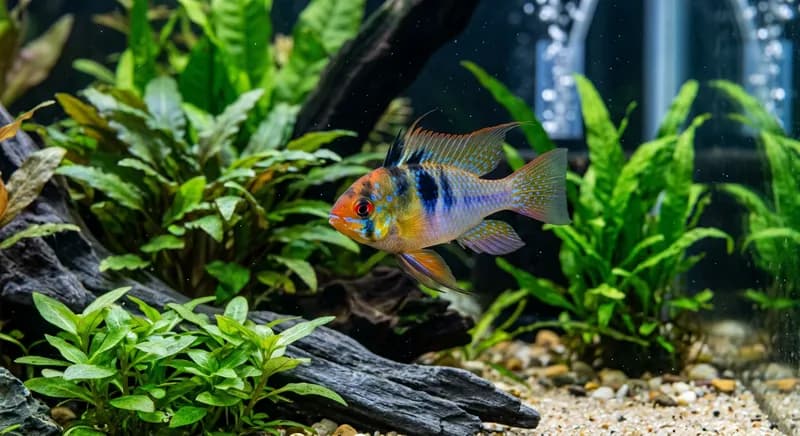
German Blue Ram
Mikrogeophagus ramirezi
Overview
The German blue ram is one of the most beautiful freshwater fish you can keep, with electric blue spangling, a red-orange face, and a black spot on its flank. But this is not a beginner fish. Rams need water warmer than almost anything else in the hobby (80-86F), soft and acidic conditions, and pristine water quality. Plenty of people buy them, lose them in 2 weeks, and blame the fish. The fish is not the problem. The setup is. Get the water right and rams will reward you with incredible color and fascinating pair-bonding behavior.
Tank Setup
A 20-gallon tank is the minimum for a single ram or a pair. Go with 30 gallons if you want them in a community. Use fine sand substrate, ideally something dark to bring out their colors. Rams spend a lot of time near the bottom, picking through sand and claiming flat rocks or small caves as territory. Driftwood and live plants are essential, both for cover and to help keep the water soft and slightly acidic. Floating plants dim the lighting, which rams prefer. They are not fans of bright open tanks. Create line-of-sight breaks with hardscape so a pair can establish territory without stressing other fish. A moderate current is fine but avoid powerheads pointed directly at their preferred area.
Water Parameters
This is where most people fail with rams. They need warm water, 80-86 degrees Fahrenheit, with 82 being ideal. This is warmer than most tropical community fish, so plan your tankmates accordingly. pH should be between 5.5 and 7.0, with 6.0-6.5 being the sweet spot. Soft water with a GH of 3-6 dGH is preferred. If your tap water is hard and alkaline, you may need to use RO water mixed with tap, or remineralized RO. Rams are extremely sensitive to nitrates. Keep them below 10 ppm, not 20 like you can get away with for hardier species. This means frequent water changes, 25-30% twice per week in a smaller tank. Always temperature-match new water carefully since even a 2-degree swing can trigger stress and disease.
Diet & Feeding
Rams are omnivores that lean carnivorous. A high-quality small pellet or micro pellet works as a staple. Supplement heavily with frozen foods: bloodworms, brine shrimp, daphnia, and cyclops. Feed small amounts twice daily. Rams are deliberate eaters, not aggressive feeders, so they can get outcompeted at mealtime. If you keep them in a community tank, make sure food reaches them by target-feeding near their territory. Live foods like baby brine shrimp are excellent for conditioning a pair for breeding. Avoid low-quality flake food as a staple since rams tend to ignore it anyway.
Behavior & Temperament
Rams are dwarf cichlids with big personalities. A bonded pair will claim a section of the tank as their own, gently chasing away intruders but rarely causing real harm. They are not aggressive in the way larger cichlids are. Think of them as territorial but polite. Males display to each other with flared fins and intensified colors, and disputes are usually settled by posturing rather than fighting. They are curious fish that will investigate your hand during water changes and learn your feeding routine quickly. Rams pair-bond, and a mated pair will often stay close together, sharing a territory and collaborating during spawning.
Compatible Tankmates
The high temperature requirement limits your options. Neon and cardinal tetras handle the warmth well and make good dither fish in a school of 10+. Bronze corydoras tolerate the upper range of ram temperatures. Bristlenose plecos are unbothered by warm water and stay out of the ram's territory. Kuhli loaches work if the tank has sandy substrate. Avoid other dwarf cichlids like kribensis in the same tank since territorial conflicts are guaranteed. Angelfish can work in a large tank (55+) but may bully rams. Bettas should not be mixed due to similar temperature needs but clashing temperaments. Cherry shrimp will coexist but rams may eat shrimplets.
Common Health Issues
Rams from pet stores have a rough reputation for dying quickly, and there are legitimate reasons for that. Many commercially bred rams are raised in antibiotics and hormones to accelerate growth, making them fragile once they hit clean home aquarium water. Buy from reputable breeders when possible. Ich is common, especially after the stress of transport. The good news is that raising temperature to 86 degrees for treatment aligns with their natural preference. Hexamita (hole-in-the-head) presents as small pits on the face and is usually caused by poor water quality or a flagellate parasite. Treat with metronidazole and improve water conditions. Bacterial infections show up as clamped fins, loss of color, and lethargy. The single best prevention is keeping nitrates low and temperatures stable.
Breeding
Rams are substrate spawners that lay eggs on flat rocks, broad leaves, or even directly on sand. A bonded pair will clean a spawning site together for days before the female deposits 100-300 small eggs. Both parents guard the eggs and fan them to keep water flowing over them. Eggs hatch in about 3 days at 82 degrees. The fry are tiny and need infusoria or liquid fry food for the first week, then baby brine shrimp. First-time parents often eat the eggs or abandon them. This is normal and they typically figure it out by the third or fourth spawn. Keeping the tank quiet and dimly lit during breeding helps reduce stress. Separate breeding tanks give the best success rates.
Tankmates to Avoid
These species don't mix well with German Blue Ram. Tap a name for the full breakdown.
Frequently Asked Questions
Quick Stats
Related Guides
Compare
What You Need for German Blue Ram
Gear that works well for this species, based on what experienced keepers actually use.
Naturally lowers pH and softens water, exactly what rams need. Dark color makes their blue and orange pop.
Precise temperature control is critical for rams. The Jager holds within 0.5 degrees and the adjustment dial goes up to 93F, plenty of headroom for the 82-84F these fish need.
Sinking sticks that mimic bloodworm movement as they fall. Rams go crazy for these and the high protein content supports vibrant coloring.
Rams cannot tolerate nitrate spikes. You need accurate liquid tests, not strips, to keep parameters in check. Test at least twice a week.