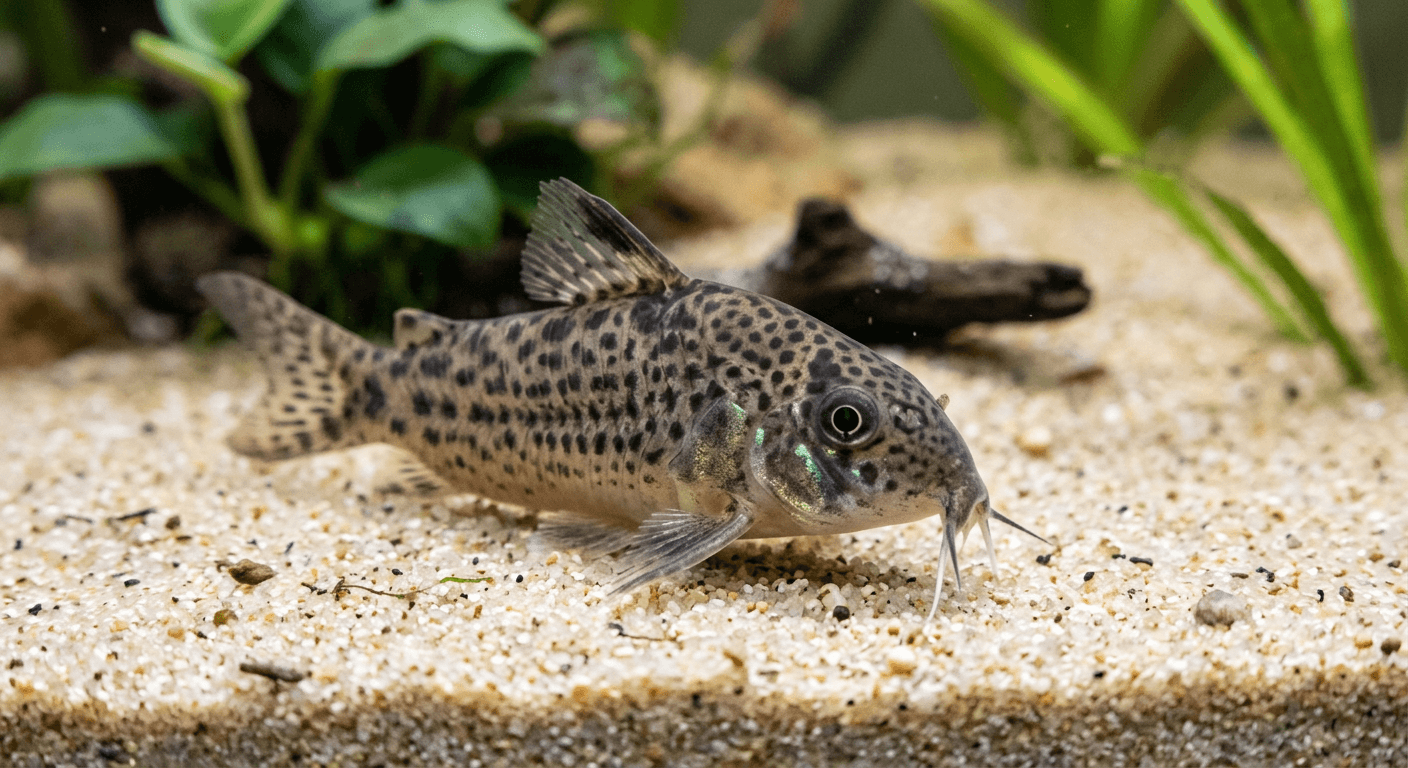
Peppered Corydoras
Corydoras paleatus
Overview
The Peppered Corydoras is one of the most common and hardiest cory catfish in the hobby. They get their name from the irregular dark patches scattered across their pale silver body, like someone shook a pepper grinder over them. They are peaceful, active bottom feeders that spend their days scooting along the substrate in a group, sifting through sand for food. They were one of the first tropical fish ever bred in captivity, and they remain a staple of community tanks for good reason — they are tough, friendly, and genuinely useful at cleaning up leftover food.
Tank Setup
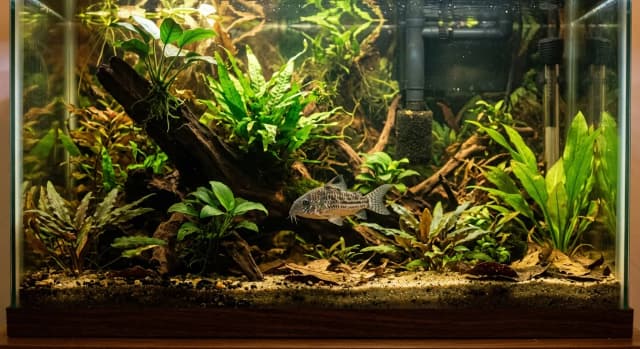
A well-setup aquarium suited to Peppered Corydoras
A 10-gallon tank works for a group of six, but a 20-gallon gives them more foraging space and is easier to maintain. The most important thing is the substrate: use fine sand or smooth, rounded gravel. Corydoras have delicate barbels that get damaged and infected on sharp gravel, and once those barbels erode, the fish struggles to find food. Add some driftwood, smooth stones, and plants for cover. They appreciate a few shady spots to rest under. Filtration should provide clean water without blasting the bottom with current — a sponge filter or gentle hang-on-back filter works well.
Water Parameters
Peppered Corydoras are adaptable and handle a pH range from 6.0 to 7.5. Temperature should stay between 72 and 79 degrees Fahrenheit. They tolerate the cooler end of the tropical range better than most corydoras species. Weekly 25% water changes keep the substrate clean, which matters because they spend all their time on the bottom where waste accumulates. Keep ammonia and nitrite at zero and nitrates below 30 ppm. They are sensitive to salt, so avoid adding aquarium salt to tanks with corydoras.
Diet & Feeding
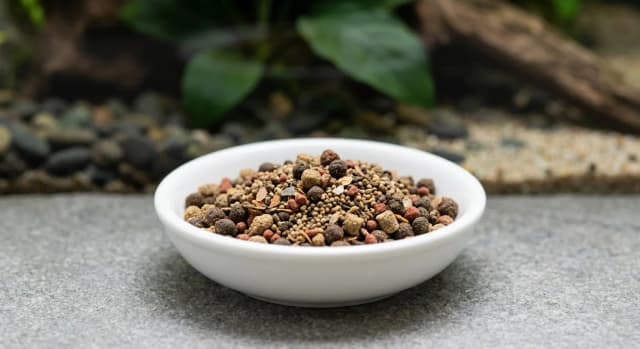
Quality nutrition supports Peppered Corydoras health and color
Corydoras are not just scavengers that eat leftovers, despite what many people think. They need their own food. Sinking pellets and wafers designed for bottom feeders should be the staple. Supplement with frozen bloodworms, brine shrimp, and blanched zucchini. They feed primarily at dawn and dusk, so dropping food in just before lights-out is effective. They use their barbels to root through the substrate for food, which is why sand substrate is so important. Make sure food reaches the bottom and is not intercepted by faster mid-level fish.
Behavior & Temperament
Peppered Corydoras are social fish that should always be kept in groups of at least six. A lone cory hides and stresses. In a group they are constantly active, moving across the substrate together, occasionally darting to the surface to gulp air (this is normal — they are facultative air breathers). They are completely peaceful and will not bother any other fish. They sometimes school with other corydoras species, which is fun to watch. They rest on the bottom in groups during quiet periods, stacking up on each other in a pile.
Compatible Tankmates
Peppered Corydoras are compatible with almost any peaceful community fish. Tetras, rasboras, livebearers, gouramis, and other bottom dwellers like otocinclus and kuhli loaches all work. They even do fine with bettas in most cases, since they stay on the bottom and stay out of the betta's space. Avoid large, aggressive fish that might harass them on the bottom, like cichlids with a digging habit. Avoid anything that might eat them, and avoid fish that need salt in the water.
Common Health Issues
Barbel erosion is the most common issue, caused by sharp substrate or dirty conditions on the bottom. Switch to sand and increase gravel vacuuming frequency. Red blotch disease shows up as red sores on the belly, usually from bacterial infection linked to poor substrate hygiene. Ich can occur after temperature drops. Corydoras are sensitive to many common medications, especially those containing copper. Always check medication labels before treating a tank with corydoras. Salt-based treatments should also be avoided.
Breeding
Peppered Corydoras were among the first tropical fish successfully bred in captivity, and they remain one of the easiest corydoras to spawn. A large water change with slightly cooler water often triggers breeding. Males chase the female, and she holds a few eggs between her pelvic fins in the classic T-position before sticking them to glass, plants, or decor. Eggs hatch in 4-6 days. Adults do eat eggs, so moving eggs to a separate container improves survival. Fry are tiny but can eat microworms and baby brine shrimp right away.
Tankmates to Avoid
These species don't mix well with Peppered Corydoras. Tap a name for the full breakdown.
Frequently Asked Questions
Quick Stats
What You Need for Peppered Corydoras
Gear that works well for this species, based on what experienced keepers actually use.