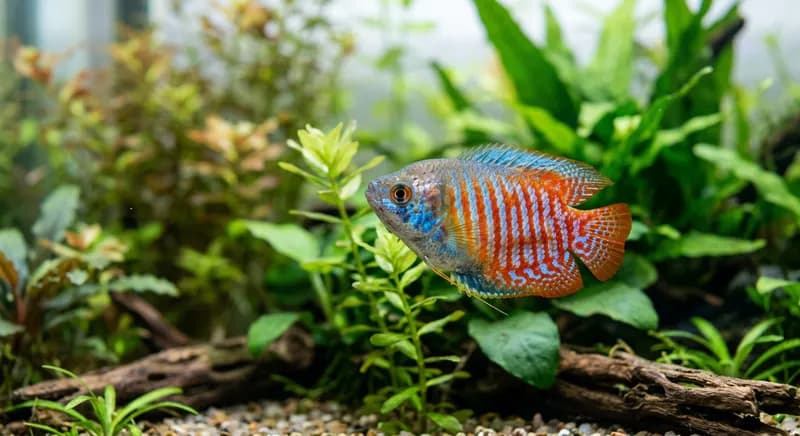
Dwarf Gourami
Trichogaster lalius
Overview
Dwarf gouramis are gorgeous fish. Males come in electric blue, flame red, and powder blue varieties that look almost too colorful to be real. They are labyrinth breathers, meaning they gulp air from the surface like bettas. In a well-planted tank, a male dwarf gourami is one of the most eye-catching centerpiece fish you can keep. But there is a catch, and it is a big one: Dwarf Gourami Iridovirus (DGIV). This virus is widespread in commercially bred stock, especially from mass-production farms in Southeast Asia. Some estimates put infection rates at 20% or higher in imported fish. There is no cure, and infected fish typically die within weeks to months. This single issue bumps the difficulty rating up and makes buying from a reputable breeder or local hobbyist worth the extra cost. If you can find a healthy specimen, they are rewarding fish. Just go in with your eyes open.
Tank Setup
A 10-gallon tank works for a single dwarf gourami, but 20 gallons gives you room for tankmates and more stable water. These fish like densely planted tanks with floating plants that dim the light and provide surface cover. They will spend time at all levels but frequently visit the surface to breathe air. Use a gentle filter, either a sponge filter or an HOB with a baffle. Strong currents stress them. Driftwood and tall plants like vallisneria or water sprite create the kind of broken sightlines they prefer. Keep a lid on the tank because they do jump, especially when startled.
Water Parameters
Keep the temperature between 72-82 degrees Fahrenheit, with 78 being the sweet spot. pH can range from 6.0 to 7.5, and most tap water works fine after conditioning. Because they are labyrinth breathers, they need access to the surface, so avoid setups where surface flow is too strong. Weekly 25% water changes are the baseline. These fish are sensitive to poor water quality, and ammonia spikes will make a DGIV-prone fish deteriorate fast. Test your water regularly, especially in the first few months after bringing one home.
Diet & Feeding
Dwarf gouramis eat just about anything. A quality micro pellet or small flake forms a solid base. Supplement 2-3 times per week with frozen bloodworms, frozen brine shrimp, or frozen daphnia. They will also pick at algae and biofilm on plant leaves. Feed a small pinch twice daily, enough that everything is eaten in about 90 seconds. These fish are mid-to-top feeders and may be outcompeted by faster tankmates if you dump food in one spot. Spread it around or use a feeding ring.
Behavior & Temperament
Males are territorial toward other gouramis and occasionally toward similarly shaped fish. Keeping two males together in anything under 30 gallons is asking for trouble because the dominant one will relentlessly harass the other. A single male in a community tank is the most common approach. Females are duller in color but much more peaceful. Dwarf gouramis are generally calm with non-gourami tankmates, though some individuals will chase smaller fish during feeding. They tend to pick a favorite spot in the tank and patrol it throughout the day. You will often see them "feeling" around with their modified pelvic fins, which work like feelers.
Compatible Tankmates
Small, peaceful species work best. Corydoras (bronze, panda, or pygmy) are great bottom dwellers that stay out of the gourami's territory. Harlequin rasboras, ember tetras, and cherry barbs are all calm enough to coexist. Nerite and mystery snails are completely safe. Avoid other gouramis in the same tank unless you have 30+ gallons with heavy planting. Do not keep with bettas because they occupy the same space and will fight. Skip aggressive or nippy species like tiger barbs. Long-finned fish like guppies can become targets too.
Common Health Issues
Dwarf Gourami Iridovirus (DGIV) is the elephant in the room. Symptoms include loss of color, lethargy, fin clamping, abdominal swelling, and skin lesions. It is fatal and there is no treatment. Quarantine new dwarf gouramis for 2-4 weeks before adding them to your display tank. Beyond DGIV, they are susceptible to ich, bacterial infections, and fin rot, all of which respond to clean water and standard medications. Hole-in-the-head disease occasionally appears, linked to poor water quality and vitamin deficiency. If you notice pitting around the head, improve water quality immediately and consider adding vitamin-enriched foods.
Breeding
Males build bubble nests at the surface, often anchoring them under floating plants or leaves. Breeding is straightforward if you have a healthy pair. Condition both fish with high-protein foods for a week or two. The male wraps around the female during spawning and catches the eggs, placing them in the bubble nest. He guards the nest aggressively, so remove the female after spawning. Eggs hatch in 24-36 hours. Fry are tiny and need infusoria or liquid fry food for the first week before graduating to baby brine shrimp. The male should be removed once fry are free-swimming.
Tankmates to Avoid
These species don't mix well with Dwarf Gourami. Tap a name for the full breakdown.
Frequently Asked Questions
Quick Stats
Related Guides
Compare
What You Need for Dwarf Gourami
Gear that works well for this species, based on what experienced keepers actually use.
Gentle flow that will not stress a labyrinth breather. The sponge surface doubles as biological filtration.
Small enough for gourami mouths, high protein content, and they sink slowly so mid-level feeders can grab them.
Adjustable temperature dial lets you dial in 78 degrees precisely. Available in sizes that fit 10-20 gallon tanks.
Liquid tests are far more accurate than strips. You need reliable readings, especially with DGIV-vulnerable fish where water quality is critical.