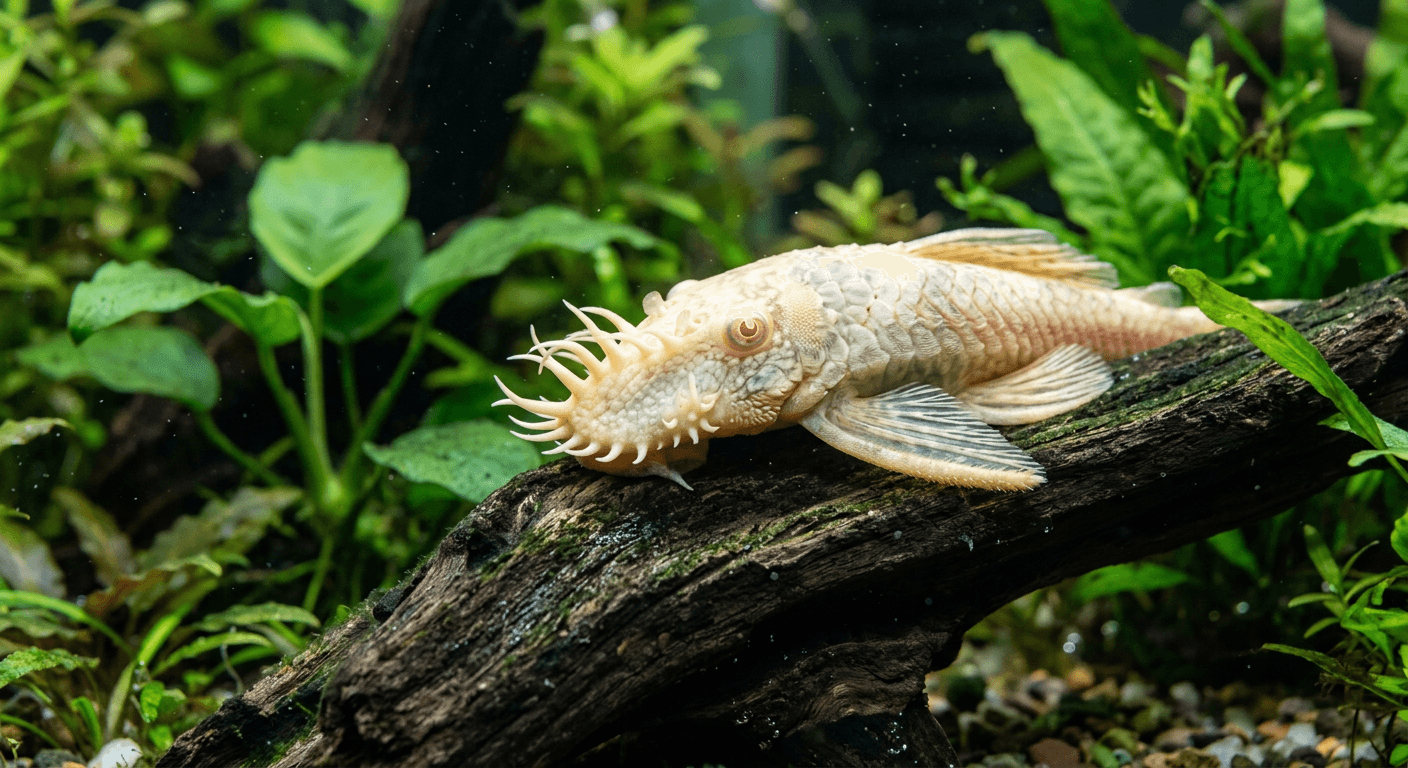
Albino Pleco
Ancistrus sp.
Overview
The Albino Pleco is the pale-colored variant of the Bristlenose Pleco, one of the most popular algae-eating catfish in the hobby. They have the same hardy constitution, manageable size, and useful algae-grazing habits as their standard-colored counterparts, just in a pale yellow-white package. Unlike the Common Pleco that grows to 15+ inches, Albino Bristlenose Plecos top out around 5 inches, making them suitable for medium-sized community tanks. Males develop the distinctive bristle-like tentacles on their snouts that give the species its name.
Tank Setup
A 30-gallon tank gives an Albino Pleco enough space, though a 40-gallon is better if you have a community setup. Driftwood is essential — they rasp on it for supplemental fiber, and it provides hiding spots for daytime resting. Add a few caves or overturned clay pots as hideouts since they are nocturnal and want dark resting places during the day. Live plants are fine; these plecos do not damage healthy plants. Use sand or smooth gravel substrate. Good filtration is important because they produce a surprising amount of waste for their size.
Water Parameters
Albino Plecos handle a pH range from 6.0 to 7.5 and temperatures between 72 and 82 degrees Fahrenheit. They are not fussy about water hardness. What matters most is water quality — regular water changes and a filter with good mechanical filtration. They are bottom dwellers that sit in the waste zone, so keeping the substrate clean with regular gravel vacuuming is important. Weekly 25% water changes are standard. They need well-oxygenated water, so surface agitation or an air stone helps.
Diet & Feeding
Despite their reputation as algae eaters, they cannot live on algae alone. Feed sinking algae wafers as the staple, supplemented with blanched vegetables like zucchini, cucumber, spinach, and sweet potato. They also eat frozen bloodworms and sinking pellets. Driftwood should always be available in the tank since they rasp on it for fiber and it aids their digestion. Feed in the evening when they become active. A well-fed Albino Pleco still grazes on algae throughout the night, keeping surfaces cleaner than they would be otherwise.
Behavior & Temperament
Albino Plecos are peaceful, solitary fish that mostly come out at night. During the day they wedge themselves into caves, under driftwood, or behind the filter. At night they cruise the tank grazing on surfaces. Males can be territorial toward other plecos, especially around caves, but they ignore other species entirely. Two males in the same tank will compete for the best cave, so provide more caves than plecos. Females are less territorial. They are not social fish and do fine kept singly.
Compatible Tankmates
Almost any peaceful community fish works. Tetras, rasboras, livebearers, gouramis, corydoras, and peaceful cichlids are all compatible. They ignore shrimp and snails. Avoid keeping them with Common Plecos, which may bully them over territory, and avoid large aggressive cichlids that might harass them. Since they are nocturnal, they rarely interact with daytime-active tankmates. Multiple Albino Plecos in the same tank need multiple caves to prevent territorial disputes between males.
Common Health Issues
Albino Plecos are hardy but susceptible to a few issues. Malnutrition is surprisingly common — owners assume algae is enough food and do not supplement. A skinny pleco with a concave belly needs more food. Ich can occur but is less visible on their pale bodies, so watch for flashing (rubbing against surfaces). Without driftwood, they may develop digestive problems. Their albino coloring means they are more sensitive to bright light, which is another reason they hide during the day. Bacterial infections can develop if the substrate stays dirty.
Breeding
Albino Bristlenose Plecos are among the easiest fish to breed. Males clean a cave and lure females inside. After the female deposits eggs on the ceiling of the cave, the male guards them, fanning them with his fins to prevent fungus. Eggs hatch in 4-10 days depending on temperature. The fry absorb their yolk sac over several days, then begin eating biofilm and crushed algae wafers. Males are dedicated parents and will defend the eggs aggressively. A single pair in a well-fed tank with good caves may breed repeatedly without any special effort from the keeper.
Tankmates to Avoid
These species don't mix well with Albino Pleco. Tap a name for the full breakdown.
Frequently Asked Questions
Quick Stats
What You Need for Albino Pleco
Gear that works well for this species, based on what experienced keepers actually use.