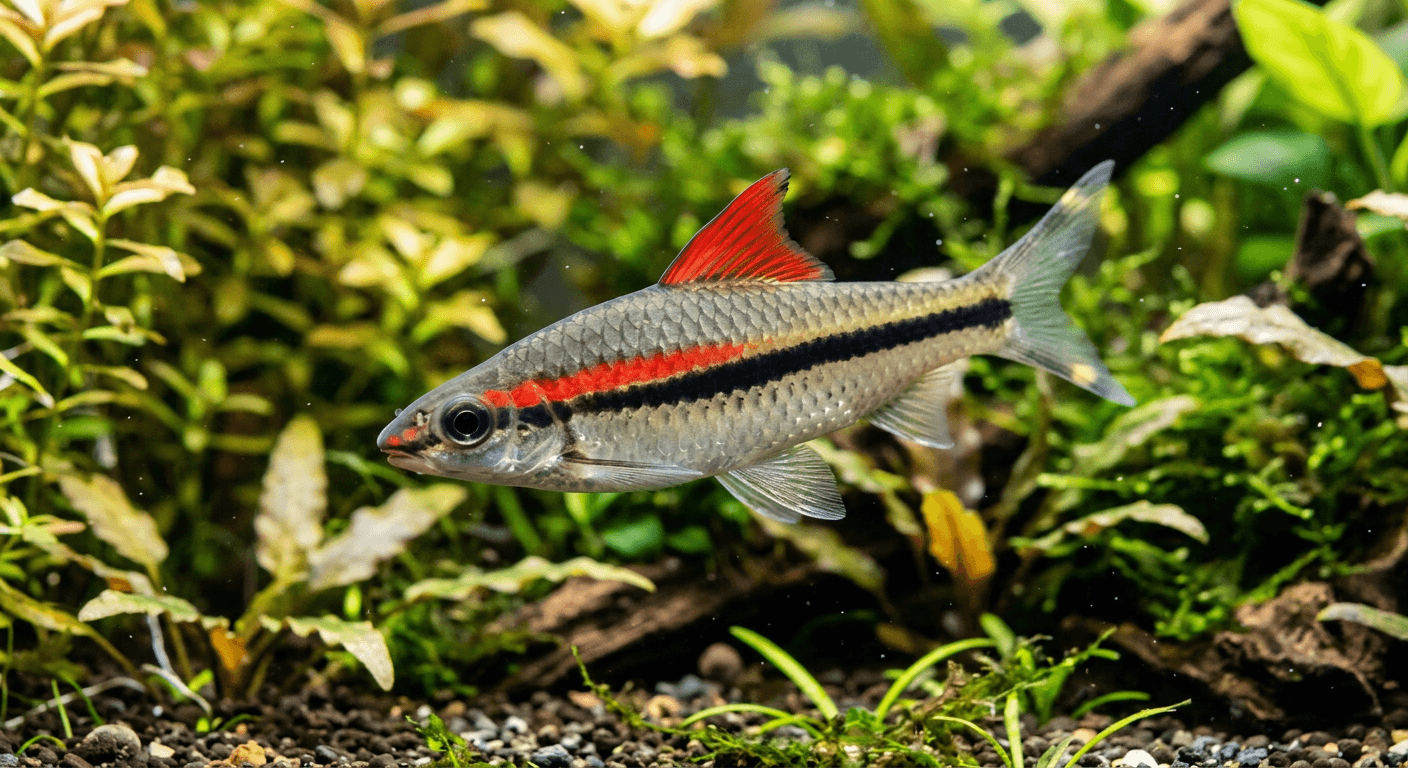
Denison Barb
Sahyadria denisonii
Overview
The Denison Barb, also sold as the Roseline Shark or Red-Line Torpedo Barb, is one of the most striking freshwater fish available. A bold red stripe runs from the snout through the eye, set against a silver body with a black horizontal line and yellow-tipped forked tail. They are active, fast swimmers that look incredible in a school of six or more darting through a planted tank. Originally from the Western Ghats rivers in India, they prefer cooler water than most tropical fish, which opens up some interesting tankmate options.
Tank Setup
These are fast, active swimmers that need a tank at least 4 feet long. A 30-gallon is the bare minimum for a small group, but a 55-gallon or larger is much better. Use a canister filter or powerhead to create moderate to strong current since they come from flowing rivers. Smooth river stones, driftwood, and hardy plants like java fern and anubias work well. Leave plenty of open swimming space along the length of the tank. A tight-fitting lid is essential because Denison Barbs are known jumpers, especially when startled.
Water Parameters
One of the more unusual things about Denison Barbs is their tolerance for cooler water. They thrive between 60 and 77 degrees Fahrenheit, with the low 70s being ideal. This means you may not need a heater depending on your room temperature. pH should be between 6.5 and 7.8. They prefer well-oxygenated water with good flow. Weekly 25-30% water changes are important since they are sensitive to nitrate buildup. Keep nitrates below 20 ppm for best health and color.
Diet & Feeding
Denison Barbs are enthusiastic omnivores. They accept flakes, pellets, frozen bloodworms, brine shrimp, and blanched vegetables like zucchini and spinach. In the wild they eat algae, small invertebrates, and plant matter. A varied diet brings out their best coloration. Feed twice daily in amounts they finish within a couple of minutes. They are fast eaters and may outcompete slower tankmates at feeding time, so watch for this if you keep them with more timid species.
Behavior & Temperament
These barbs are peaceful but extremely active. They spend most of their time zipping back and forth across the tank. In a school of six or more they stay calmer and display better color. A lone Denison Barb or a pair often becomes stressed and may hide. They are not aggressive toward other species, though their speed and size means very small fish might get accidentally bumped around. They do not nip fins despite being barbs.
Compatible Tankmates
Good tankmates include other active, peaceful fish that can handle similar temperatures. Cherry barbs, rosy barbs, zebra danios, giant danios, and rainbowfish all work well. Bottom dwellers like corydoras and kuhli loaches are fine since they stay out of each other's way. Peaceful cichlids like bolivian rams and keyhole cichlids are compatible. Avoid very small or delicate species like chilli rasboras and celestial pearl danios, which can get stressed by the constant activity. Avoid large predators.
Common Health Issues
Denison Barbs are fairly hardy but sensitive to poor water quality. High nitrate levels cause loss of color and lethargy. Ich can occur when temperatures drop too quickly or during transport stress. They are also prone to skin flukes in water with low oxygen levels, so good surface agitation matters. Bacterial infections occasionally appear as red streaks or sores, usually linked to injuries from jumping into the lid or from sharp decorations. Use smooth-edged decor and keep water clean to prevent most issues.
Breeding
Breeding Denison Barbs in home aquariums is rare and considered difficult. They are egg scatterers that reportedly need specific water conditions, including soft, slightly acidic water and a temperature drop to trigger spawning. Most commercially available fish are either wild-caught or bred in large outdoor ponds in Southeast Asia using hormone injections. If you want to attempt breeding, a separate planted tank with fine-leaved plants and pristine water quality gives the best chance. Remove adults after spawning since they will eat the eggs.
Tankmates to Avoid
These species don't mix well with Denison Barb. Tap a name for the full breakdown.
Frequently Asked Questions
Quick Stats
Related Guides
What You Need for Denison Barb
Gear that works well for this species, based on what experienced keepers actually use.