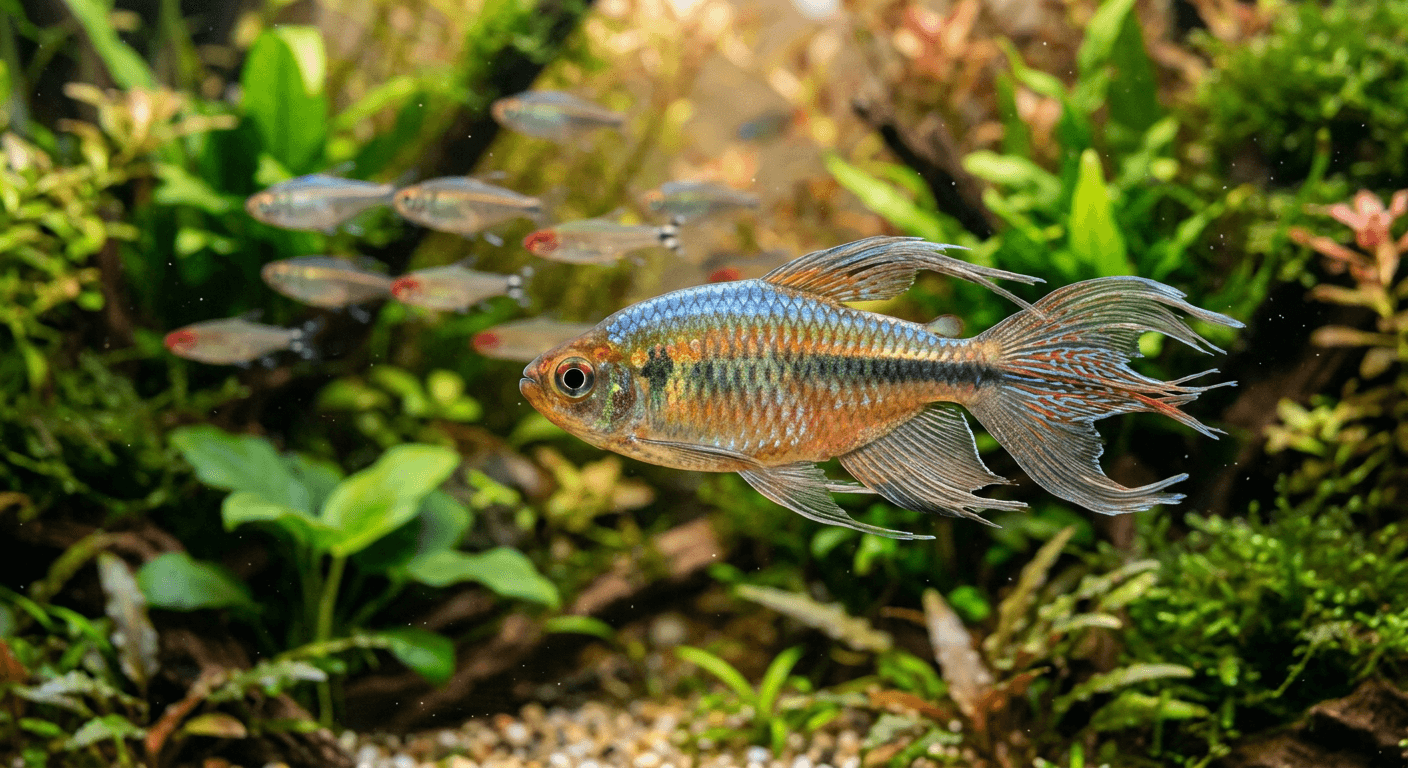
Congo Tetra
Phenacogrammus interruptus
Overview
The Congo Tetra is one of the showiest tetras you can keep. Males develop long, flowing fins and an iridescent shimmer that shifts through blue, green, gold, and orange depending on the light. They come from the Congo River basin in central Africa and do best in groups of six or more in a well-planted tank. Unlike many smaller tetras, Congos have real visual presence at around 3 inches and fill out the mid-level of a community tank nicely.
Tank Setup
A 30-gallon tank is the minimum for a school of six, but 55 gallons gives them more swimming room and lets the males color up better. Use a dark substrate to bring out their iridescence. Floating plants and tall background plants help diffuse light and make them feel secure. They appreciate moderate current from a hang-on-back or canister filter. Leave open swimming space in the middle of the tank. They are not destructive with plants, but softer-leaved species sometimes get nibbled if the fish are underfed.
Water Parameters
Congo Tetras prefer slightly acidic to neutral water with a pH between 6.0 and 7.5. Temperature should stay between 73 and 82 degrees Fahrenheit, with 77 being a good target. They come from soft water habitats and do best with lower hardness, though they adapt to moderately hard water. Weekly 25% water changes keep things stable. Good filtration matters since a school of six produces a fair amount of waste.
Diet & Feeding
These are omnivores that eat just about anything. A quality flake or micro pellet works as the daily staple. Supplement with frozen or live foods like bloodworms, brine shrimp, and daphnia a few times per week. They feed in the middle water column and are not shy eaters, but they can get outcompeted by faster or more aggressive feeders. Feed twice daily in amounts they finish within two minutes.
Behavior & Temperament
Congo Tetras are peaceful and somewhat timid for their size. They startle easily and may hide behind plants when they feel threatened. Keeping them in groups of six or more brings out their confidence and their color. Males will display to each other by flaring their fins, but these interactions are harmless posturing. They do not bother other fish, though very small shrimp fry might get eaten. A well-settled school that feels safe will spend most of its time in open water, showing off.
Compatible Tankmates
Congos work well with other peaceful community fish of similar size. Good choices include other medium tetras, rasboras, corydoras, peaceful barbs like cherry barbs, and peaceful cichlids like bolivian rams or keyhole cichlids. They pair well with rainbowfish since both enjoy similar conditions. Avoid keeping them with fin nippers like tiger barbs or serpae tetras, since male Congos have flowing fins that are easy targets. Avoid large predatory cichlids that could eat them.
Common Health Issues
Congo Tetras are relatively hardy once established but can be sensitive during the first week or two after introduction. Ich is the most common issue, typically triggered by temperature swings during transport. Fin rot can develop if water quality slips, which is especially noticeable on the males' elongated fins. Columnaris occasionally shows up as white patches on the body. Maintaining stable temperatures and clean water prevents most problems. Quarantine new arrivals for two weeks before adding them to an established tank.
Breeding
Breeding Congo Tetras is possible in home aquariums but takes some effort. They are egg scatterers that spawn over fine-leaved plants or spawning mops. The eggs are large for a tetra, sticky, and slightly amber-colored. Adults will eat eggs and fry if given the chance, so a separate breeding tank with a mesh bottom or dense plant cover is ideal. Eggs hatch in about six days, and fry are large enough to take baby brine shrimp right away. Condition breeding pairs with plenty of live food beforehand.
Tankmates to Avoid
These species don't mix well with Congo Tetra. Tap a name for the full breakdown.
Frequently Asked Questions
Quick Stats
Related Guides
What You Need for Congo Tetra
Gear that works well for this species, based on what experienced keepers actually use.