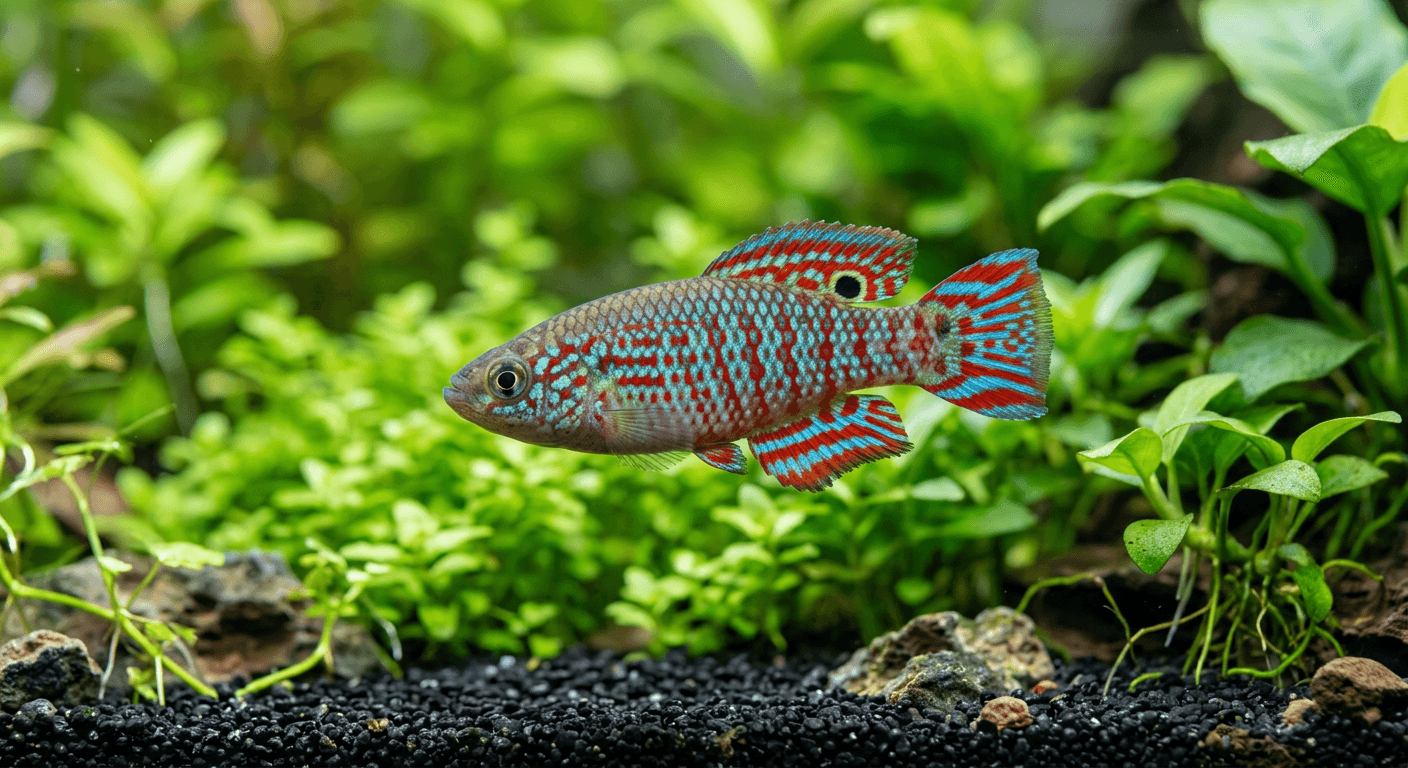
American Flagfish
Jordanella floridae
Overview
The American Flagfish is a native North American killifish found in ponds and slow streams throughout Florida. Males earn their name with a pattern of alternating red and iridescent blue-green stripes that loosely resemble the stars and stripes. They are one of the best algae-eating fish available for cooler-water setups, happily grazing on hair algae and black beard algae that most other fish ignore. They are small, hardy, and tolerant of a wide range of water conditions, though they can be scrappy with each other.
Tank Setup
A 10-gallon tank works for a single fish or a pair. For a group, step up to a 20-gallon. Dense planting is helpful because males can be territorial and plants break up sight lines. Use hardy, cool-water-tolerant plants like java moss, hornwort, and vallisneria. A dark substrate brings out the best color. Filtration can be a sponge filter or hang-on-back — they do not need strong current. A heater is usually not necessary since they prefer cooler temperatures between 64 and 72 degrees. A lid is recommended because they occasionally jump.
Water Parameters
American Flagfish are adaptable and handle a wide pH range from 6.5 to 8.0. Temperature should stay between 64 and 72 degrees Fahrenheit, which is cooler than most tropical fish. This makes them great candidates for unheated tanks in temperate climates. They tolerate moderate hardness well and are generally unfussy about water chemistry as long as it stays stable. Weekly 25% water changes keep things clean. They handle slight temperature fluctuations better than most tropical species.
Diet & Feeding
While they are technically omnivores, their real value is as algae grazers. They eat hair algae, thread algae, and even black beard algae — a type most fish will not touch. Supplement their diet with high-quality flake food, blanched vegetables like zucchini and spinach, and occasional frozen or live foods like brine shrimp and daphnia. They need a good amount of vegetable matter in their diet. A tank with natural algae growth plus supplemental feeding keeps them healthy and active.
Behavior & Temperament
Males are territorial, especially toward other males. Two males in a small tank will spar constantly, with the dominant fish chasing the subordinate into hiding. In a larger tank with plenty of cover, multiple males can coexist with occasional posturing. Females are much calmer. Toward other species they are generally fine, though they may chase or nip at slow-moving fish with long fins. They spend a lot of time grazing on surfaces, which is their most useful behavior from a tankkeeping perspective.
Compatible Tankmates
Best tankmates are other cool-water species that can hold their own. White cloud mountain minnows, zebra danios, rosy barbs, and hillstream loaches all work. Peppered corydoras and bronze corydoras are great bottom-dwelling companions. Avoid tropical species that need temperatures above 76 degrees. Avoid long-finned or very slow fish like bettas and fancy guppies, which may get nipped. Snails and amano shrimp are fine. Smaller shrimp like cherry shrimp may get picked off.
Common Health Issues
American Flagfish are hardy and disease-resistant when kept in appropriate conditions. The biggest mistake is keeping them in water that is too warm, which shortens their lifespan and makes them more susceptible to bacterial infections. Ich can appear after temperature swings. Fin rot is uncommon but can develop from fighting injuries in overcrowded tanks. They are not particularly prone to parasites. Keep the water cool and clean and they rarely have problems.
Breeding
Breeding is straightforward. Males build nests in dense vegetation or java moss and court females with intensified coloring and fin displays. The female deposits eggs in the nest or scattered on plant surfaces, and the male guards them. Eggs hatch in about 6-7 days. The male may eat some eggs, but generally provides decent parental care by fanning and guarding. Fry are large enough to eat crushed flake and baby brine shrimp immediately. Remove the adults once fry are free-swimming to prevent predation.
Tankmates to Avoid
These species don't mix well with American Flagfish. Tap a name for the full breakdown.
Frequently Asked Questions
Quick Stats
What You Need for American Flagfish
Gear that works well for this species, based on what experienced keepers actually use.