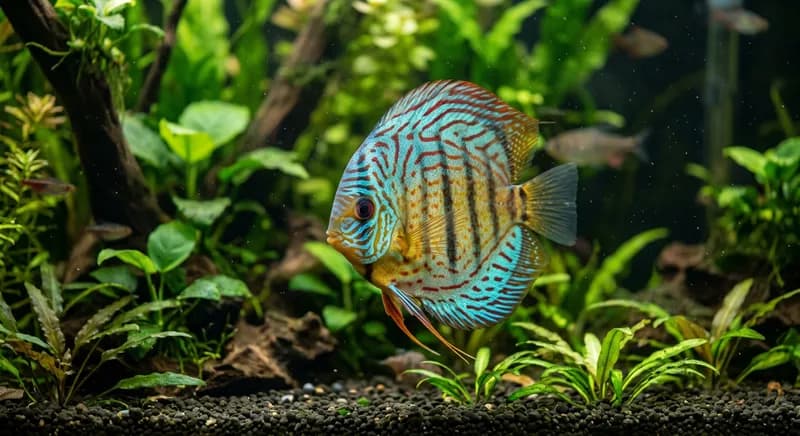
Discus
Symphysodon spp.
Overview
Discus are called the king of freshwater aquarium fish, and the title is earned. A healthy group of adult discus, with their tall, round bodies painted in reds, blues, greens, and intricate patterns, is one of the most striking things you can put in a home aquarium. But keeping discus healthy is genuinely hard. They need water temperatures of 82-88 degrees Fahrenheit, which is warmer than almost all other tropical fish. They demand pristine water quality with frequent large water changes. They are sensitive to stress, picky about food, and prone to diseases that rarely affect hardier species. This is not a fish for beginners. It is not even a great fish for intermediate keepers. Discus are for experienced aquarists who already understand water chemistry, disease treatment, and the reality of doing 50% water changes every day or two. If that sounds like a lot, it is. The reward is a fish that genuinely stops people in their tracks when they see your tank.
Tank Setup
A 55-gallon tank is the absolute floor for a group of 5 discus, and 75 gallons is where things start getting comfortable. These are large fish (6-8 inches as adults) that need vertical height as well as horizontal space. Tall tanks work better than long, shallow ones because of their body shape. There are two schools of thought on discus tank setup. The bare-bottom approach uses no substrate, making daily cleaning and water changes easier. The planted approach uses substrate and live plants, which looks better but requires more effort to keep clean. Both work. If you go planted, choose species that tolerate high temperatures: anubias, java fern, and some vallisneria. Filtration should be oversized. A canister filter rated for a tank 50% larger than yours is a reasonable starting point. Discus produce significant waste, and ammonia spikes are their worst enemy.
Water Parameters
This is where discus get demanding. Temperature must stay between 82-88 degrees Fahrenheit, with 84 as the sweet spot. This high temperature limits tankmate options and accelerates bacterial growth, which means you need to stay on top of cleaning. pH should be between 5.5 and 7.0, with 6.0-6.5 being ideal for most strains. Wild-caught discus need softer, more acidic water than captive-bred strains. Many serious discus keepers use RO (reverse osmosis) water remineralized to their target parameters. Water changes are the cornerstone of discus care. Plan on 50% water changes every other day for bare-bottom tanks, or at least 30-40% every other day for planted setups. Some breeders do daily water changes on grow-out tanks. This is the single biggest commitment with discus, and skipping it leads to problems fast.
Diet & Feeding
Discus are omnivores but can be picky. A staple diet of high-quality discus-specific granules or pellets works for most tank-bred fish. Supplement with frozen bloodworms (their favorite), frozen brine shrimp, and frozen beef heart mix. Beef heart is controversial in the hobby. Some breeders swear by it for growth, others argue it fouls the water and causes digestive problems. If you use beef heart, feed small amounts and clean up uneaten food immediately. Feed 2-3 times daily in amounts the group finishes within 3-5 minutes. Young discus (under 4 inches) benefit from more frequent feedings, up to 4-5 times daily, to support growth. Uneaten food must be removed promptly because it degrades water quality at discus temperatures.
Behavior & Temperament
Discus are social fish that must be kept in groups of 5 or more. They establish a hierarchy, and a group of fewer than 5 usually results in one fish being bullied relentlessly. In a proper group, aggression spreads out and no single fish takes the brunt. They are generally peaceful but can be pushy with each other during feeding and when establishing dominance. Discus are sensitive to their environment. Loud noises, sudden movements near the tank, and changes in routine can stress them. A stressed discus turns dark, stops eating, and becomes vulnerable to disease. They prefer a calm room with consistent lighting and minimal disruption. Bonded pairs will claim a section of the tank and defend it mildly, especially during breeding. Despite their sensitivity, well-kept discus learn to recognize their owner and will come to the front of the tank at feeding time.
Compatible Tankmates
The high temperature requirement (82-88 degrees) eliminates most common tropical fish. Cardinal tetras are the classic discus companion because they tolerate warm water and their red-blue coloring complements discus beautifully. Rummy-nose tetras are another excellent choice and serve as a water quality indicator (their red noses fade when water conditions deteriorate). Sterbai corydoras (which handle warm water better than most cories) and bristlenose plecos work for the bottom level. Avoid anything nippy (tiger barbs, serpae tetras) or fast-moving that will outcompete discus for food. Angelfish are generally a bad idea because they can carry diseases that transfer to discus and may become aggressive. Shrimp will be eaten. Neon tetras struggle at discus temperatures. Keep the tank focused on the discus and add tankmates sparingly.
Common Health Issues
Discus are prone to more diseases than most freshwater fish, largely because their high temperature and sensitivity to stress create opportunities for pathogens. Hexamita (hole-in-the-head disease) is the most feared discus ailment, causing pitting around the head and lateral line. It is linked to poor water quality, vitamin deficiency, and the flagellate parasite Hexamita. Treat with metronidazole in food or water. Internal parasites (flagellates and roundworms) are common, especially in imported fish. Symptoms include white stringy feces, loss of appetite, and wasting. Praziquantel and metronidazole are the standard treatments. Gill flukes cause rapid breathing and flashing (rubbing against surfaces). Treat with praziquantel. Bacterial infections show up as cloudy eyes, fin rot, or body sores, all tied to water quality. The theme with discus health is consistent: clean water prevents most problems, and catching issues early (before the fish stops eating) is critical.
Breeding
Discus breeding is one of the most rewarding experiences in the freshwater hobby. Pairs form naturally from a group of 6+ juveniles raised together. A bonded pair will claim a vertical surface (a spawning cone, broad leaf, or the aquarium glass) and clean it obsessively before laying eggs. The female deposits rows of eggs while the male follows to fertilize. Both parents guard the eggs, which hatch in about 60 hours. Here is what makes discus breeding unique: the fry feed on a mucus coating that the parents produce on their skin. For the first 1-2 weeks, the fry attach to the parents' sides and graze on this secretion. Attempting to raise fry without the parents during this stage is extremely difficult. After 2 weeks, the fry begin eating baby brine shrimp while still supplementing from the parents. Separate them at 3-4 weeks when they are fully free-feeding. Breeding discus requires pristine water, a dedicated breeding tank (bare bottom, 30+ gallons, sponge filter), and patience.
Tankmates to Avoid
These species don't mix well with Discus. Tap a name for the full breakdown.
Frequently Asked Questions
Quick Stats
Related Guides
Compare
What You Need for Discus
Gear that works well for this species, based on what experienced keepers actually use.
Oversized filtration is not optional with discus. The FX4 handles 55-100 gallons and provides the water polishing these sensitive fish demand.
Accurate and reliable at the high temperatures discus need. Holds 84 degrees without fluctuation. Consider running two heaters for redundancy on a discus tank.
Formulated specifically for discus with color-enhancing ingredients. Sinking granules that discus readily accept.
You will be testing water constantly with discus. Liquid tests give the accuracy you need to catch ammonia and nitrite spikes before they cause damage.
50% water changes every other day means hauling buckets gets old fast. This system connects to your faucet and drains and refills the tank directly. A must-have for serious discus keepers.