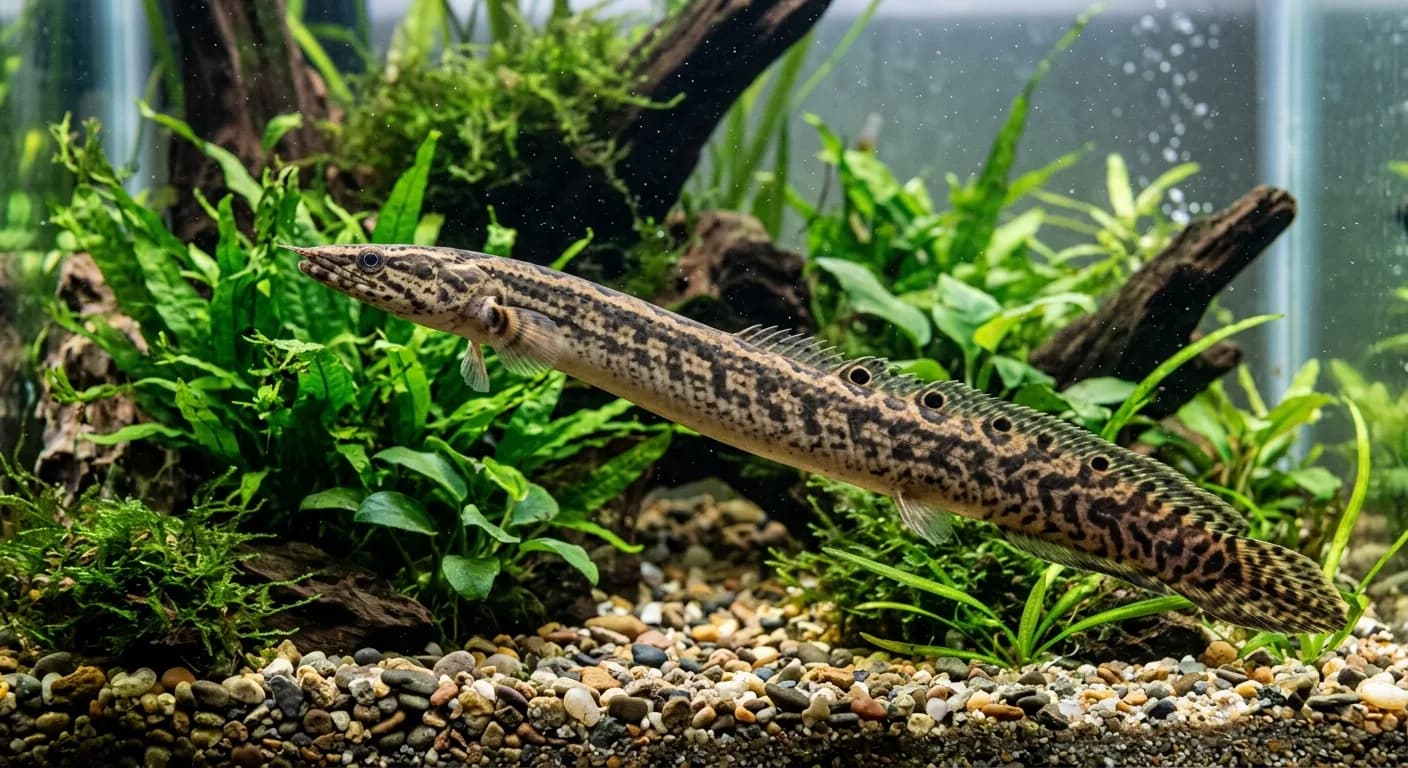
Peacock Spiny Eel
Macrognathus siamensis
Overview
Peacock spiny eels are one of the most striking eel-like fish available in the freshwater aquarium hobby. Their elongated, snake-like body is covered in a beautiful pattern of ocelli, which are the eye-like spots that give them their common name. Each fish has a unique pattern of these spots, which are typically brown or black against a tan or olive background. The spots run in rows along their body and are most prominent on their back and sides. These eels are nocturnal by nature, spending much of the day hiding in caves or buried in the substrate. They become more active at feeding time and in the evening hours. What makes peacock spiny eels appealing beyond their looks is their generally peaceful temperament with appropriately sized tankmates. They are not aggressive predators like some eels, but they are carnivores that will eat anything small enough to fit in their mouth. They have a somewhat deserved reputation for being elusive and shy, especially when first introduced to a tank. Give them time and plenty of hiding spots, and they will become more confident and visible during the day.
Tank Setup
A 35-gallon tank is the minimum for a single peacock spiny eel, though 55 gallons is much better. These fish like to burrow and need a soft substrate to do so. Fine sand or smooth gravel works best - sharp or coarse substrate can damage their delicate skin. They are enthusiastic burrowers and will create elaborate tunnels and resting spots beneath the substrate surface. Provide plenty of hiding spots in addition to their burrowing. PVC pipes, caves, driftwood with hollows, and dense planting all work. They feel most secure when they can completely hide, so create multiple hiding options. Plants like java fern, anubias, and amazon sword can be anchored to hardscape since they don't burrow up rooted plants. Lighting should be dim, as they are nocturnal and prefer subdued conditions. Use a quality canister filter that provides good filtration without excessive current. They come from slow-moving waters and do not appreciate strong flow. Keep the tank covered - they are not jumpers like some eels, but it is still good practice.
Water Parameters
Peacock spiny eels are adaptable to a range of conditions, which makes them suitable for intermediate keepers. They do best in slightly acidic to neutral water with a pH between 6.0 and 7.5. They can tolerate a range of hardness but prefer softer to moderately hard water. Temperature should stay between 73 and 82°F, with 78°F being ideal. They are somewhat sensitive to water quality compared to some other eels. Ammonia and nitrite must always be zero. Keep nitrates under 30 ppm with weekly 25% water changes. They do not tolerate poor water conditions and can develop bacterial infections or fin problems if water quality slips. They are scaleless, so be cautious with medications. Use only treatments specifically labeled as safe for scaleless fish. They can tolerate slightly brackish water, which can help prevent some common health issues.
Diet & Feeding
Peacock spiny eels are carnivores that need a diet rich in protein. In the wild, they eat insects, small crustaceans, worms, and small fish. In the aquarium, they readily accept a variety of meaty foods. Bloodworms, frozen brine shrimp, mysis shrimp, and daphnia are all good options. They also eat earthworms, which make an excellent staple. Some will accept high-quality sinking pellets or wafers, especially if trained from a young age, but many refuse prepared foods entirely. Feed them 2-3 times per week. A good portion size is what they can consume in a few minutes. They are not aggressive feeders and may be outcompeted by faster tankmates. Consider feeding them after lights-out or in a designated area where they won't have to compete. Young eels can be fed more frequently, but adults do well with less frequent feedings. Watch their body condition - a well-fed eel should have a slightly rounded body but not appear bloated.
Behavior & Temperament
Peacock spiny eels are generally peaceful but can be shy, especially when newly introduced. They spend much of their time hiding during the day and become more active at dusk and into the night. Give them time to adjust to a new tank - it may take weeks before you see them regularly. Once comfortable, they often become more confident and may even emerge during the day to beg for food. They are not aggressive toward appropriately sized tankmates, but they are carnivores that will eat anything small enough to be considered prey. They can be territorial with other bottom-dwellers, especially in smaller tanks. They get along well with other non-aggressive large fish. One interesting behavior is their use of their spiny dorsal fin. They can lock the spines erect as a defense mechanism, which makes them difficult for predators to swallow. When handling them, be careful of these spines as they can cause painful pricks.
Compatible Tankmates
Choosing tankmates for peacock spiny eels requires the same rule as other eels: anything small enough to fit in their mouth will be eaten. This eliminates most small community fish. Good tankmates include large, peaceful fish that are too big to be eaten: synodontis catfish, bichirs, clown loaches, flag tetras, congo tetras, silver dollars, tinfoil barbs, and large plecos. They do well in tanks with other bottom-dwellers as long as there is enough space and hiding spots to reduce competition. Avoid aggressive cichlids like oscars that might harass them. Avoid any fish under 3 inches when fully grown. They can be kept as the only eel in a tank, or with other spiny eels in very large setups with multiple territories. They do best with peaceful tankmates that don't compete too aggressively for food.
Common Health Issues
Peacock spiny eels are relatively hardy when kept in appropriate conditions. The most common health issues involve their skin and fins. Because they burrow and are scaleless, they are prone to bacterial infections and fungal issues if the substrate is dirty or if water quality is poor. Watch for red spots, ulcers, or cottony growths. Treat by improving water quality and using antibacterial medications safe for scaleless fish. Internal parasites can be a problem, especially in wild-caught specimens. Symptoms include weight loss despite good appetite and stringy white feces. Treat with medicated foods. Ich can affect them, but use treatments specifically labeled as safe for scaleless fish. They are sensitive to copper-based medications, which can be toxic to them. The best prevention is excellent water quality, clean substrate, and careful quarantine of any new additions.
Breeding
Breeding peacock spiny eels in home aquariums is extremely rare and not well documented. They have not been reliably bred in captivity, and most available fish are wild-caught or farm-raised. If breeding were to occur, it would likely require a very large tank, excellent water quality, and carefully matched pairs. Males and females are difficult to tell apart - there are no obvious external differences. The breeding behavior is not well understood. What is known is that they are likely egg-scatterers and probably do not provide parental care. Given the difficulty and lack of documented success, most hobbyists enjoy peacock spiny eels as single specimens rather than attempting to breed them. Focus on providing excellent care for a single fish rather than trying to reproduce them.
Tankmates to Avoid
These species don't mix well with Peacock Spiny Eel. Tap a name for the full breakdown.
Frequently Asked Questions
Quick Stats
What You Need for Peacock Spiny Eel
Gear that works well for this species, based on what experienced keepers actually use.
Reliable hang-on-back filter with strong flow and customizable media. Good for 35-55 gallon tanks and provides excellent biological filtration for clean water.
Reliable submersible heater with adjustable temperature for the 73-82°F range peacock spiny eels need. Durable construction suits larger tank setups.
High-protein sinking pellets formulated for carnivorous fish. Some eels accept pellets, making them a convenient supplement to frozen foods.
Smooth, fine substrate ideal for burrowing eels. Won't damage delicate skin and allows natural burrowing behavior. Inexpensive and easy to maintain.