Best Fish Food for Freshwater Aquariums
Cheap flake food works, but it is not doing your fish any favors. Low-quality food means more waste, duller colors, and fish that are surviving instead of thriving. The right food matches your fish's natural diet, keeps the water cleaner, and honestly does not cost that much more. Here are four picks that cover community tanks, bettas, shrimp, and bottom feeders.
Our Picks
Fluval Bug Bites Tropical Fish Food
Best OverallBug Bites are made with black soldier fly larvae as the primary protein source, which is closer to what most tropical fish eat in the wild than the fish meal filler in standard flakes. They come in small granules that sink slowly, so mid-water and surface feeders both get a shot at them. Less filler means less waste in the water, which means cleaner tanks between water changes.
Pros
- • Black soldier fly larvae as the #1 ingredient, not cheap filler
- • Slow-sinking granules work for surface and mid-water feeders
- • Produces noticeably less waste than traditional flake foods
- • Contains salmon for omega-3s that support color and health
Cons
- • Granule size can be too large for very small fish like ember tetras
- • Sinks faster than flakes, which can be an issue for strict surface feeders
- • The bag does not reseal well, consider transferring to a container
Hikari Betta Bio-Gold Pellets
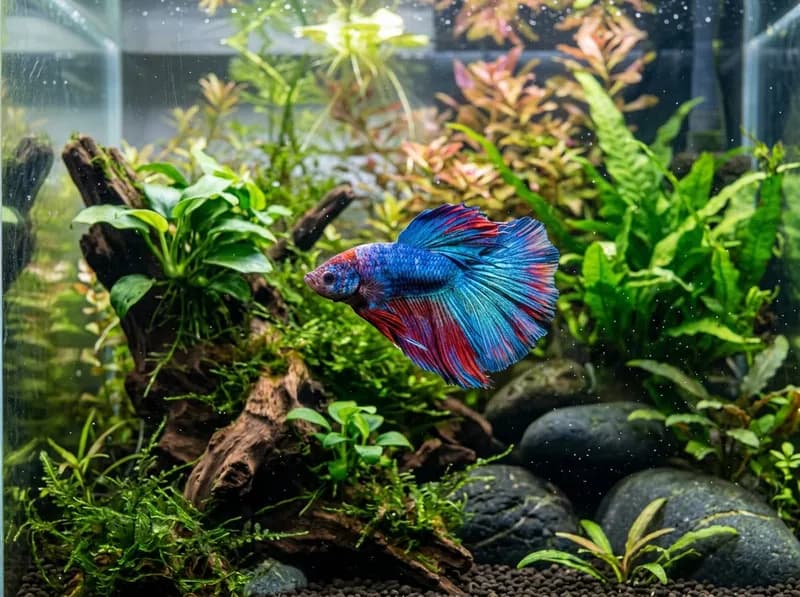
Best for BettasThe standard betta pellet for a reason. Hikari Bio-Gold pellets are sized correctly for betta mouths (unlike many generic pellets that are too big), float at the surface where bettas naturally feed, and are high in protein to match their carnivore diet. The color-enhancing formula genuinely brings out reds and blues after a few weeks of consistent feeding.
Pros
- • Properly sized pellets that bettas eat cleanly without spitting out
- • High protein content matches a betta's natural carnivore diet
- • Color-enhancing ingredients produce visible results
- • Floats reliably so bettas can feed at the surface
Cons
- • Small container, runs out quickly with multiple bettas
- • Should be supplemented with frozen bloodworms or brine shrimp for variety
- • Not suitable as a primary food for most community fish
Shrimp King Shrimp Food
Best for ShrimpDennerle's Shrimp King line is the gold standard for dedicated shrimp keepers. The food sticks come packed with plant matter, minerals, and proteins that shrimp actually need, not just generic fish food relabeled for shrimp. It sinks immediately, does not cloud the water, and one stick feeds a colony without falling apart into mush.
Pros
- • Formulated specifically for freshwater shrimp, not repurposed fish food
- • Sinks immediately and holds together so shrimp can graze on it
- • Balanced mix of plant proteins, minerals, and spirulina
- • Does not cloud the water or disintegrate quickly
Cons
- • More expensive per feeding than general-purpose foods
- • Only useful if you actually keep shrimp, not a general fish food
- • Individual sticks can be large for very small colonies, break them in half
Hikari Sinking Wafers
Best for Bottom FeedersIf you keep corydoras, plecos, loaches, or any bottom-dwelling fish, sinking wafers are a must. Hikari's version sinks fast, softens slowly so bottom feeders can graze for hours, and is packed with algae and vegetable matter that these fish need. A single wafer feeds a group of corydoras, and it will not fall apart into a cloudy mess like cheaper brands.
Pros
- • Sinks immediately to reach bottom dwellers before other fish steal it
- • Holds its shape for hours, allowing natural grazing behavior
- • High in spirulina and vegetable matter for herbivore and omnivore bottom feeders
- • One wafer feeds multiple fish, so a container lasts a long time
Cons
- • Can be hard for very small corydoras to break apart initially
- • Uneaten wafers will rot and spike ammonia if left overnight, remove leftovers
- • Not a complete diet for carnivorous plecos, supplement with driftwood and other foods
How to Pick the Right Fish Food
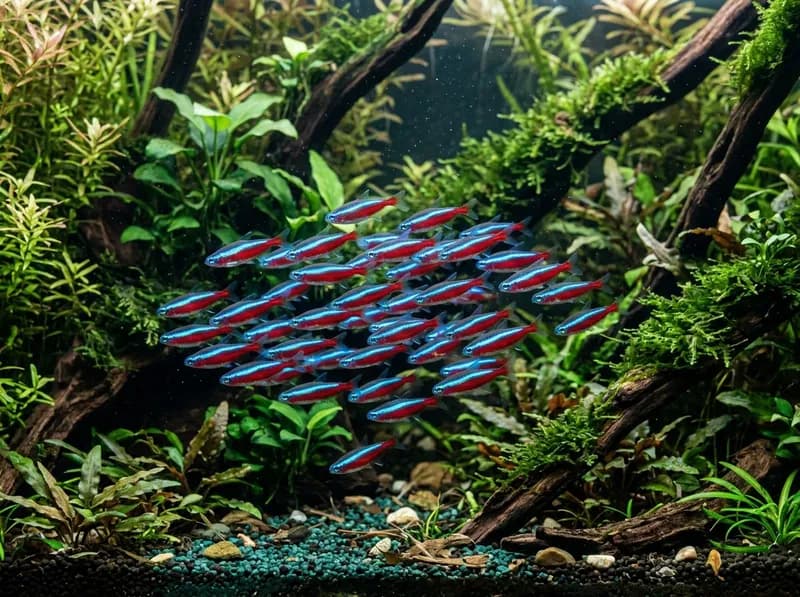
Match the food to the fish. Bettas and other carnivores need high-protein pellets or frozen foods. Community fish like tetras, rasboras, and barbs do well on quality granules or flakes with insect-based protein. Bottom dwellers need sinking wafers or pellets. Shrimp need their own food formulated for invertebrates.
Ingredient lists matter. Look for whole proteins (fish, shrimp, insect larvae) as the first ingredient, not wheat flour or soy meal. The more filler in the food, the more waste your fish produce, and the faster your water quality drops between changes.
Feed small amounts 1-2 times per day. Your fish should finish everything within 2-3 minutes. Overfeeding is the number one cause of water quality problems in home aquariums. Uneaten food rots, spikes ammonia, and feeds algae. Less is genuinely more here.
Variety keeps fish healthy. Even the best pellet food should be supplemented occasionally. Frozen bloodworms, brine shrimp, and daphnia are all great options for most tropical fish. Feed frozen foods 1-2 times per week alongside your staple food.
Store food properly. Fish food loses nutritional value over time, especially once opened. Keep containers sealed, stored in a cool dry place, and try to use up opened food within 6 months. If it smells off or looks discolored, replace it.