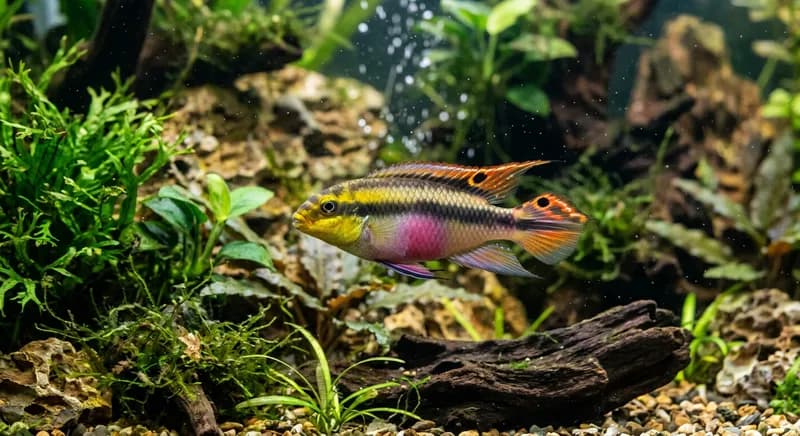
Kribensis
Pelvicachromis pulcher
Overview
If you want to try cichlids but feel intimidated by their reputation, the kribensis is your gateway fish. Hardy, colorful, and easy to breed, kribs check every box for a first cichlid. The females steal the show with a vibrant cherry-pink belly that deepens to almost purple when they are ready to spawn. Males are larger and more subtly colored with yellow-tipped tails. A pair will claim a cave, raise their fry together, and parade the babies around the tank like proud parents. It is genuinely fun to watch.
Tank Setup
A 20-gallon tank works for a single pair. If you want a community around them, go with 30 gallons or more to give other fish room to escape the kribs' territory during breeding. Caves are mandatory. A coconut shell cut in half, a terracotta pot on its side, or stacked rocks with gaps all work. The pair will choose their favorite and defend it fiercely. Sand or fine gravel substrate lets them dig, which they will do constantly near their cave. Live plants are appreciated but kribs may uproot ones near their spawning site. Use hardy rooted plants like java fern and anubias attached to rocks or wood so they cannot be dislodged. Moderate filtration and lighting are fine.
Water Parameters
Kribs are adaptable and handle a wide range of conditions, which is part of why they are so beginner-friendly. Temperature between 75-82 degrees Fahrenheit, pH from 6.0 to 7.5, and moderate hardness all work. An interesting quirk: water pH during breeding can influence the sex ratio of the fry. Acidic water (below 7.0) tends to produce more females, while alkaline water (above 7.0) produces more males. Neutral pH gives a roughly even split. Weekly 25% water changes and standard water conditioning are all they require. Keep nitrates below 20 ppm.
Diet & Feeding
Kribs are easy to feed and not picky. A quality cichlid pellet is a good staple. Supplement with frozen bloodworms, brine shrimp, and daphnia 2-3 times per week. They also pick at algae and biofilm on surfaces, so do not worry if you see them grazing on rocks. Feed a small pinch twice daily. When conditioning a pair for breeding, increase the frozen food frequency. During fry-rearing, the parents will chew up food and spit it toward the babies, but supplementing with crushed flake or baby brine shrimp helps fry growth.
Behavior & Temperament
Kribs are territorial but manageable. A pair will stake out an area around their cave and chase away anyone who gets too close, but they rarely cause real damage to tankmates. The aggression ramps up significantly when they have eggs or fry, and in a smaller tank this can make life miserable for other bottom-dwellers. The dynamic between a bonded pair is fascinating. The female initiates courtship by displaying her colorful belly and shimmying in front of the male near the cave entrance. Both parents share fry-guarding duties, with the female typically staying closer to the fry while the male patrols the perimeter.
Compatible Tankmates
Mid-water and upper-level fish are the safest bets since kribs mostly stay near the bottom. Schools of neon tetras, harlequin rasboras, or similar-sized peaceful fish work well as dither fish. Bronze corydoras can coexist but may get chased away from the cave area during breeding. Bristlenose plecos are large and armored enough to hold their ground. Mystery snails and nerite snails are ignored. Kuhli loaches work if there are enough hiding spots. Avoid other bottom-dwelling cichlids like german blue rams since both species want the same cave and territory. Small shrimp like cherry shrimp will get eaten. Pygmy corydoras are too small and defenseless when kribs are in breeding mode.
Common Health Issues
Kribs are one of the hardiest cichlids available and rarely get sick if water quality is maintained. Ich can occur after stress from shipping or a sudden temperature drop. Standard ich treatment (raise temp to 84F, use medication) works well. Bloating from overfeeding is possible since kribs are enthusiastic eaters. If a fish looks swollen, fast for 2-3 days and reduce portions going forward. Bacterial infections are uncommon but can show up as red streaks on fins or body if water quality deteriorates. Keep up with water changes and you will avoid most issues. Kribs from reputable breeders are generally bulletproof.
Breeding
Kribs are among the easiest freshwater fish to breed. Provide a cave, a bonded pair, and decent water quality, and they will likely spawn without any special effort on your part. The female lays 100-300 eggs on the ceiling or walls of the cave, and both parents guard them intensely. Eggs hatch in 3-5 days. The fry stay in the cave for another week, surviving on their yolk sacs. Once free-swimming, the parents escort the fry around the tank in a tight cloud, with both adults actively defending them from any perceived threat. This parental behavior is one of the best reasons to keep kribs. Fry eat baby brine shrimp, micro worms, and crushed flake. Growth is fast, and you will have a serious population on your hands within a few months if you let them keep breeding.
Tankmates to Avoid
These species don't mix well with Kribensis. Tap a name for the full breakdown.
Frequently Asked Questions
Quick Stats
What You Need for Kribensis
Gear that works well for this species, based on what experienced keepers actually use.
Natural coconut half-shell makes a perfect kribensis cave. The right size for a breeding pair and looks more natural than terracotta pots.
Good protein content with color-enhancing ingredients that bring out the kribensis' pink belly and fin coloration. Mini pellet size is right for their mouths.
Fine sand that kribs can dig through when excavating near their cave. Smooth grains will not damage their mouths during substrate sifting.
A 20-gallon starter kit with filter and heater included is the most economical way to set up a kribensis pair. Upgrade the heater if the included one is not adjustable.