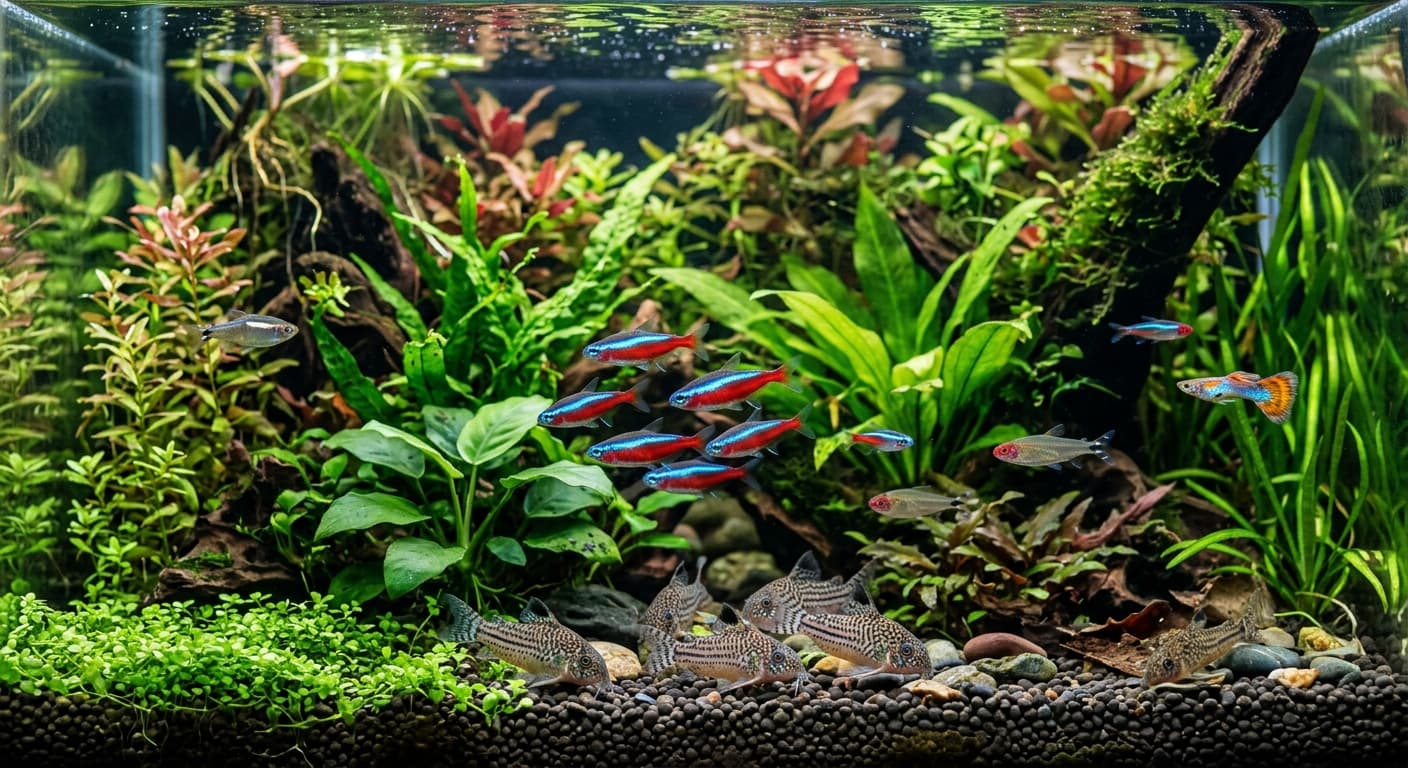
Best Fish for Community Tanks: 15 Species That Get Along
Walk into any pet store and half the fish tanks have "community fish" labels. That label doesn't tell you that some of those fish grow too big, need different water chemistry, or turn aggressive once they settle in. This guide covers which fish actually work together, which ones look peaceful but cause problems, and how to stock your first community tank without expensive mistakes.
01
What Makes a True Community Fish
Real community fish share three requirements that pet stores often ignore.
Similar Water Parameters: A fish that needs 78°F water won't thrive with one that prefers 68°F. pH matters too. Tetras love soft, acidic water (pH 6.0-6.8) while livebearers prefer harder, alkaline water (pH 7.0-8.0). You can mix them, but someone's not getting ideal conditions.
Non-Aggressive Temperament: This goes beyond "won't kill other fish." Good community fish don't chase, nip fins, or stress tankmates during feeding. They ignore other species and mind their own business.
Compatible Swimming Levels: Community tanks work best when fish occupy different levels. Bottom dwellers (corydoras), middle swimmers (tetras), and top dwellers (gouramis) rarely compete for space. Cramming 12 surface fish into one tank creates territory wars.
Pet store "community" labels mean "won't immediately murder everything," not "perfect tank mates." Do your own research.
02
Top Beginner Community Fish (Easy Mode)
Start here if this is your first community tank. These fish forgive mistakes and get along with almost everyone.
Neon Tetra: 6+ fish minimum, 10 gallon tank, 72-78°F. Stays small (1.5 inches), peaceful, and cheap enough to school properly. Read our full neon tetra guide.
Guppy: 2-3 fish minimum, 10 gallon tank, 74-82°F. Hardy livebearers that eat flakes, breed easily, and come in a wide range of colors. Males have the fancy tails; females grow larger. Full guppy care guide.
Platy: 3-4 fish minimum, 20 gallon tank, 70-78°F. Chunky, colorful livebearers that mind their own business. Slightly larger than guppies but equally peaceful. Excellent starter fish. Complete platy guide.
Cherry Barb: 6+ fish minimum, 20 gallon tank, 72-79°F. Unlike their tiger barb cousins, cherry barbs are mellow schooling fish. Males turn bright red when happy. Good personality without the aggression. Cherry barb care sheet.
Harlequin Rasbora: 6+ fish minimum, 10 gallon tank, 72-81°F. Triangular orange and black pattern. Peaceful, school tightly, and tolerate a wide range of water conditions. Harlequin rasbora guide.
These five species can live together in most tank combinations. They occupy similar water parameters and rarely cause problems.
03
Intermediate Community Fish (Worth the Learning Curve)
Once you're comfortable with basics, these fish add personality to community setups. They need more specific conditions but reward you with interesting behavior.
Corydoras (Sterbai or Panda): 4+ fish minimum, 20 gallon tank, 72-78°F. Bottom-dwelling catfish that constantly root through substrate looking for food scraps. Peaceful, social, good at cleaning up leftover food. Sterbai cory guide.
Honey Gourami: 1-2 fish maximum, 20 gallon tank, 72-82°F. Surface dwellers with personality. Males build bubble nests and show off golden colors when breeding. Choose these over dwarf gouramis; they're healthier and less aggressive. Honey gourami care.
Celestial Pearl Danio: 6+ fish minimum, 10 gallon tank, 72-78°F. Tiny fish with blue spots and orange fins. More timid than other danios and look great in planted tanks. Also called galaxy rasboras. CPD guide.
Ember Tetra: 10+ fish minimum, 10 gallon tank, 73-84°F. Micro schooling fish that glow orange under good lighting. Need larger groups than other tetras to feel secure. Good fit for nano community setups. Ember tetra care.
Otocinclus: 3+ fish minimum, 20 gallon tank, 72-78°F. Algae-eating catfish smaller than your thumb. Peaceful and effective, but sensitive to water quality. Wait until your tank is well-established before adding them. Otocinclus guide.
These fish require more attention to water quality and specific tank conditions, but they're worth the extra effort once you have experience.
04
Bottom Dwellers That Complete a Community
Every community tank needs bottom dwellers. They utilize space other fish ignore and help keep the tank clean.
Corydoras Species: The workhorses of community tanks. Sterbai, panda, bronze, and peppered cories all work well. They need groups of 4+ and soft substrate that won't damage their barbels. Sand is ideal; sharp gravel hurts them.
Otocinclus Catfish: Algae cleanup crew. These tiny sucker fish graze constantly on glass, plants, and decorations. They're sensitive to poor water quality, so add them only after your tank is cycled and stable.
Nerite Snails: One nerite snail per 10 gallons prevents overpopulation. They eat algae steadily but won't reproduce in freshwater. Zebra and tiger patterns are most common.
Mystery Snails: Larger than nerites with long tentacles they use to explore. Apple snails, Japanese trapdoor snails, and mystery snails are all good options. They need calcium for shell health - add cuttlebone if your water is soft.
The key is swimming level compatibility. Bottom dwellers rarely interact with middle or surface fish, making them perfect community additions.
AquaClear 20 Power Filter
Multi-stage filtration handles waste from full community stocking without creating excessive current that stresses small fish.
05
Fish That Seem Community But Aren't
Some species are marketed as community fish but cause problems in mixed tanks. Learn to spot the troublemakers.
Tiger Barbs: Schooling fish that nip fins of slow-moving tankmates. They're fine with other barbs or fast fish, but they'll torture angelfish, bettas, and gouramis. Semi-aggressive at best.
Buenos Aires Tetras: Large, silvery tetras that grow 3 inches and get increasingly aggressive with age. They eat plants and bully smaller tetras. Not the peaceful community fish you expect from the "tetra" name.
Male Bettas: Beautiful fish that don't belong in community tanks. They attack anything with long fins or bright colors. Some people report success, but most end up with dead tankmates or a stressed betta.
Convict Cichlids: Small Central American cichlids sold as "community fish" in some stores. They're territorial, dig up plants, and breed aggressively. Save these for species-only or cichlid community setups.
Chinese Algae Eaters: Sold as peaceful algae control, but they grow large (10+ inches) and become aggressive bullies. They also stop eating algae as adults and prefer fish slime instead. Get otocinclus or nerite snails for algae control.
When in doubt, research fish individually before trusting store labels. "Community fish" is often code for "we need to sell these somehow."
06
Sample Community Stocking Lists
Here are three proven community combinations. Don't exceed these numbers - overstocking kills fish faster than aggression.
10 Gallon Tank - 6 neon tetras or harlequin rasboras - 2 guppies (1 male, 1 female) - 1 nerite snail
Small tank means light stocking. This combination gives you schooling fish, colorful livebearers, and algae control without overcrowding.
20 Gallon Long Tank - 8 ember tetras or neon tetras - 3 platies or guppies - 4 sterbai corydoras - 2 nerite snails
The extra length lets you add bottom dwellers. Corydoras need groups and space to roam, which a 20 gallon long provides.
29 Gallon Tank - 10 harlequin rasboras - 5 cherry barbs - 1 honey gourami - 6 sterbai corydoras - 3 otocinclus - 2 mystery snails
This setup uses all swimming levels effectively. The larger volume supports more fish and better water stability.
Water Change Schedule: 25% weekly water changes for all three setups. Test water parameters monthly with a reliable test kit.
API Freshwater Master Test Kit
Tests ammonia, nitrite, nitrate, and pH levels accurately - essential for monitoring community tank health with mixed species.
Table of Contents
Related Content
Essential Gear
Best Filter for a 20 Gallon Tank
Aquaneat 3-Pack Biosponge Filter
Best Filter for 10-Gallon Fish Tanks
AquaClear 20 Power Filter
Best Aquarium Test Kit for Freshwater Tanks
API Freshwater Master Test Kit