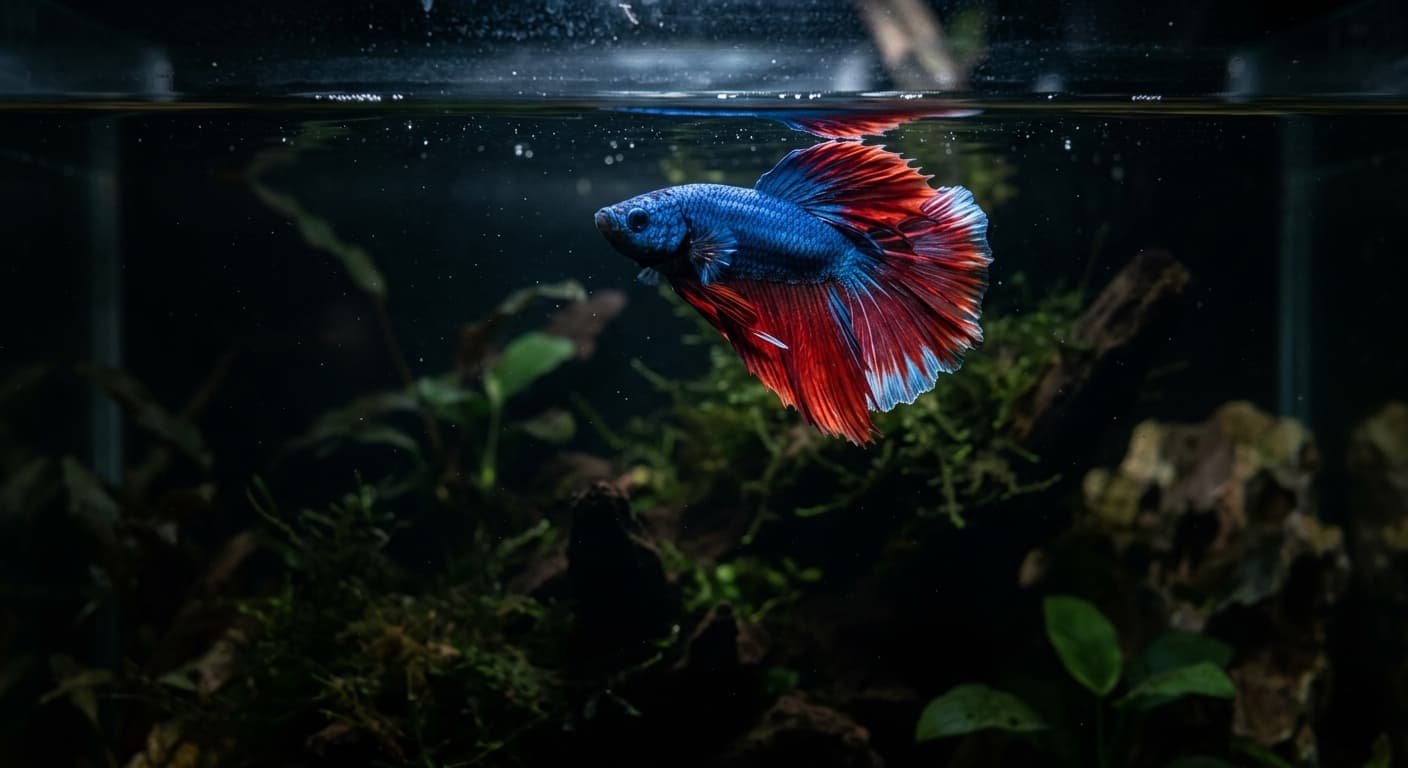
How to Keep Your Betta Safe During a Power Outage
A power outage is a real threat to a betta. Two things go wrong fast: temperature drops and oxygen depletes. How long you have depends on season and tank size. In summer a 10-gallon tank might stay warm enough for 12-24 hours. In winter you might have 2-3 hours before the temperature drops below the safe range. Here is what to do.
01
How Long Can a Betta Survive Without Power?
Two threats hit a betta when the power goes out: temperature and oxygen. Of the two, temperature is usually the one that kills first.
Bettas are tropical fish. Their ideal range is 76-82F. Below 68F, you start seeing stress and immune suppression. Below 60F, lethal within hours. This is not a gray zone. A betta sitting in 58F water is not going to bounce back when you warm it up.
Oxygen is different. Bettas have a labyrinth organ, which means they can breathe air directly from the water's surface. When the filter stops, a betta can still get oxygen as long as it has surface access. Do not seal the lid airtight. A crack is all they need. This gives bettas more resilience than most fish during outages.
How long do you actually have? Rough timelines:
In summer (room temperature 72-78F), a 5-gallon tank might drop to unsafe levels in 4-8 hours. A 10-gallon or larger with good insulation can stay in range for 12-24 hours or more.
In winter (room temperature 60-65F, which is realistic if your heat is out too), a small tank can fall below 68F in 2-4 hours. A larger tank buys more time but not indefinitely.
Bigger water volume holds heat longer. If you have a 5-gallon betta tank and the heat is out in January, you have a short window. Take it seriously.
02
The First 10 Minutes: What to Do Immediately
Do not panic, but do not wait and see either. The first thing to figure out is how long the outage is likely to last.
Check your utility provider's outage map or app. If you can get a rough estimate, that shapes everything. A 30-minute outage requires almost nothing. A storm that knocked out power for your whole zip code for 6+ hours is a different situation.
If you think it will be longer than 1-2 hours:
Cover the tank with a blanket or towel immediately. Do not wait until the tank feels cool. Heat loss starts the moment the heater cuts off. Wrapping it now slows that loss significantly.
Leave the lid cracked or slightly open. Bettas need surface access to breathe. A fully sealed tank with no air exchange will deplete oxygen in the water layer near the surface where the betta breathes. Even a half-inch gap is enough.
Note the current water temperature. If you have a thermometer in the tank, write it down or remember it. You want to know your baseline so you can track how fast it is dropping.
Do not feed the fish. This is not the time. Uneaten food rots fast without filtration, and ammonia buildup is the last thing you need on top of everything else. A betta can go 3-5 days without food without harm.
03
How to Keep the Tank Warm
Insulation is your first and most effective tool. Wrap the tank in blankets or towels on all sides except the top, where you need air access. The more layers, the slower the heat loss. A well-insulated 10-gallon tank wrapped in two blankets loses heat much more slowly than an unwrapped one sitting on a cold surface.
A hot water bottle is the most practical active warming method during an outage. Fill a plastic bottle (not glass) with hot water from your tap. Cap it securely, then float it in the tank. Replace it as it cools. This approach can maintain temperature for several hours if you stay on top of it. Do not use boiling water, which can overshoot the temperature. Aim for water that is warm but comfortable to the touch, around 90-100F, so it warms the tank water without spiking it.
If you have a fireplace, a propane heater, or another heat source for the room, use it. Warming the air around the tank helps. Propane heaters work well but ventilate the room. Carbon monoxide is a real risk with fuel-burning heaters indoors.
Hand warmers in a sealed plastic bag floated in the tank work as a last resort. They do not last long and heat unevenly, but they can buy time when nothing else is available.
What to avoid: Direct heat sources like space heaters aimed at one side of the tank, stovetops, or radiators can create extreme temperature gradients inside the tank. One side at 90F while the other is at 65F is as dangerous as cold water. A betta can go into thermal shock from rapid temperature spikes just as it can from cold. Warm the whole tank slowly and evenly.
04
Battery-Powered Air Pumps: Are They Worth It?
Yes, with one important clarification about what they actually do.
A battery air pump does not replace your filter for biological filtration. When your filter stops, the nitrogen cycle stops with it. Beneficial bacteria in your filter media start dying off within hours without flow. Ammonia will begin building up, especially if there is any waste or uneaten food in the tank. The air pump does nothing for that.
What it does do: maintain surface agitation and dissolved oxygen levels. That is the immediate concern during an outage, and it is a real one. A still tank with no surface movement accumulates CO2 and depletes oxygen in the water column. A battery air pump with a simple air stone prevents that. For a betta specifically, this is less critical than for other fish because of the labyrinth organ, but it still matters, especially in a longer outage.
A USB rechargeable pump like the Hygger battery pump can run 4-8 hours on a full charge. If you live somewhere with frequent outages (storms, grid instability, rural areas), one of these sitting on a shelf fully charged is worth having. The cost is low and the peace of mind during the next outage is real.
Hygger Battery Powered Aquarium Air Pump
USB rechargeable, runs 4-8 hours on a full charge, and keeps surface agitation going when your filter is offline.
05
When to Move Your Betta to a Temporary Container
Transfers stress fish, so do not do this unless the tank is actually becoming dangerous. Moving a betta introduces handling stress, which weakens its immune system at exactly the wrong time.
The threshold for moving: if the tank temperature has dropped below 68F and you have no way to warm it in the next hour, move the fish.
For the temporary container, use a 1-gallon or larger plastic container. A food-safe container works fine. Fill it with water from the main tank, not tap water. The fish is already acclimated to that water's chemistry, and adding a new water change on top of everything else is unnecessary stress.
Once the betta is in the smaller container, the hot water bottle method becomes much more effective because you have less water volume to heat. Float the container in a sink filled with warm water to help maintain temperature. Replace the sink water as it cools.
Keeping the container in the warmest room in the house helps. A bathroom near hot pipes, a room with a fireplace, or even next to a propane heater with the room vented all work.
When do you leave the betta in the main tank instead? If the temperature is still above 70F, if you are successfully maintaining it with insulation and hot water bottles, or if the outage is likely to end soon, leave it where it is. The main tank has more stable water chemistry and causes less handling stress.
06
After Power Returns: Getting Back to Normal
Do not rush when the power comes back on.
If the tank temperature has dropped significantly, do not just turn the heater back on and let it rip. A sudden temperature spike is as stressful as the cold was. Turn the heater on and let it raise the temperature gradually. Most heaters do this naturally since they heat slowly by design, but if yours is a high-wattage unit in a small tank, monitor it and adjust.
If you moved the betta to a temporary container, float the container in the main tank for 20-30 minutes to equalize temperatures before releasing the fish.
Watch ammonia levels closely. This is the main post-outage risk. A long outage, especially anything over 8-12 hours, can kill off significant populations of beneficial bacteria in your filter media. When those die, ammonia spikes. Test within 12-24 hours of power returning. If ammonia is elevated, do a 25-30% water change and dose Seachem Prime to detoxify it while the cycle recovers.
Feed lightly for the next several days. Only what the fish will eat in 2 minutes. Excess food adds ammonia load to an already stressed biological filter.
Monitor for disease for the next 7-10 days. Temperature stress is a common trigger for ich and fin rot in bettas. Early signs of ich are small white dots like salt grains. Early fin rot shows as edge discoloration or slight fraying. Catching either early makes treatment much easier.
07
Preparing Before the Next Outage
The best time to prepare for a power outage is before it happens. A 20-minute setup now can mean a calm response next time instead of a scramble.
A short checklist:
Keep a battery air pump on the shelf and charged. USB rechargeable ones are easy. Plug it in once a week for a few minutes if you want to keep it topped up.
Know where your blankets and towels are. This sounds obvious but when the power goes out at 2am, you want to grab and go.
Sign up for your utility's outage alerts. Most providers have text or app notifications. Knowing an outage is storm-related and expected to last 6 hours is useful information.
Keep Seachem Prime on hand. It detoxifies ammonia in emergency situations and is useful for post-outage recovery water changes.
Have an API test kit accessible. You need to test ammonia after any extended outage.
For frequent outage areas, a small UPS (uninterruptible power supply) can keep a filter and heater running for 30-90 minutes during brief outages. This handles the most common short outages completely. It is more hardware than most people need, but if you are losing power several times a year, it is worth knowing about.
Table of Contents
Related Content
Popular Fish Species
Essential Gear
Best Filter for a 20 Gallon Tank
Aquaneat 3-Pack Biosponge Filter
Best Aquarium Heater for Fish Tanks
Hitop Adjustable Aquarium Heater
Frequently Asked Questions
Sources & Further Reading
- Betta splendens Temperature Tolerance and Thermal Stress
Research on thermal tolerance ranges in tropical freshwater fish, including the physiological effects of sub-optimal temperatures on immune function in labyrinth fish.
- Labyrinth Fish and the Labyrinth Organ (Macrozone)
FishBase species data and documented biology of the labyrinth organ in anabantoid fish, including surface air-breathing behavior and oxygen acquisition.
- Nitrogen Cycle Stability and Bacterial Survival in Aquarium Filters
Reference on nitrifying bacteria survival rates, filter media die-off during flow interruption, and recovery timelines for biological filtration.