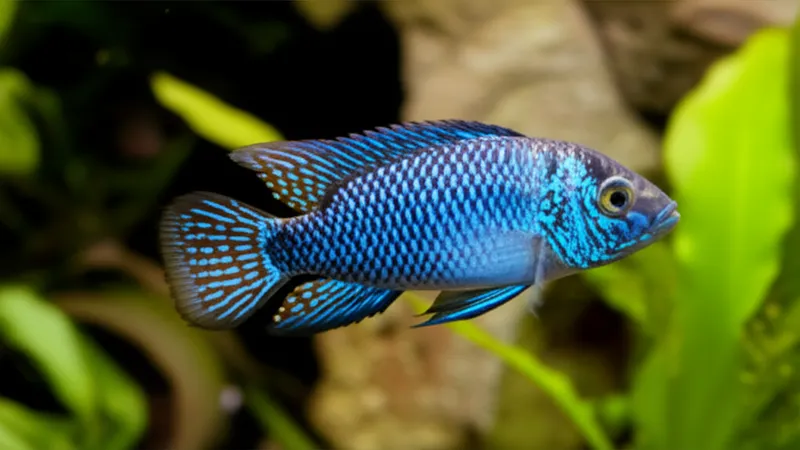
Electric Blue Acara
Andinoacara pulcher hybrid
Overview
The Electric Blue Acara is one of the few cichlids you can confidently put into a community tank. That iridescent blue coloring is not exaggerated in photos; they really do look like that in person, especially under decent lighting. These are a selectively bred variant of the standard Blue Acara, and the tradeoff for that intense color is that they tend to be slightly smaller and a bit more delicate than their wild-type cousins. They top out around 6-7 inches and can live 8-10 years with good care. Unlike most cichlids their size, Electric Blue Acaras are genuinely calm. They will hold their ground if harassed but rarely start trouble. Pairs bond for life and will often swim together around the tank. The biggest behavioral quirk is substrate rearranging. They love to dig, and any carefully arranged aquascape is going to get remodeled.
Tank Setup
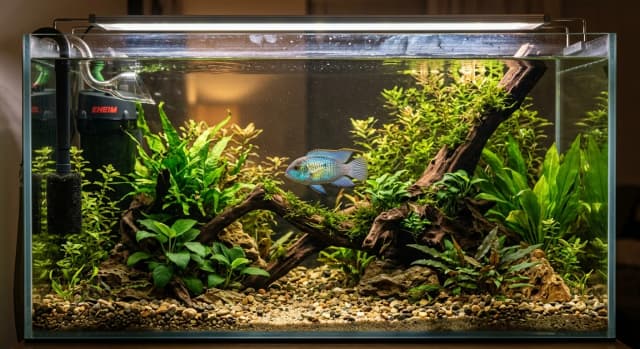
A well-setup aquarium suited to Electric Blue Acara
A 30-gallon tank is the bare minimum for a single Electric Blue Acara, but 55 gallons is much better if you want to keep a pair or add community tankmates. Use sand or fine gravel as substrate because these fish dig constantly. Larger gravel can injure their mouths. Provide driftwood, rocks, and sturdy plants like Anubias and Java fern that can be attached to hardscape since anything planted in the substrate will probably get uprooted. Leave open swimming space in the center of the tank. A hang-on-back filter or canister filter rated for your tank size works well. They do not need extreme flow but appreciate clean, well-oxygenated water. A secure lid is a good idea because they can jump when startled.
Water Parameters
Keep the temperature between 72-82 degrees Fahrenheit, with 78 being the sweet spot. pH can range from 6.0 to 7.5, so most tap water works fine after conditioning. These fish are less picky about water chemistry than many cichlids, but they do not tolerate ammonia or nitrite at all. Weekly 25-30% water changes are important. Nitrates should stay below 20 ppm. If you are keeping them with other sensitive species, test weekly with a liquid kit. Stability matters more than hitting a specific number.
Diet & Feeding
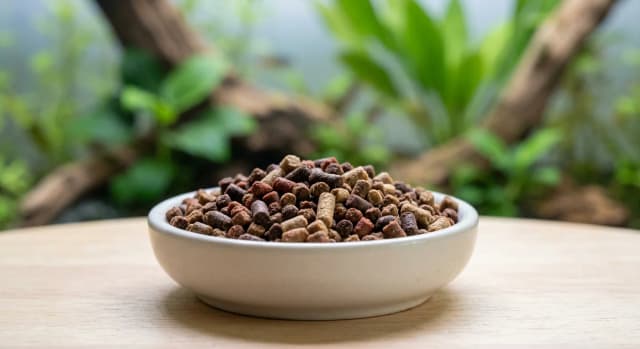
Quality nutrition supports Electric Blue Acara health and color
Electric Blue Acaras are omnivores that eat just about anything. A high-quality cichlid pellet should be the base diet. Supplement with frozen bloodworms, brine shrimp, and mysis shrimp 2-3 times per week. They also accept blanched zucchini and peas. Feed once or twice daily, giving only what they can finish in 2-3 minutes. These fish are not shy eaters and will outcompete slower tankmates at feeding time, so make sure food reaches everyone. Overfeeding leads to bloat, which cichlids are particularly susceptible to.
Behavior & Temperament
For a cichlid, the Electric Blue Acara is remarkably mellow. They spend most of their time cruising the middle and lower levels of the tank, occasionally digging through the substrate looking for food. Pairs form strong bonds and will claim a small territory but defend it without the extreme aggression you see in other cichlids like convicts or Jack Dempseys. During breeding, they get more territorial, but even then, they usually just chase intruders away rather than causing real damage. They can be kept singly, but a bonded pair is more interesting to watch. Expect your carefully arranged substrate to be bulldozed into hills and craters. That is normal and not a sign of stress.
Compatible Tankmates
Good tankmates include medium-sized tetras (rummy-nose, larger cardinals), harlequin rasboras, cherry barbs, corydoras (especially sterbai for matching temperature preferences), bristlenose plecos, and other peaceful community fish that are not small enough to eat. Avoid very small fish like neon tetras and guppies, which can become snacks. Do not keep with aggressive cichlids that will bully them, or with shrimp smaller than Amano size. Snails like nerites and mystery snails are generally fine. In a 55-gallon or larger, you have a lot of options. In a 30-gallon, keep the stocking light since a pair of acaras takes up a lot of bioload.
Common Health Issues
Hole-in-the-head disease (HITH) is the most common concern with any cichlid. It appears as small pits or lesions on the head and lateral line, usually caused by poor water quality, lack of dietary variety, or both. Keep nitrates low and feed a varied diet to prevent it. Ich can affect them, especially after shipping or a tank move. Treat with raised temperature (82-84 degrees) and ich medication. They can also develop internal parasites, particularly if fed live foods from unreliable sources. Bloat from overfeeding is another risk. If the fish stops eating and looks swollen, fast for 2-3 days and do a large water change.
Breeding
Electric Blue Acaras are open spawners that lay eggs on flat surfaces like rocks, driftwood, or even the tank glass. A bonded pair will clean a spawning site together before the female deposits 150-300 eggs. Both parents guard the eggs and fan them for aeration. Eggs hatch in about 3 days, and the fry become free-swimming around day 5. Parents are attentive and will move fry around the tank in a tight school. Feed fry baby brine shrimp once they are free-swimming. Breeding is relatively straightforward if you have a healthy bonded pair and decent water quality. The tricky part is that Electric Blue Acara fry do not always breed true for color, and you may get some standard-colored offspring mixed in.
Tankmates to Avoid
These species don't mix well with Electric Blue Acara. Tap a name for the full breakdown.
Frequently Asked Questions
Quick Stats
What You Need for Electric Blue Acara
Gear that works well for this species, based on what experienced keepers actually use.
Protein-rich formula designed for cichlids with added color enhancers. Pellets sink slowly, matching how acaras prefer to feed in the mid-water column.
Rated for 20-45 gallons with multiple media baskets. Quiet operation and adjustable flow output that works well for medium cichlid setups.
Fine sand that is safe for digging cichlids. Neutral color shows off the blue coloring nicely and will not alter your pH.
Slim profile with accurate temperature control. The flat design makes it easy to hide behind hardscape where digging cichlids will not knock it around.