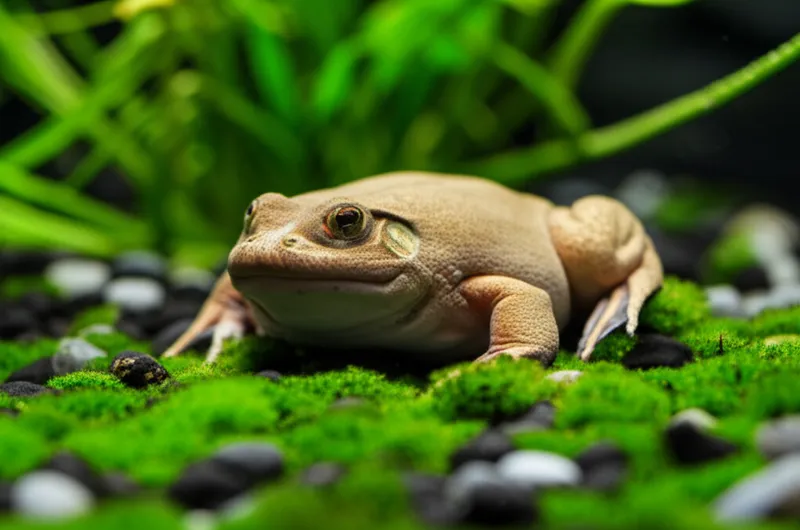
African Dwarf Frog
Hymenochirus boettgeri
Overview
African dwarf frogs are fully aquatic frogs that never need to leave the water. They breathe air by surfacing every few minutes, but they live their entire lives submerged. They max out at about 2.5 inches, which makes them a fun oddball for small community tanks. The most common mistake people make is confusing them with African clawed frogs (Xenopus laevis), which look similar as juveniles but grow to 5 inches and will eat anything that fits in their mouth, including your other fish. The easiest way to tell them apart: dwarf frogs have four webbed feet, clawed frogs have clawed front toes with no webbing. Dwarf frogs have poor eyesight and are slow, clumsy eaters. This is not a cute quirk. It means they will struggle to compete for food in a tank with fast fish, and target feeding is often necessary to keep them from starving. Males "sing" at night with a quiet buzzing or humming sound, which is either charming or annoying depending on where your tank is located.
Tank Setup
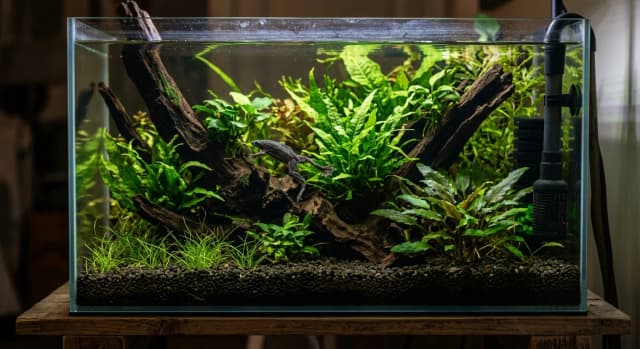
A well-setup aquarium suited to African Dwarf Frog
A 10-gallon tank is the minimum for 2-3 frogs, and a 20-gallon gives them proper space to thrive. Water depth matters more than footprint with these frogs — keep depth under 12 inches. African dwarf frogs need to surface to breathe, and in deep tanks they expend too much energy swimming to the top. Taller tanks like 20-gallon highs are too deep. Use sand or smooth gravel as substrate. Provide plenty of plants (live or silk) and low structures that let the frogs rest near the surface. They love sitting on broad leaves at mid-tank height where they can reach the surface quickly. A gentle sponge filter is ideal since strong flow pushes them around and makes surfacing difficult. Keep a secure lid with no gaps. Despite being aquatic, they will climb out of an uncovered tank and die on the floor. Even small gaps around filter intakes or heater cords need to be blocked.
Water Parameters
Keep the temperature between 72-78 degrees Fahrenheit, with 75 being comfortable. A heater is required since they are tropical animals. pH should be 6.5-7.5. Standard tropical freshwater parameters apply. They are sensitive to ammonia and nitrite, so the tank must be fully cycled before adding frogs. Weekly 20-25% water changes keep things clean. Use a water conditioner that removes chlorine and chloramine. One thing to know: African dwarf frogs are extremely sensitive to chemicals in the water, including many fish medications. Copper-based treatments will kill them. If you need to medicate fish in a tank with dwarf frogs, remove the frogs to a separate container first. Even some water conditioners at high concentrations can cause problems.
Diet & Feeding

Quality nutrition supports African Dwarf Frog health and color
This is where most people fail with dwarf frogs. They have terrible eyesight and hunt by smell and vibration. In a community tank with fish, the fish will eat all the food before the frog even finds it. Target feeding is the answer. Use long tweezers or a turkey baster to deliver food directly in front of the frog's face. Frozen bloodworms are the best staple food. Thaw a small cube, then use tweezers to drop individual worms right near the frog. Frozen brine shrimp and mysis shrimp also work well. Sinking frog pellets (Hikari and Zoo Med both make them) are an option for daily feeding. Feed every day or every other day. Each frog needs about 2-3 bloodworms or a small pinch of pellets per feeding. They are slow eaters and may take several minutes to finish. Watch them eat rather than walking away, so you can confirm they actually got food.
Behavior & Temperament
Dwarf frogs spend time both resting on the bottom and floating at the surface in a spread-eagle "zen pose" that alarms new owners. This floating with all limbs extended is completely normal. They are also known for the "death float" where they hang motionless at the surface. Poke them gently and they will swim away. They are mostly crepuscular, being most active at dawn and dusk. Males produce a quiet buzzing or clicking sound at night to attract females. In a quiet room, you can hear it from across the room. It is a distinctive sound, not loud enough to wake you up but noticeable if you are nearby. They coexist peacefully with fish and other frogs. Aggression is basically nonexistent. They can be kept in small groups, and two or three frogs in a tank are more active and interesting than a single one. They sometimes ride the filter current for fun or chase each other in short bursts.
Compatible Tankmates
Choose small, peaceful fish that will not outcompete the frogs for food. Neon tetras, cardinal tetras, harlequin rasboras, and otocinclus are good choices. Snails like nerites and mystery snails are great tankmates since they do not compete for the same food. Cherry shrimp generally coexist fine because they are too fast for the frogs to catch. Avoid any fish aggressive enough to harass the frogs or fast enough to steal all their food. Bettas are a common pairing that sometimes works and sometimes does not. Some bettas leave the frogs alone while others nip at them. The bigger issue is that both species need target feeding attention, which doubles your workload. Skip larger cichlids, gouramis, and anything with a mouth big enough to eat a frog. Also avoid crayfish, which will definitely catch and eat them.
Common Health Issues
Bacterial infections are the most common problem, appearing as red patches on the skin or cloudy, swollen eyes. These usually trace back to poor water quality. Clean water and partial water changes are the first treatment. For stubborn infections, an antibiotic like Maracyn-Two in a hospital tank (not the main tank if other species are present) can help. Fungal infections show up as white, fuzzy patches, often after an injury or in stressed animals. Salt baths (1 teaspoon per gallon for 10 minutes in a separate container) can treat mild cases. Dropsy (severe bloating with a rounded body) indicates kidney failure or internal infection and is usually fatal by the time you notice it. Chytrid fungus is a concern with any amphibian, though captive-bred dwarf frogs are lower risk. The most common cause of death, honestly, is starvation. Owners put them in community tanks, assume they are eating, and find them dead a month later. Watch them eat.
Breeding
African dwarf frogs breed readily in captivity. The amplexus position (male clasping the female from behind around the waist) can last several hours. They typically spawn at the surface, releasing eggs that float and then stick to plants and surfaces. A single spawning can produce 100-750 eggs. Eggs hatch in about 48 hours at 77 degrees. The tadpoles are tiny and need infusoria or liquid fry food for the first week, then can transition to baby brine shrimp. Separate the eggs or fry from adults because the frogs will eat them. Raising the fry is the hard part since they are extremely small and need frequent feeding in clean water. A small, filtered container with daily water changes gives the best survival rate. Most casual keepers who notice eggs just let nature take its course, and a few survivors from each clutch may make it in a densely planted tank.
Tankmates to Avoid
These species don't mix well with African Dwarf Frog. Tap a name for the full breakdown.
Frequently Asked Questions
Quick Stats
What You Need for African Dwarf Frog
Gear that works well for this species, based on what experienced keepers actually use.
Gentle flow that will not push frogs around when they surface to breathe. No intake openings large enough to trap a frog's limbs.
Sinking pellets designed for aquatic frogs. Slow-dissolving formula gives slow eaters time to find and eat them before they fall apart.
Adjustable temperature dial for hitting the 75-degree target. Available in small wattages (25W, 50W) that fit the smaller tanks dwarf frogs need.
Target feeding is not optional with dwarf frogs. Long tweezers let you place bloodworms directly in front of the frog without sticking your whole arm in the tank.