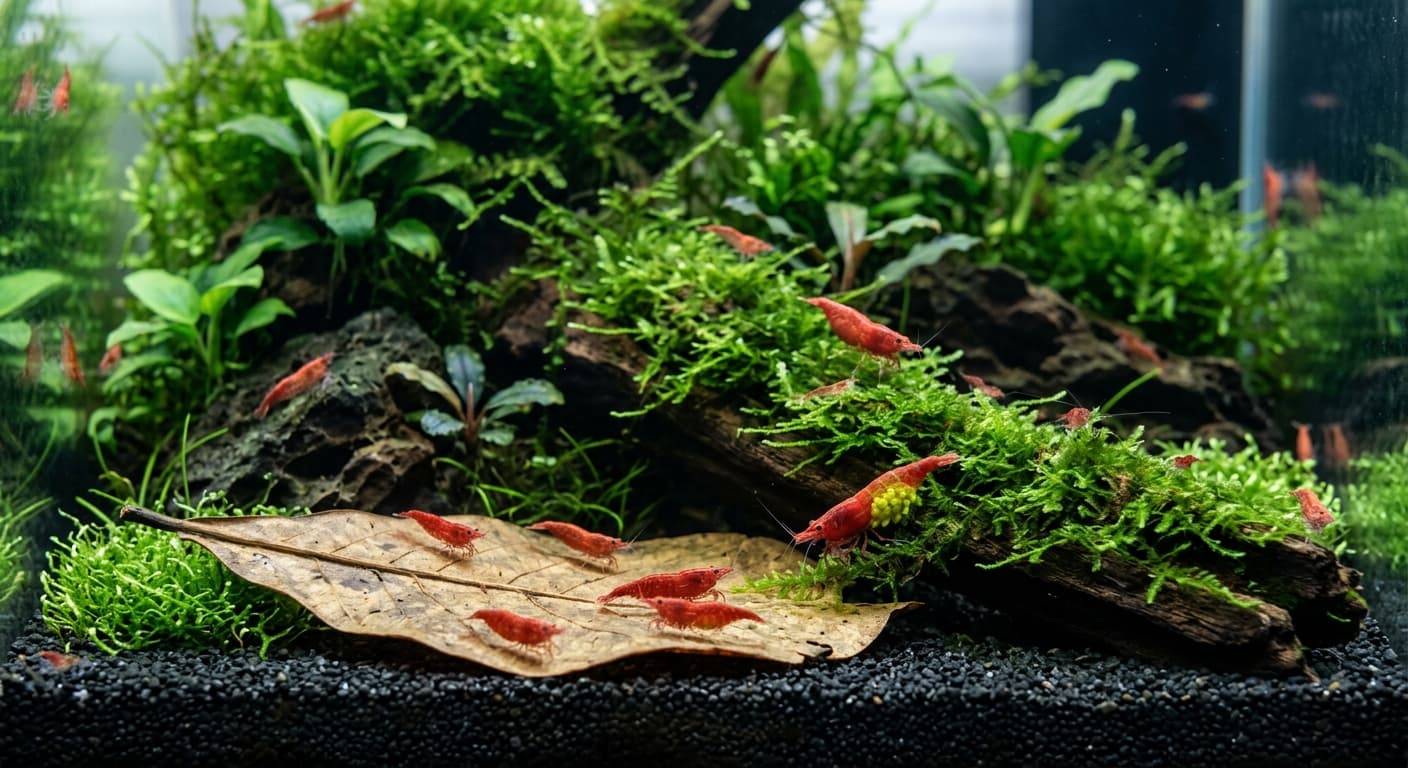
Shrimp Tank Setup: A Beginner's Guide to Cherry Shrimp
Cherry shrimp (neocaridina davidi) are hardy, visually striking, and will breed on their own in a stable environment without any intervention. The challenge is stability. Shrimp do not tolerate sudden parameter changes or the chemicals that fish tanks routinely use. Set it up right from the start and a cherry shrimp colony will run itself.
01
Neocaridina vs Caridina: Start With the Right Shrimp
Freshwater shrimp for aquariums fall into two main groups with very different care requirements.
Neocaridina (cherry shrimp, blue dream shrimp, blue velvet, orange rilis, and dozens of color variants) are the beginner shrimp. They tolerate a wide range of water parameters, breed readily, and bounce back from minor mistakes. All neocaridina color variants have the same care requirements. The different colors are just selective breeding of the same species.
Caridina (crystal red shrimp, bee shrimp, tiger shrimp, shadow mosura) require specific, narrow water parameters: low KH (0-2 dKH), lower pH (5.8-7.0 depending on species), and very soft water. They are unforgiving of parameter swings and will die quickly in typical tap water. They also cost significantly more per shrimp.
Start with neocaridina. Specifically, red cherry shrimp are the most widely available and least expensive. Once you have a stable colony running for 6-12 months and understand shrimp water chemistry, then consider caridina.
This guide is written for neocaridina shrimp. The tank setup, filtration, and water parameter targets here are not appropriate for caridina.
02
Tank Size and Equipment
Tank size: 5-10 gallons is ideal for a beginner shrimp tank. Larger volumes are more stable, but shrimp have such a small bioload that a 10-gallon tank can support 50-100 shrimp without filtration strain. A 5-gallon works but leaves less room for error on water quality.
Filter: Use a sponge filter. It is the right filter for shrimp for two reasons. First, sponge filters cannot suck up shrimp or shrimp babies (shrimplets are tiny enough to get pulled into HOB and canister filter intakes). Second, the gentle flow rate is appropriate for shrimp, which prefer low-flow environments. Run the sponge filter with a small air pump and air line tubing.
If you already own an HOB filter, you can use it with a pre-filter sponge covering the intake. But purpose-built sponge filters are simpler and cheaper for a shrimp-only tank.
Heater: Cherry shrimp do well at 65-75°F and do not need a heater if your home stays in that range. They prefer cooler water than most tropical fish. Avoid running them above 78°F, where oxygen levels drop and metabolism stress increases. If your home drops below 65°F in winter, a small adjustable heater set to 70°F is worthwhile.
Lighting: Any moderate light works. Shrimp do not have special lighting requirements. If you plan to keep live plants (recommended), use a light appropriate for the plants.
Aquaneat Aquarium Bio Sponge Filter
Sponge filters are the right choice for shrimp: no intake to suck up babies, gentle flow, and solid biological filtration in one simple unit.
03
Water Parameters and Chemistry
Cherry shrimp are tolerant but not bulletproof. The parameters that matter most:
Temperature: 65-75°F. They survive outside this range but thrive within it.
pH: 7.0-7.8. Stable pH within this range is more important than hitting a specific number. Avoid tanks where pH swings more than 0.5 points over the course of a day.
GH (general hardness): 6-8 dGH. Cherry shrimp need minerals, particularly calcium and magnesium, for molting successfully. Soft water below 4 dGH causes failed molts, where shrimp get stuck in their old shell and die. If your tap water is very soft, use SaltyShrimp GH/KH+ or Seachem Equilibrium to bring GH up to the target range.
KH (carbonate hardness): 2-4 dKH. Enough to buffer pH stability without going too hard.
Ammonia and nitrite: 0 ppm, always. Shrimp have zero tolerance for ammonia or nitrite. Do not add shrimp to an uncycled tank, and never skip water changes long enough for nitrates to climb above 20 ppm.
Nitrates: Below 20 ppm. Shrimp start showing stress at 20-30 ppm and die off above 40 ppm. This is much lower than the 40 ppm threshold for most fish.
Copper: Zero. Copper is lethal to shrimp at concentrations that are safe for fish. Check the ingredient label on any medication, fertilizer, or tap water treatment you plan to use in a shrimp tank. Some tap water also contains trace copper from old pipes. If you suspect this, use a water conditioner that binds heavy metals.
Test your water with the API GH and KH test kit (separate from the master kit) before adding shrimp. Know your parameters.
API GH and KH Test Kit
The master test kit does not include GH or KH. For shrimp, both matter a lot. This separate kit covers them.
SaltyShrimp GH/KH+
If your tap water is too soft, this remineralizes RO or soft water to the right GH and KH ratio for neocaridina shrimp.
04
Substrate, Plants, and Hiding Spots
Substrate: Shrimp spend most of their time on the substrate grazing on biofilm and algae. They prefer fine-grain substrate over large gravel because it provides more surface area for biofilm growth. Dark substrates (black sand, dark planted substrate) make cherry shrimp display their red coloration more vividly. They tend to pale out on white or light sand.
Fluval Plant and Shrimp Stratum is a popular choice for shrimp tanks. It supports plant growth, buffers toward the right pH, and has a texture shrimp graze on readily. Plain inert black sand is a cheaper option that works well.
Plants: Live plants are highly recommended for shrimp tanks. They absorb nitrates and ammonia, provide grazing surfaces covered in biofilm, and give shrimp somewhere to hide during the vulnerable molting period. Shrimp that just molted are soft-bodied and helpless for several hours. Cover lets them hide until their new shell hardens.
Java moss is especially useful. Shrimp constantly pick through its fine strands for food, and shrimplets hide in it effectively. Anchor it to driftwood or rocks. Other good options: anubias (attach to hardscape), water wisteria (fast-growing, absorbs nutrients), floating plants like frogbit (provides shade and biofilm on roots).
Hides and hardscape: Shrimp also use caves, hollow driftwood, and gaps in rocks as molt hiding spots. Even a few small stones arranged to create gaps is enough. Indian almond leaves on the substrate break down slowly and provide grazing surfaces, tannins that keep shrimp comfortable, and another micro-habitat layer.
Indian Almond Leaves (Catappa)
Decomposing leaves provide biofilm for shrimp to graze on, release beneficial tannins, and give shrimplets hiding spots. A standard addition to shrimp tanks.
05
Feeding and Maintenance
Feeding: Shrimp in a tank with live plants and established biofilm often need very little supplemental feeding. In a mature tank, they graze continuously on algae, biofilm, and decomposing plant matter. Overfeeding is a more common problem than underfeeding. Uneaten food spikes ammonia and crashes parameters.
Feed a small amount 2-3 times per week, not daily. Use shrimp-specific foods (Hikari Shrimp Cuisine, GlasGarten Shrimp Baby Food, or similar) for complete nutrition. Blanched vegetables (zucchini, spinach, cucumber) are accepted and provide variety. Remove any uneaten food after 2-3 hours.
Water changes: Do smaller, more frequent changes than you would for fish. 10-15% weekly rather than 25-30%. Large water changes cause sudden parameter shifts that shrimp cannot handle as well as fish. Always match temperature and treat with dechlorinator before adding new water. Pour new water in slowly or use a drip method, especially if your tap water parameters differ significantly from the tank.
What to avoid: No copper-based medications or fertilizers. No fish medications in general unless labeled shrimp-safe. No aggressive tank mates. Most fish will eat shrimp, especially shrimplets. If you want tank mates, limit to small, non-predatory species: small rasboras (chili rasboras work well), otocinclus, or nerite snails.
Signs the tank is thriving: Shrimp grazing actively and in the open, females carrying eggs (a green or yellow cluster under their tails), shrimplets visible in moss and plant roots, and visible population growth over several months.
Hikari Shrimp Cuisine
Complete sinking shrimp food that cherry shrimp readily accept. Small wafer form makes it easy to control portion size and remove uneaten food.
Table of Contents
Related Content
Popular Fish Species
Essential Gear
Best Aquarium Test Kit for Freshwater Tanks
API Freshwater Master Test Kit
Frequently Asked Questions
Sources & Further Reading
- Neocaridina davidi — Wikipedia
Biology, natural habitat, and water parameter requirements for the cherry shrimp species.
- FishBase — Global Species Database
Species-specific parameter data used to verify temperature and water chemistry requirements cited in this guide.