Axolotl
Ambystoma mexicanum
Overview
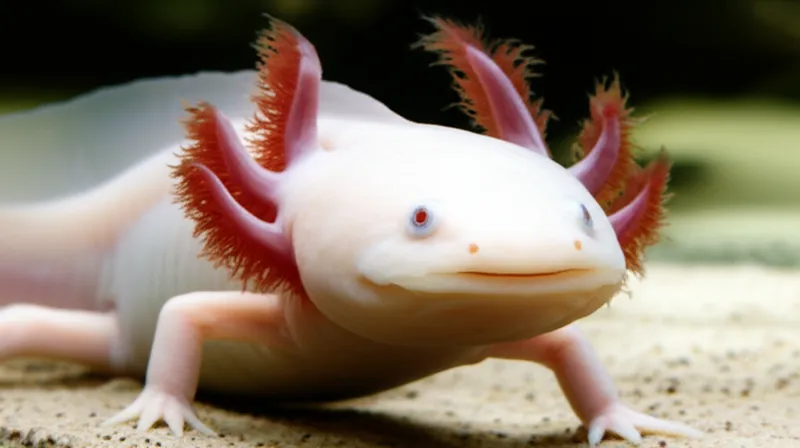
Axolotls are not fish. They are permanently aquatic salamanders that never undergo metamorphosis, spending their entire lives in a larval-like state with external feathery gills. They are native to Lake Xochimilco in Mexico City, where they are critically endangered in the wild. In captivity, though, they are bred in huge numbers and have become one of the most popular aquatic pets online, especially with younger keepers. The leucistic morph (white body with pink gills) is the most common and the one you see everywhere on social media. They grow to 9-12 inches, live 10-15 years, and can regenerate lost limbs, which is genuinely wild from a biology standpoint. The catch is that they have very specific care requirements that eliminate most of the usual fishkeeping shortcuts. They need cold water (60-68 degrees), which means no heater and possibly an aquarium chiller depending on where you live. They cannot be kept with fish. They need fine sand substrate or bare bottom because gravel impaction is a real and sometimes fatal risk. They are rewarding pets but not low-maintenance ones.
Tank Setup
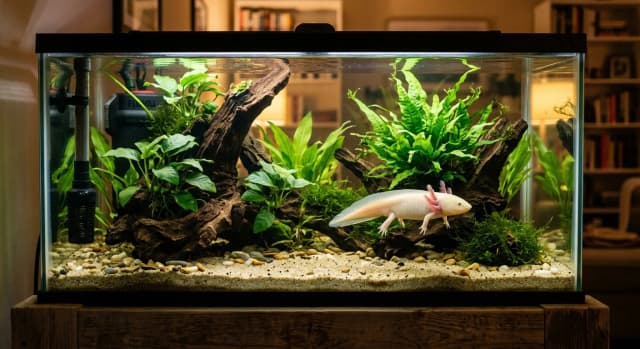
A well-setup aquarium suited to Axolotl
A 20-gallon long is the minimum for one axolotl. A 40-gallon breeder is better and necessary if keeping two. Use fine sand substrate or bare bottom only. Gravel is off the table. Axolotls swallow substrate while eating, and gravel pieces can cause intestinal impaction that requires veterinary intervention or is fatal. Play sand, pool filter sand, or aquarium sand with grains under 1mm all work. Provide hides using PVC pipes, terracotta pots, smooth stones, or aquarium-safe caves. Axolotls are shy and stressed without hiding spots. Live plants are optional but Java fern and Anubias attached to driftwood can work in the cold water. Skip the heater entirely. If your room temperature keeps the water above 68 degrees, you need an aquarium chiller or a fan blowing across the water surface to bring it down. Lighting should be dim since axolotls have no eyelids and bright light stresses them. A sponge filter or a gentle hang-on-back filter works for filtration. Avoid strong flow because they are slow swimmers with delicate gills.
Water Parameters
Temperature is the single most important parameter. Keep it between 60-68 degrees Fahrenheit, with 64 being ideal. Above 68 degrees, axolotls become stressed, stop eating, and become susceptible to fungal infections. Above 72 degrees, you are in emergency territory. This cold water requirement is the biggest challenge for most keepers, especially in summer or warm climates. A clip-on fan blowing across the surface can drop temperature by 2-4 degrees. An aquarium chiller handles it more reliably but is a higher-end investment. pH should be 7.0-8.0. They prefer slightly hard, alkaline water. Ammonia and nitrite must be zero. Axolotls produce a lot of waste for their size, so a fully cycled tank and regular water changes (20-25% weekly) are non-negotiable. Use a liquid test kit, not strips. If your tap water contains chloramine (common in city water), a conditioner that neutralizes both chlorine and chloramine is necessary.
Diet & Feeding
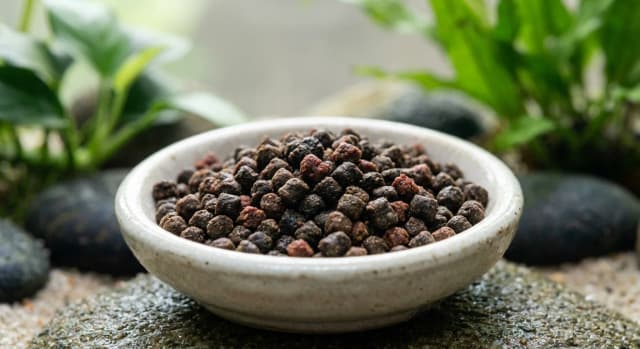
Quality nutrition supports Axolotl health and color
Axolotls are carnivores. Earthworms (nightcrawlers) are the single best staple food. Cut them into pieces for juveniles, feed whole worms to adults. A fully grown axolotl eats 2-3 nightcrawlers every other day. Hikari sinking carnivore pellets work as a secondary food but should not be the only diet. Frozen bloodworms are a good treat and useful for younger axolotls whose mouths are too small for earthworms. Avoid feeder fish entirely. They carry parasites and are nutritionally poor. Hand-feeding with long tweezers or forceps is common and helps build trust between you and the axolotl. They have poor eyesight and locate food primarily by smell and by detecting water movement. Wiggling a worm near their face triggers the feeding response. They snap at food quickly and swallow it whole, which is why substrate size matters so much. Anything that fits in their mouth will get swallowed.
Behavior & Temperament
Axolotls are calm, slow-moving animals that spend most of their time sitting on the bottom of the tank or inside a hide. They are most active at dawn and dusk. During the day, they typically pick a spot and stay there for hours. They respond to movement outside the tank (that is usually you walking by) and will often come to the glass at feeding time once they learn the routine. They should not be handled. Their skin is permeable and sensitive to oils, soap residue, and temperature differences from your hands. If you need to move one, use a soft mesh net or a container to scoop it with tank water. Multiple axolotls can be housed together if they are similar in size. Smaller axolotls will get their limbs bitten by larger ones. Yes, the limbs grow back, but that does not make it okay. Keep similarly sized individuals together or house them separately.
Compatible Tankmates
The honest answer is that axolotls should be kept alone or with other axolotls of the same size. Fish are not compatible. Small fish will be eaten, and larger fish will nip at the axolotl's gills, which can cause infection and permanent damage. Goldfish are sometimes suggested as tankmates because they also like cold water, but they nip gills and are too large to eat, creating a lose-lose situation. Snails are sometimes added as cleanup crew, but axolotls will try to eat them, and snail shells pose an impaction risk similar to gravel. Ghost shrimp are occasionally used as feeders rather than permanent tankmates. The safest approach is a species-only setup. Two axolotls of the same size in a 40-gallon tank is a good pairing. If you want a community cold water tank, an axolotl is not the right centerpiece for it.
Common Health Issues
Fungal infections are the most common health problem. White, cotton-like growths appear on the gills or body, usually triggered by warm water temperatures or poor water quality. Drop the temperature below 68 degrees and do daily partial water changes. Salt baths (2 tablespoons of aquarium salt per liter of dechlorinated water for 10-15 minutes) help with mild cases. Ammonia burns cause red, inflamed skin and gill tips, almost always from an uncycled tank or infrequent water changes. Impaction from swallowed gravel is a serious emergency. Symptoms include bloating, refusal to eat, and floating. A vet may need to remove the obstruction surgically. Prevention is simple: do not use gravel. Stress from warm water shows as curled gill filaments (the gills fold forward rather than flowing straight back). This is your early warning that temperatures are too high. Limb loss from bites or filter intakes is alarming but not usually life-threatening. Axolotls regenerate limbs over 6-8 weeks in clean, cool water.
Breeding
Axolotl breeding is not difficult if you have a healthy male and female. Males have a noticeably swollen cloaca (the area at the base of the tail). Breeding is triggered by a temperature drop. Lowering the water temperature by 5 degrees for 2-3 weeks simulates seasonal change and often triggers courtship. The male deposits spermatophores (small protein packets) on the substrate, and the female picks them up. She then lays 100-1000 eggs individually over 12-24 hours, attaching them to plants, rocks, or any available surface. Remove the adults after spawning because they eat the eggs. Eggs hatch in about 2 weeks at 64 degrees. Fry need daily feeding of baby brine shrimp or daphnia and must be separated by size as they grow to prevent cannibalism. Breeding is easy. Responsibly rehoming hundreds of baby axolotls is the hard part. Do not breed unless you have a plan for the offspring.
Tankmates to Avoid
These species don't mix well with Axolotl. Tap a name for the full breakdown.
Frequently Asked Questions
Quick Stats
What You Need for Axolotl
Gear that works well for this species, based on what experienced keepers actually use.
Gentle flow that will not push axolotls around or damage their gills. No intake tube to trap limbs. Biological filtration handles their heavy waste load with regular maintenance.
Fine sand that passes through the digestive system safely if swallowed during feeding. Grain size is under 1mm, which is the threshold for impaction risk.
Good secondary food when earthworms are not available. Sinks quickly and holds together well on the bottom where axolotls feed.
Axolotls are sensitive to ammonia and nitrite. Liquid tests catch problems early that strip tests miss. Test twice a week in a newer setup.
Plug in an aquarium fan or chiller and set target temperature. Automatically turns cooling on and off to maintain the cold water axolotls need. Essential in warm climates or during summer.