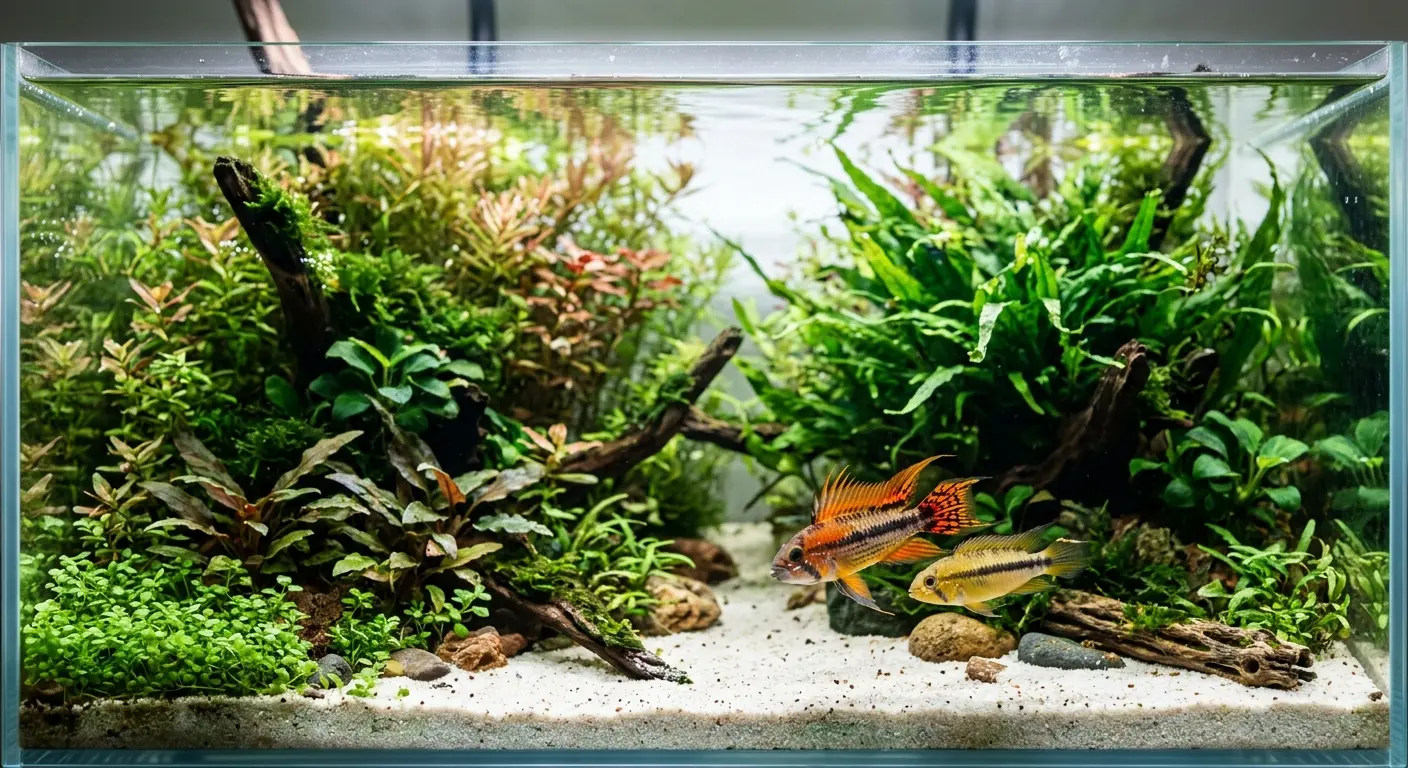
Best Fish for a 30 Gallon Tank (Planted Tanks, Breeders, and Community Builds)
A 30 gallon tank comes in two very different configurations that are worth understanding before you buy. The standard 30 high is 24x12x24 inches: tall and narrow, more column-shaped than useful for most fish. The 30 gallon breeder (also called a 30 long in some markets) measures 36x18x12 inches, shorter but dramatically wider front-to-back than either a 29 gallon or 55 gallon. That 18-inch depth is the defining feature. If you can choose, go with the breeder configuration. This guide focuses on both, but the stocking ideas are built around the breeder footprint, which is what experienced fishkeepers typically mean when they say 30 gallon tank.
01
30 High vs. 30 Breeder
The 30 High (24x12x24)
The 30 high's tall, narrow footprint has limited practical use in freshwater fishkeeping. The 24-inch height is awkward for most fish, and the 12-inch depth is the same as a 20 gallon long. You get extra water volume but not much more useful space. Maintenance requires reaching further down into the water. Lighting a 24-inch water column evenly for live plants is harder and more expensive.
The 30 high works for specific setups: tall decorative arrangements, a single pair of fish that like vertical space (some central American cichlids), or situations where only a narrow footprint fits. For most freshwater stocking, it's not the right choice.
The 30 Breeder (36x18x12)
This is the tank most experienced keepers mean when they recommend a 30 gallon. The 36-inch length matches a 40 breeder and fits standard 36-inch LED fixtures. The 18-inch depth matches a 40 breeder and a 75 gallon, the widest footprint tier in standard freshwater tanks. At only 12 inches tall, it creates a shallow, wide aquascape that looks different from any other tank shape.
The wide footprint is the reason breeders and planted tank enthusiasts gravitate toward this tank. More floor space means more territory for dwarf cichlids, better visual depth for planted layouts, and a wider viewing angle than a taller, narrower tank.
Who should buy a 30 high: Someone with a very narrow space who wants more water volume than a 20 gallon.
Who should buy a 30 breeder: Anyone interested in planted tanks, dwarf cichlids, breeding projects, or bottom-dwelling fish.
02
Dwarf Cichlids: The 30 Breeder's Specialty
The 30 breeder's wide, shallow footprint is ideal for dwarf cichlids. These small South American and West African cichlids are territorial but in a small-scale way. A pair of apistos or kribs needs a defined territory, and the 18-inch depth plus 36-inch length gives them enough separation to coexist with community fish.
Apistogramma (1 Pair)
Apistogramma are small cichlids, 2-3 inches, with male color that rivals any reef fish. Males display deep yellows, blues, and red markings with elaborate fin extensions. Females turn bright yellow-gold when breeding, which is genuinely striking.
Apistogramma cacatuoides is the most widely available and hardy species. Males have a distinctive tall dorsal fin with orange markings. Keep one pair per tank. Two males will fight, and two females will often fight over territory as well. Provide caves (coconut halves or small clay pots) for spawning. If a pair bonds and spawns, the female becomes an aggressive protector of eggs and fry. Temperature 75-82F, pH 6.0-7.5 for tank-raised specimens.
Kribensis (1 Pair)
Kribs are West African dwarf cichlids, easier to breed and slightly less demanding than apistos. Males reach 4 inches with a yellow body and red belly; females are smaller with a more intense red-purple belly that intensifies when ready to spawn. They'll spawn in flowerpot caves without much coaxing.
Kribs are more tolerant of harder, more alkaline water than most dwarf cichlids (pH 7.0-8.0 works fine), making them easier to keep alongside community fish that prefer standard water parameters. Temperature 75-81F. In a 30 breeder with sand substrate and a few caves, a kribensis pair will spawn reliably.
German Blue Rams (1 Pair)
Same as in a 40 breeder, German blue rams in a 30 breeder are stunning fish that require careful water management. Warm (78-84F), soft, slightly acidic (pH 5.5-7.0), zero ammonia tolerance. The 30 breeder provides adequate territory for a single pair. The limitation is that warm, soft water needed for rams narrows your schooling fish options significantly.
03
Community Schooling Fish
Harlequin Rasboras (10-12)
The 36-inch length of a 30 breeder gives harlequin rasboras the room to school properly. A group of 10-12 moving as a formation across a planted 30 breeder is a genuinely rewarding setup to watch. They're compatible with dwarf cichlids, tolerating temperatures and pH that overlap with apistos and kribs, and peaceful enough that cichlid pair aggression doesn't extend to them.
Ember Tetras (12-15)
Ember tetras are tiny, under an inch, with a warm orange coloring. In a 30 breeder with plants, a group of 15 ember tetras creates a gentle, warm-colored cloud of activity that doesn't overwhelm the visual space the way larger schooling fish would. They're peaceful, stay in the mid-water, and look spectacular in a planted tank lit to emphasize the orange.
They're also genuinely compatible with a wide range of dwarf cichlids because they're small, fast, and stay mostly above the cichlid territory zone. Temperature 72-80F, pH 6.0-7.5.
Celestial Pearl Danios (10-12)
Celestial pearl danios (also called galaxy rasboras) are small spotted fish with red, blue, and orange accent markings. At 0.75-1 inch, they're extremely peaceful, and the spotted pattern looks unique compared to the typical tetra/rasbora schooling fish. A group of 10-12 in a planted 30 breeder provides gentle mid-water activity without competing with the dwarf cichlid pair for visual attention. Temperature 72-79F, pH 6.0-7.5.
Fluval Bug Bites Tropical Fish Food
Small pellet size works for ember tetras, CPDs, and rasboras while the protein content also suits dwarf cichlids. One food for the whole tank.
04
Bottom Dwellers
Corydoras (6-8)
The 18-inch depth of a 30 breeder is more floor space than a 20 gallon long, making it better suited for larger cory schools. Six to eight bronze, panda, or peppered corydoras have room to form proper foraging groups across the full bottom. They're a natural fit alongside dwarf cichlids. Cories and apistos/kribs use overlapping space but don't conflict directly because cories aren't threatening territory holders.
Fine sand substrate is the standard recommendation. Dwarf cichlids also appreciate sand for digging near caves, making sand the right choice for the whole 30 breeder bottom.
Pygmy Corydoras (8-10)
Pygmy cories (Corydoras pygmaeus) are worth considering in a 30 breeder because they swim in the mid-water column rather than strictly on the bottom. A group of 8-10 pygmy cories adds activity at multiple levels and works particularly well in planted tanks where full-sized cories would constantly disturb plants while foraging. Temperature 72-79F, pH 6.0-7.5.
Cherry Shrimp or Amano Shrimp
The 30 breeder's shallow depth and wide floor space makes it excellent for shrimp colonies. Cherry shrimp (a breeding colony of 20-30) or a cleanup group of 8-10 Amano shrimp both work well. Be cautious mixing shrimp with dwarf cichlids: apistos and kribs will eat small shrimp. Amano shrimp at 2 inches are usually left alone by dwarf cichlids; cherry shrimp are small enough to be eaten. If you want shrimp alongside cichlids, keep Amanos.
05
Stocking Plans
The Apisto Planted Tank 1 pair Apistogramma cacatuoides + 12 ember tetras + 8 sterbai corydoras + 8 Amano shrimp
Soft, warm water (pH 6.5-7.2, temperature 78-80F). Heavy planting with anubias, java fern, and a background of vallisneria. Sterbai handle the warmer temperature. Ember tetras fill the mid-water with gentle color. Amanos keep the substrate tidy. The apisto pair is the centerpiece and will eventually spawn.
The Krib Community 1 pair kribensis + 12 harlequin rasboras + 6 bronze corydoras + 3 nerite snails
More flexible water parameters (pH 7.0-7.5, temperature 76-78F). Kribs are easier to keep than apistos and more compatible with standard community fish. Harlequins school reliably and don't trigger krib aggression. Cories and nerites handle cleanup duty.
The CPD Planted Garden 12 celestial pearl danios + 8 pygmy corydoras + 15 cherry shrimp + lots of plants
No centerpiece fish. The CPDs and the planted aquascape are the display. Dense foreground carpets, midground plants, and background vallisneria or stem plants. Cherry shrimp colony that breeds and maintains itself. Pygmy cories add bottom and mid-water movement. Low bioload, beautiful tank, minimal aggression to manage.
The Breeding Setup 1 pair kribensis + 8 pygmy corydoras + 10 ember tetras
Focused setup for anyone interested in actually breeding fish. Kribs spawn readily with minimal encouragement. Once they have fry, the ember tetras and pygmy cories will likely be herded away from the breeding area but not harmed. Fine sand, multiple caves, and moderate flow. A 30 breeder with a spawning krib pair and a cloud of ember tetras is a genuinely rewarding tank to manage.
06
Equipment Notes
Filtration
A 30 breeder at 12 inches tall has less water column than most tanks of similar volume, which slightly reduces natural circulation. A sponge filter plus a small hang-on-back filter (like an AquaClear 20 or 30) handles adequate filtration without creating strong current that would stress dwarf cichlids or shrimp. The sponge filter is especially useful as a biological filter bank for when you clean the HOB media.
For planted builds using CO2, a small canister filter produces less surface agitation that would off-gas CO2, making it the better choice. The Fluval 207 is appropriately sized.
Lighting
A 30 breeder at 12 inches tall is the easiest tank to light for plants. Light penetrates all the way to the substrate without attenuating much. A standard 36-inch aquarium LED in the 6500K range supports low to medium-light plants easily. For a carpet plant or high-tech planted tank, a medium-output light with a timer is appropriate.
Substrate
Fine sand is the right substrate for a 30 breeder stocked with dwarf cichlids, corydoras, or shrimp. All three benefit from it: cichlids dig, cories need soft material for their barbels, and shrimp graze across the full floor. Pool filter sand is the most economical option; Fluval Stratum works well for planted tanks where you want the nutrient-rich substrate.
Pool Filter Sand
Fine-grained and safe for dwarf cichlids and corydoras barbels. Available in bulk quantities that fill a 30 breeder floor completely without breaking the budget.
API Freshwater Master Test Kit
Liquid test kit accuracy matters more in dwarf cichlid tanks where you're maintaining specific pH ranges. Test strips don't give you the precision you need for sensitive fish.
Table of Contents
Related Content
Essential Gear
Best Aquarium Heater for Fish Tanks
Hitop Adjustable Aquarium Heater