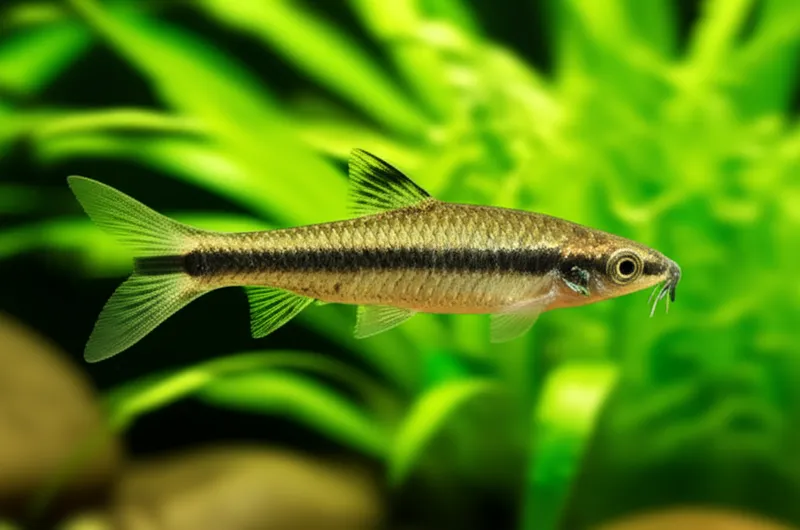
Siamese Algae Eater
Crossocheilus oblongus
Overview
The Siamese Algae Eater is famous for one thing: it actually eats black beard algae (BBA). Most algae-eating fish ignore BBA entirely. Otocinclus eat soft green algae. Bristlenose plecos scrape diatoms and green spot algae. But BBA? Almost nothing touches it except SAEs. That alone makes them popular. Here is what nobody tells you at the store, though. SAEs get 6 inches long. That small 2-inch fish in the pet store tank is going to triple in size within a year. And as they get older and discover pellets, flakes, and frozen foods, they get lazy about eating algae. A well-fed adult SAE may never touch BBA again. They are active, fast swimmers that need horizontal space, and they can be mildly pushy toward slower, smaller fish as they mature. They are a useful fish, but go in with realistic expectations about their algae eating dropping off as they grow.
Tank Setup
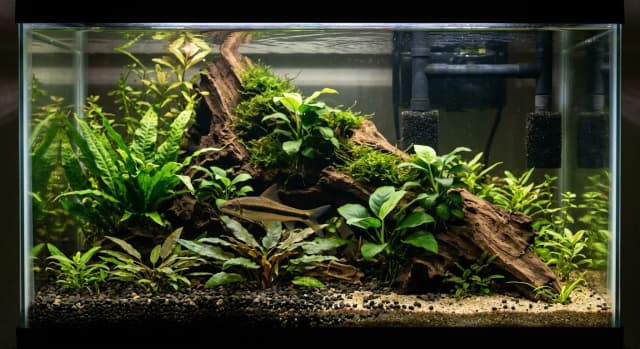
A well-setup aquarium suited to Siamese Algae Eater
A 30-gallon tank is the absolute minimum, but 55 gallons is much better given their adult size and activity level. These are horizontal swimmers that need length more than height. A 4-foot tank is ideal. Use any substrate you prefer. Provide driftwood, rocks, and plants for resting spots. SAEs like to perch on broad-leaf plants like Anubias and sword plants, often lying directly on the leaves. A tight-fitting lid is necessary because they can jump, especially when startled. Moderate to strong filtration works well since they come from flowing streams and appreciate some current. A hang-on-back or canister filter with a directional output nozzle lets you create a flow pattern they enjoy swimming in.
Water Parameters
Keep the temperature between 75-79 degrees Fahrenheit. They prefer a slightly narrower range than many tropical fish. pH should stay between 6.5 and 7.5. They are not particularly sensitive to water chemistry as long as conditions remain stable. Weekly 25% water changes keep nitrates manageable. Keep ammonia and nitrite at zero. They come from well-oxygenated streams, so good surface agitation or an air stone helps. Avoid letting temperature creep above 80 degrees for extended periods since they are not a warm-water species by preference.
Diet & Feeding
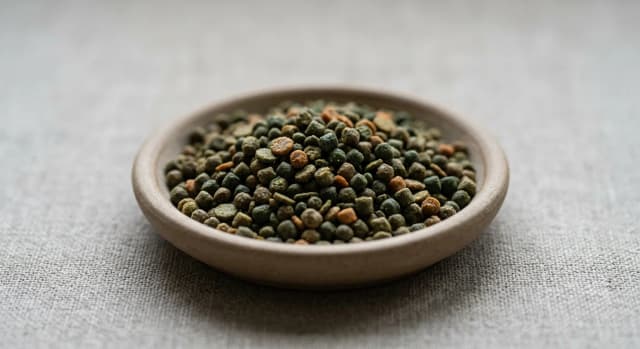
Quality nutrition supports Siamese Algae Eater health and color
Young SAEs actively graze on algae, including the black beard algae (BBA) that other fish refuse to touch. This is their main selling point. The catch is that once they discover regular fish food, many of them lose interest in algae. To keep them eating algae as long as possible, avoid overfeeding the tank. If there are flakes and pellets raining down twice a day, why would they bother scraping tough BBA off a rock? Feed the tank once daily and use sinking foods that reach other fish directly, rather than broadcasting food everywhere. When supplementing their diet, offer blanched zucchini, spirulina wafers, and frozen bloodworms in moderation. A slightly hungry SAE is a better algae eater than a well-fed one. That said, do not starve them. They need food. Just do not make it too easy.
Behavior & Temperament
SAEs are active, fast swimmers that cover the entire tank throughout the day. Juveniles spend most of their time grazing surfaces. Adults tend to swim laps, rest on broad leaves, and generally act like they own the place. They are not aggressive in the traditional sense, but their constant activity and size can stress smaller, slower fish. They sometimes chase each other and other bottom-dwelling fish in territorial displays, though actual injuries are rare. They do not school but tolerate each other fine in groups. Keeping 2-3 in a larger tank is common. A single SAE works fine too. One important behavioral note: they rest by perching on leaves and hardscape rather than sitting on the substrate. You might see them lying completely still on an Anubias leaf and think they are sick. They are just resting.
Compatible Tankmates
SAEs work with most medium-sized community fish. Cardinal tetras, harlequin rasboras, cherry barbs, corydoras, and bristlenose plecos are all fine companions. Avoid keeping them with very small fish or slow-moving species that might get bullied by the SAE's activity level. Bettas are a poor match because the constant motion stresses them. Shrimp are generally safe with SAEs, but large adults may occasionally chase cherry shrimp. Amano shrimp are a better match since they are bigger and faster. Do not keep SAEs with Chinese algae eaters, which look similar but become aggressive as adults and may attach to the sides of flat-bodied fish.
Common Health Issues
SAEs are hardy fish with few species-specific health problems. Ich is the most likely issue, typically after purchase or a big temperature swing. Standard ich treatment (raised temperature plus medication) works well. They are not as sensitive to medications as scaleless fish, so normal dosing is fine. Obesity is actually the bigger long-term concern. Adult SAEs that give up on algae and eat rich foods pack on weight. A fat SAE is a common sight in mature community tanks. Cut back on feeding if your SAE looks rounded. Internal parasites can show up as weight loss despite heavy eating, usually in wild-caught specimens. Quarantine new fish for 2 weeks before adding them to your main tank.
Breeding
SAEs have not been reliably bred in home aquariums. Most specimens sold in stores are wild-caught or commercially bred in Asian fish farms using hormone injections. There are scattered reports of accidental spawnings in large, heavily planted tanks, but no one has published a repeatable method. If you are interested in breeding them, a large group in a species tank with seasonal temperature fluctuations might trigger spawning, but do not count on it. This is one of those fish where breeding is a happy accident rather than a realistic goal.
Tankmates to Avoid
These species don't mix well with Siamese Algae Eater. Tap a name for the full breakdown.
Frequently Asked Questions
Quick Stats
Related Guides
Compare
What You Need for Siamese Algae Eater
Gear that works well for this species, based on what experienced keepers actually use.
Strong filtration with adjustable output for a 55-gallon tank. Creates the moderate current that SAEs enjoy swimming in. Multiple media baskets for biological and mechanical filtration.
Spirulina-based sinking wafer for when your SAE inevitably stops eating algae off the glass. Low enough in protein to not completely replace their algae motivation.
SAEs are jumpers, especially when startled. A glass lid keeps them in the tank while still allowing gas exchange. Cut-out section accommodates filter intakes and heater cords.
Increases dissolved oxygen, which SAEs appreciate given their stream origins. Also helps drive surface agitation for gas exchange in larger tanks.