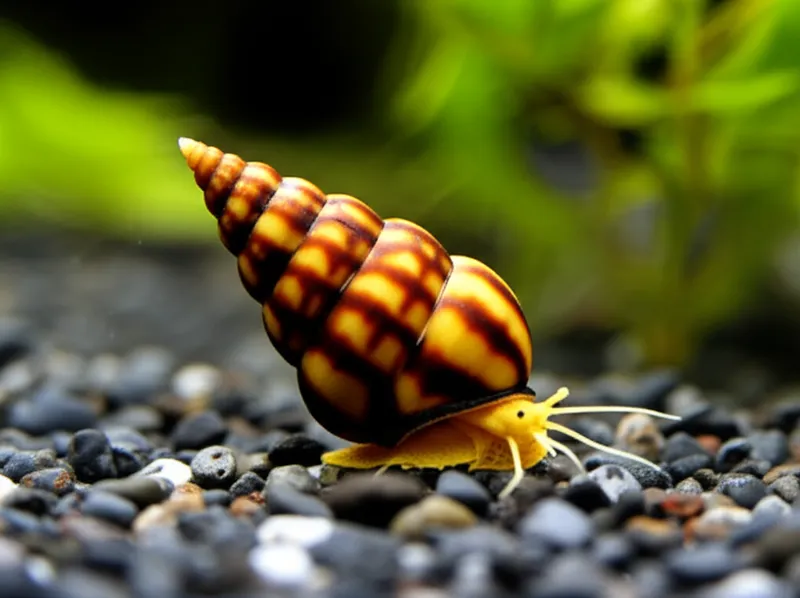
Assassin Snail
Clea helena
Overview
Assassin snails are the biological answer to a pest snail infestation. If your tank is overrun with bladder snails, ramshorn snails, or Malaysian trumpet snails, a handful of assassin snails will slowly and methodically work through the population. They hunt by burrowing into the substrate and ambushing other snails, using a proboscis to drill into the shell. It sounds brutal, and it kind of is. The upside is that they actually look good doing it. Their conical shells have distinctive dark brown and bright yellow stripes, making them one of the more attractive snails in the hobby. They are small (about an inch), slow breeders, and completely plant-safe. Once the pest snails are gone, they switch to scavenging leftover food, dead plant matter, and protein-rich sinking foods. They will not eat nerite snails or mystery snails because those species are too large for them to attack.
Tank Setup
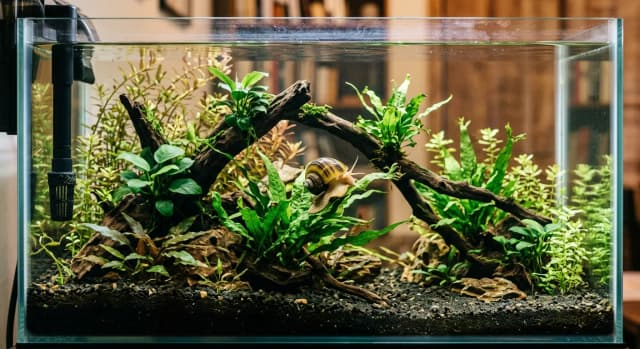
A well-setup aquarium suited to Assassin Snail
A 10-gallon tank is enough for 3-5 assassin snails. They spend most of their time burrowed in the substrate with just their siphon sticking out, so sand or fine gravel is the best substrate. Coarse gravel makes burrowing difficult and you will see them less often. Provide some hardscape with rocks and driftwood. They do not care about plants one way or the other since they do not eat them and do not need them for cover. Filtration is straightforward. Any filter suitable for your tank size works. Assassin snails have very low bioload and produce minimal waste compared to fish. No special equipment needed. They are one of the most low-maintenance additions you can make to a tank.
Water Parameters
Keep the temperature between 70-80 degrees Fahrenheit, with 75 being comfortable. pH should be 7.0-8.0. Like all snails, assassin snails need calcium for shell growth, so slightly hard water is better than very soft water. If your water is soft, a piece of cuttlebone in the tank or a calcium supplement in the water helps prevent thin, eroded shells. Weekly water changes of 20-25% keep conditions stable. Ammonia and nitrite at zero, nitrates below 20 ppm. They tolerate a range of conditions and are not fussy about water chemistry as long as it stays consistent.
Diet & Feeding
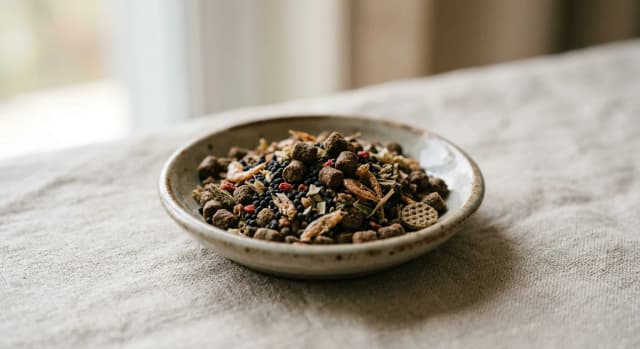
Quality nutrition supports Assassin Snail health and color
In a tank with pest snails, assassin snails will feed themselves. A single assassin snail eats roughly 1-2 pest snails per day, depending on the size of the prey. Once the pest population is controlled, supplement with protein-rich sinking foods. Frozen bloodworms, sinking carnivore pellets, and shrimp wafers all work. They will also scavenge any uneaten fish food that reaches the bottom. Feed every other day if there are no pest snails left to hunt. They ignore algae wafers and vegetables. These are carnivores and they want protein. If you see empty pest snail shells piling up near a particular rock or corner, that is where your assassin snail has been dining.
Behavior & Temperament
Assassin snails spend most of the day burrowed in the substrate, emerging to hunt at night or when they detect food. You will often see just their striped siphon tube poking above the sand. When they find a pest snail, they latch on and use their proboscis to consume the prey, which can take several hours. They ignore fish entirely and fish ignore them. They are solitary and do not need companions of their own species, though they are perfectly fine in groups. If you keep multiple assassin snails, they will eventually breed, but the rate is slow compared to the pest snails they eat. After the pest snails are gone, they become more visible as they actively forage for food on the substrate surface.
Compatible Tankmates
Assassin snails are compatible with nearly any fish. They are too small and well-armored for most fish to bother, and they pose no threat to anything except other snails. They are safe with tetras, rasboras, corydoras, bristlenose plecos, bettas, and most community fish. Nerite snails and mystery snails are safe because they are too large for assassin snails to attack. Do not keep them with snail species you want to protect, especially smaller ones like ramshorn or bladder snails (unless eliminating those snails is the goal). There is some debate about whether assassin snails eat shrimp. They can occasionally catch baby shrimp, but healthy adult cherry shrimp are generally fast enough to escape. The risk is low but not zero.
Common Health Issues
Shell erosion is the most common problem, caused by soft or acidic water that dissolves the calcium in their shells. You will see the shell becoming thin, pitted, or losing its color pattern. Add calcium to the water through cuttlebone, crushed coral in the filter, or a remineralizer. Parasites are rare in assassin snails. The most common cause of death is starvation after they have eaten all the pest snails and the keeper forgets to provide supplemental food. Watch for inactivity. A healthy assassin snail moves daily, even if it is just repositioning in the substrate. A snail that has not moved in several days may be dead. The smell test works: a dead snail smells terrible. A sleeping or resting snail does not smell.
Breeding
Assassin snails breed slowly, which is exactly what you want from a snail you are adding to control other snails. They are not hermaphrodites like most pest snails. You need a male and a female, and there is no reliable way to sex them visually. If you keep a group of 5-6, you will almost certainly have both sexes. Females lay single eggs in small, square-shaped capsules attached to hard surfaces. Each capsule contains one egg that hatches in about 8 weeks. The baby snails burrow into the substrate immediately and you will not see them for months. They reach full size in about 6 months. You will never end up with an assassin snail population explosion the way you do with bladder or ramshorn snails. Most keepers report finding a few juveniles per month, which is manageable.
Tankmates to Avoid
These species don't mix well with Assassin Snail. Tap a name for the full breakdown.
Frequently Asked Questions
Quick Stats
What You Need for Assassin Snail
Gear that works well for this species, based on what experienced keepers actually use.
Fine sand that lets assassin snails burrow naturally. They spend most of their time partially buried, and coarse gravel prevents this behavior.
High-protein sinking food for after the pest snails run out. Assassin snails are strict carnivores and will not eat plant-based foods.
Dissolves slowly to add calcium, which assassin snails need for healthy shell growth. Sized for small tanks and lasts about a month before needing replacement.