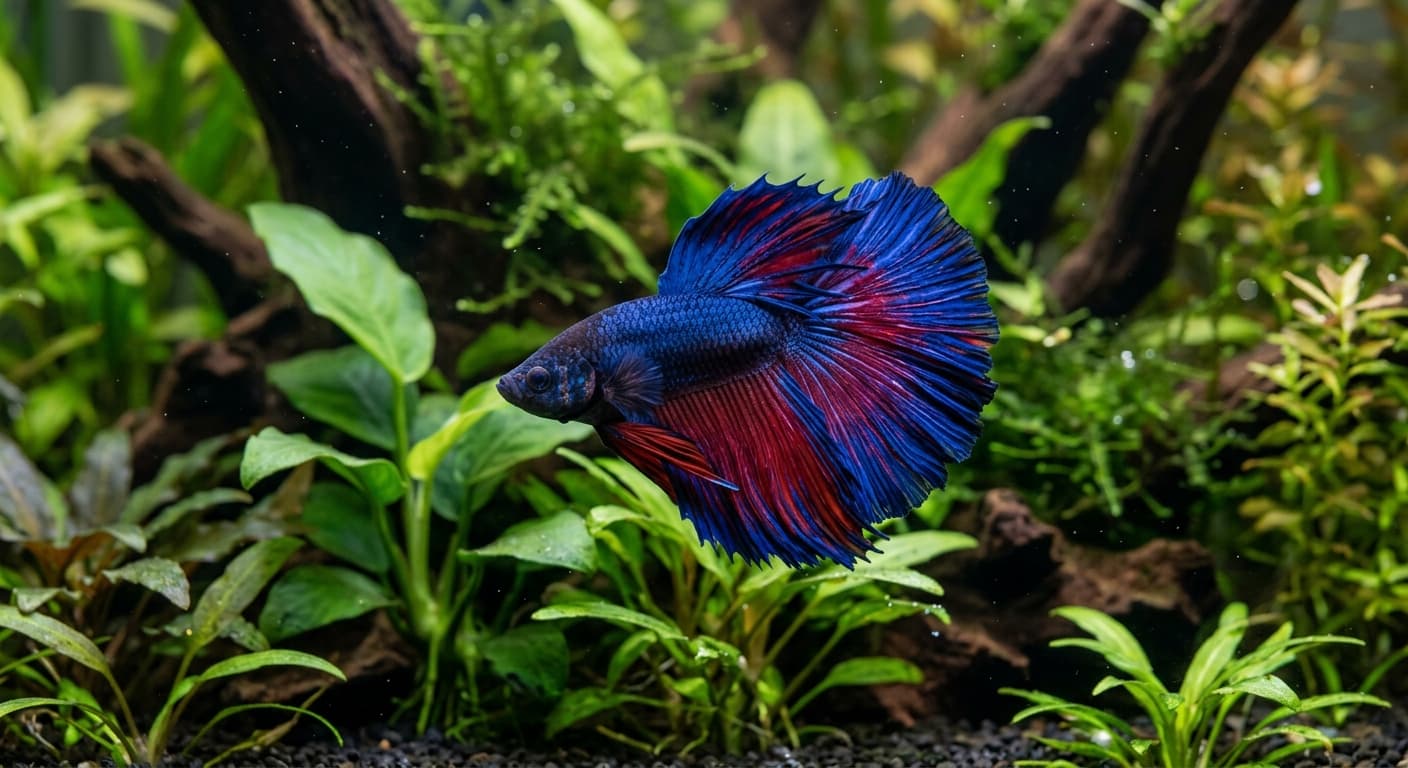
Betta Fish Care Guide: Tank Setup, Feeding, and Health
Betta fish are sold in small cups at every pet store, which creates the impression that a small container is an acceptable home. It is not. Bettas in tiny unfiltered containers survive but do not thrive. They live shorter lives, show poor color, and are much more prone to disease. A properly set up 5-gallon or larger tank with a gentle filter and heater produces a completely different fish: active, colorful, and behaviorally engaged.
01
Tank Setup
Tank size: 5 gallons minimum. This is the floor, not the ideal. A 5-gallon tank with a filter and heater maintains stable water much more easily than a smaller container, but bettas in 10-gallon tanks display more natural behavior and have a larger stable environment to work with. Avoid bowls or containers under 2.5 gallons entirely.
Filtration: Bettas need filtration but are highly sensitive to flow. They come from slow-moving rice paddies, ponds, and drainage ditches in Southeast Asia, and their long fins are not designed for swimming in current. Use a sponge filter or a hang-on-back filter with the output baffled (a piece of filter sponge or a bottle cap over the outflow slows the current). If your betta is constantly fighting the current or his fins are getting blown around, the flow is too strong.
Temperature: 76-82°F. Bettas are tropical fish from warm climates and need a heater in almost any home environment. Below 74°F they become lethargic, stop eating, and are far more susceptible to disease. At 78-80°F their metabolism and immune system function normally. Use an adjustable heater; preset heaters often run hotter or cooler than labeled.
Cover: Bettas are labyrinth fish that breathe atmospheric air at the surface. They also jump. Any betta tank needs a lid or cover. A gap of even a few inches between the water surface and the lid is enough for a determined betta to escape.
Plants and decor: Bettas use plants heavily for resting and cover. Both live and silk plants work well. Avoid plastic plants with sharp edges; betta fins tear easily on rigid plastic. A classic test is to run pantyhose across any decoration; if it snags, it will tear fins. Java fern, anubias, and hornwort are all good options that do not require CO2 or strong lighting.
Aqueon Adjustable Pro Heater
Reliable adjustable heater that holds temperature consistently. Essential for keeping bettas in the 78-80°F range where they stay healthy.
02
Water Parameters
pH: 6.5-7.5. Bettas tolerate a range but do best in slightly acidic to neutral water. Most tap water in the 7.0-7.4 range is fine without adjustment.
Temperature: 76-82°F. The single most important parameter. Temperature swings of more than 4-5°F within a day are a common trigger for fin rot and ich in bettas.
Ammonia and nitrite: 0 ppm. Bettas need a cycled tank before being added. New tank syndrome (ammonia and nitrite spiking in an uncycled tank) kills bettas within days to a week. The cups at pet stores often contain bettas with some ammonia exposure already; this is part of why newly purchased bettas develop fin rot so quickly if not moved into clean, cycled water.
Nitrates: Below 20 ppm with weekly water changes. In a 5-gallon tank, nitrates accumulate quickly. A weekly 25-30% water change keeps them in range. Bettas experiencing chronic high nitrates develop fin deterioration and immune suppression even without other obvious problems.
Hardness: Bettas tolerate moderate hardness without issue. GH of 5-15 dGH is the typical range. They originated in soft, slightly acidic water but have been bred in captivity for generations and adapt to typical tap water.
03
Feeding
Bettas are carnivores. In the wild they eat insects, insect larvae, and small crustaceans. A plant-based or low-protein diet leads to poor color, lethargy, and shortened lifespan.
Staple food: A high-quality betta-specific pellet. Hikari Betta Bio-Gold and Fluval Bug Bites are both good options. Feed 3-5 small pellets twice daily. The pellets should be about the size of the betta's eye; avoid large pellets that expand in the stomach.
Variety: Frozen or freeze-dried bloodworms, daphnia, and brine shrimp 2-3 times per week provide protein variety and improve conditioning. Bettas are particularly enthusiastic about bloodworms, which also improve color in males.
Fasting: One day per week of fasting is standard practice for bettas. It prevents constipation and bloating, which bettas are prone to due to their small digestive tract. If a betta looks slightly pinecone-like (scales sticking out), that is dropsy, a serious condition. Regular fasting and high-protein feeding prevents most constipation issues before they progress.
Overfeeding: The leading cause of water quality problems in betta tanks. In a 5-gallon tank, uneaten food spikes ammonia quickly. Feed only what the betta consumes within 2-3 minutes and remove anything left over.
Hikari Betta Bio-Gold Pellets
Small pellet size appropriate for bettas, high protein content, widely available. One of the cleaner betta foods in terms of ingredient quality.
04
Tankmates and Aggression
Bettas are famous for being aggressive toward other bettas and toward fish that resemble bettas. The reality is more nuanced.
Male-male aggression: Two male bettas cannot share a tank without a divider. They will fight to injury or death. This is not a training issue. It is hardwired behavior that does not change.
Males and females: A male and female betta can be housed together only during active breeding attempts, and even then the male needs to be removed after spawning. Otherwise the male will harass and injure the female.
Tank mates for bettas: Some community fish work with bettas depending on the individual betta's temperament. Good options include: - Corydoras catfish (peaceful, bottom-dwelling, stay out of the betta's territory) - Small tetras like ember tetras (fast, not fin-nippers) - Otocinclus catfish - Nerite snails and mystery snails
Avoid: guppies and other fish with flowing fins (betta reads them as rivals), tiger barbs and serpae tetras (fin nippers), any fish aggressive enough to harass a betta.
Not every betta tolerates tank mates. Some individuals attack anything that moves. Introduce tank mates cautiously and be prepared to remove them if the betta pursues them aggressively.
05
Common Health Problems
Fin rot is the most common betta problem by far. It almost always traces back to water quality: ammonia or nitrite exposure, or consistently high nitrates. See the fin rot guide for the full treatment protocol. In bettas, the first sign is usually ragged or translucent fin edges. Catch it early and clean water alone often resolves it.
Ich presents as white grains of salt on the fins and body, clamped fins, and rubbing against decorations. Raise temperature to 86°F and treat with Hikari Ich-X. See the ich guide for dosing.
Velvet is similar to ich but finer: the fish looks dusted with gold or rust-colored powder rather than salt grains. It is harder to see and often missed until fish start gasping or scratching. Treat with Seachem ParaGuard and raise temperature. Dim the tank lights during treatment; the Oodinium parasite is photosynthetic and light inhibits treatment.
Swim bladder disorder: A betta that floats sideways, sinks, or has trouble controlling buoyancy may have swim bladder issues. Common causes are overfeeding, constipation, or bacterial infection. Fast for 2-3 days first. If the problem persists, look for other symptoms of bacterial infection.
Lethargy without other symptoms: Usually temperature. Check the heater. A betta that goes from active to barely moving overnight almost always has a temperature drop as the cause.
API Freshwater Master Test Kit
Tests ammonia, nitrite, nitrate, and pH. The baseline diagnostic for any betta health problem: check the water before treating with anything.
Table of Contents
Related Content
Popular Fish Species
Essential Gear
Best Filter for a 20 Gallon Tank
Aquaneat 3-Pack Biosponge Filter
Best Aquarium Heater for Fish Tanks
Hitop Adjustable Aquarium Heater
Best Aquarium Test Kit for Freshwater Tanks
API Freshwater Master Test Kit
Frequently Asked Questions
Sources & Further Reading
- Betta splendens — FishBase
Species data for Siamese fighting fish including native habitat, water parameters, and behavioral characteristics.
- Betta splendens — Wikipedia
Biology, distribution, captive care history, and behavioral research on betta fish.
- FishBase — Global Species Database
Species-level water parameter data used to verify temperature and parameter ranges cited in this guide.