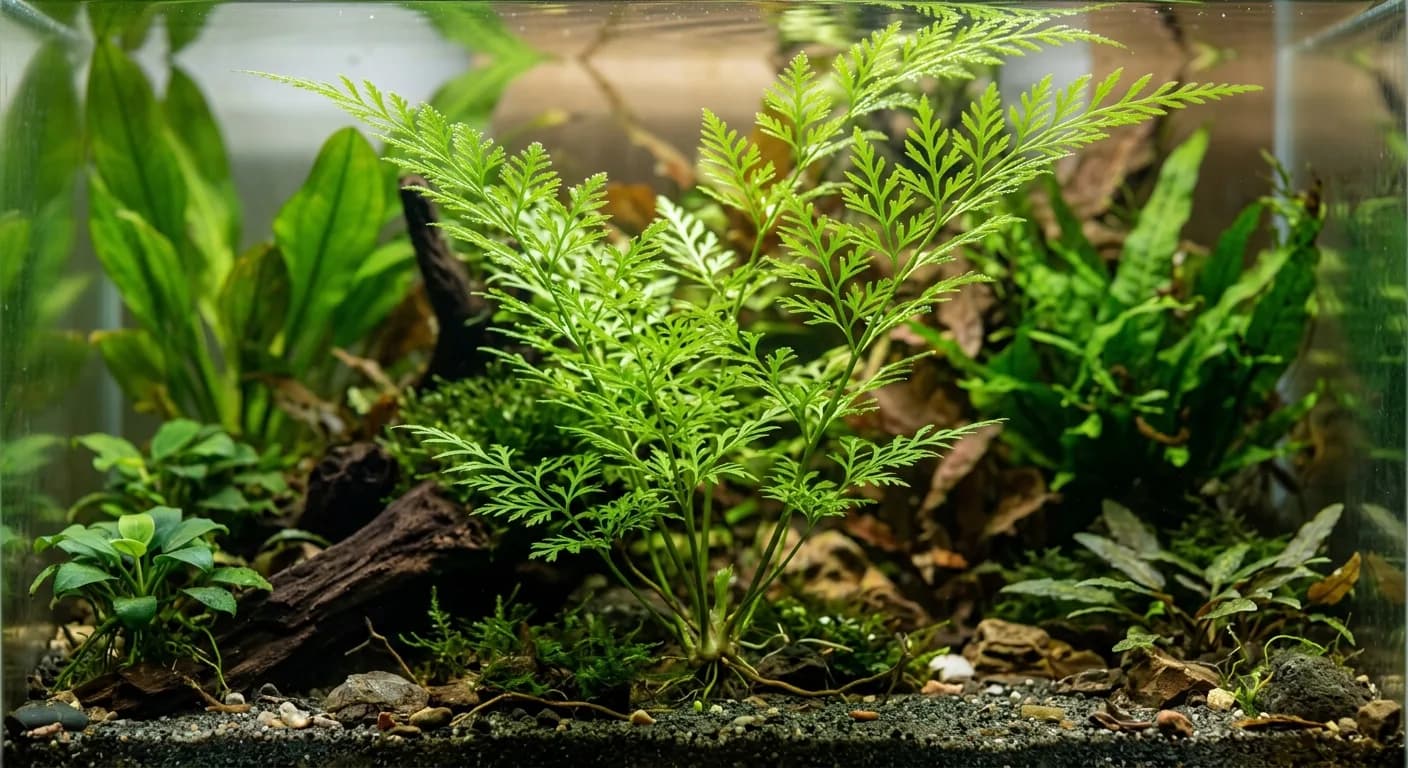
Water Sprite
Ceratopteris thalictroides
Difficulty
1 / 5
Light
medium
CO₂
none
Growth
fast
Placement
floating, midground, background
Max Height
12-18 inches
Tank Min
10 gal
Temp
68–82°F
Overview
Water Sprite is one of the most versatile plants in the hobby because it works two different ways in the same tank. Let it float and it grows fast, pulling nitrates out of the water column and forming a canopy that bettas and gouramis use for cover. Plant it in substrate and it grows slower but makes a proper midground or background bush with feathery light green foliage. Growth rate is fast either way, producing 2 to 4 inches of new growth per week in good conditions. The plant tolerates 68 to 82F and a wide pH range, making it suitable for almost any community tank. Fry survival rates noticeably improve with a floating clump of Water Sprite because the roots hanging down provide perfect hiding cover for newly hatched fish.
Planting
Float it or plant it, both work. Floating gives you the fastest growth and best nitrate uptake because the leaves get direct access to air and the roots hang free in the water column to grab nutrients. For substrate planting, set the base of the stem loosely into the gravel with the roots buried and the crown sitting above the substrate line. Do not push it in deep or pack the gravel tight around it. This plant does not have robust roots and aggressive planting can cut off the crown. Expect some transition time. A floated plant moved to substrate will often melt back the original leaves and regrow with slightly different leaf shape over 2 to 3 weeks.
Water Parameters
Temperature 68 to 82F with 76F as a comfortable sweet spot. pH from 6.0 to 7.5 is fine. GH from 3 to 15 works, so both soft and moderately hard water are acceptable. No CO2 needed. Water Sprite is a heavy water-column feeder, so liquid fertilizer matters more than root tabs. A comprehensive liquid plant food containing iron and potassium, dosed twice weekly at the label rate, keeps the leaves bright green and growing fast. Weekly water changes of 25 to 30 percent prevent nutrient imbalance in heavily planted tanks where this species is colonizing fast. If growth suddenly slows or leaves pale, check iron first.
Care & Maintenance
Trim floating mats weekly to prevent them from covering the entire water surface and blocking light to plants below. I pull a handful of mature plants out every 7 to 10 days in a well-fed tank and compost them. When plantlets growing on mature leaves reach 2 inches, pinch them off and either let them float or plant them, because leaving them attached slows the parent plant. For substrate-planted specimens, trim the tops back to 6 to 8 inches every 3 weeks to keep them from shading nearby plants. Remove any leaves that are yellowing at the base. Do not let trimmings drift into the filter intake, because they clog sponges quickly.
Propagation
Water Sprite propagates itself through plantlets that form on the surface and edges of mature leaves. You will see small ruffled growths along the leaf that gradually develop their own root threads and 2 to 3 miniature leaves. Once a plantlet has roots roughly half an inch long and at least 2 visible leaves, pinch it off between your fingernails. You can float the baby or plant it loosely in substrate. A single healthy mother plant produces 6 to 12 plantlets per month in a well-fed tank, so this species multiplies rapidly. If you want to slow propagation, trim the oldest leaves before plantlets fully develop. If you want more plants, let mature leaves age longer before trimming.
Common Problems
Pale or yellowing leaves almost always signal an iron or nitrogen deficiency, which is common because this plant consumes nutrients fast. Dose a comprehensive liquid fertilizer at the label rate and leaves green up within 7 to 10 days. Melt after moving from floating to planted or planted to floating is normal for the first 2 to 3 weeks. The plant sheds old leaves and regrows new ones adapted to the new condition. Do not pull the plant during this transition. Root loss on planted specimens happens when keepers bury the crown too deep. Fix: replant with roots in substrate and crown exposed. Brown tips on floating leaves sitting directly under high-output LEDs indicate light burn, solved by moving the plant or dimming the light slightly.
What You Need for Water Sprite
Gear that works well for this species, based on what experienced keepers actually use.
Aquarium Co-Op Easy Green All-in-One Fertilizerwater-care
Water Sprite grows fast and feeds heavily from the water column, especially floated. An all-in-one liquid fertilizer keeps growth lush.
NICREW ClassicLED Aquarium LightLight
Medium light drives the fast growth that makes Water Sprite such a good nitrate sponge. A budget LED handles it.