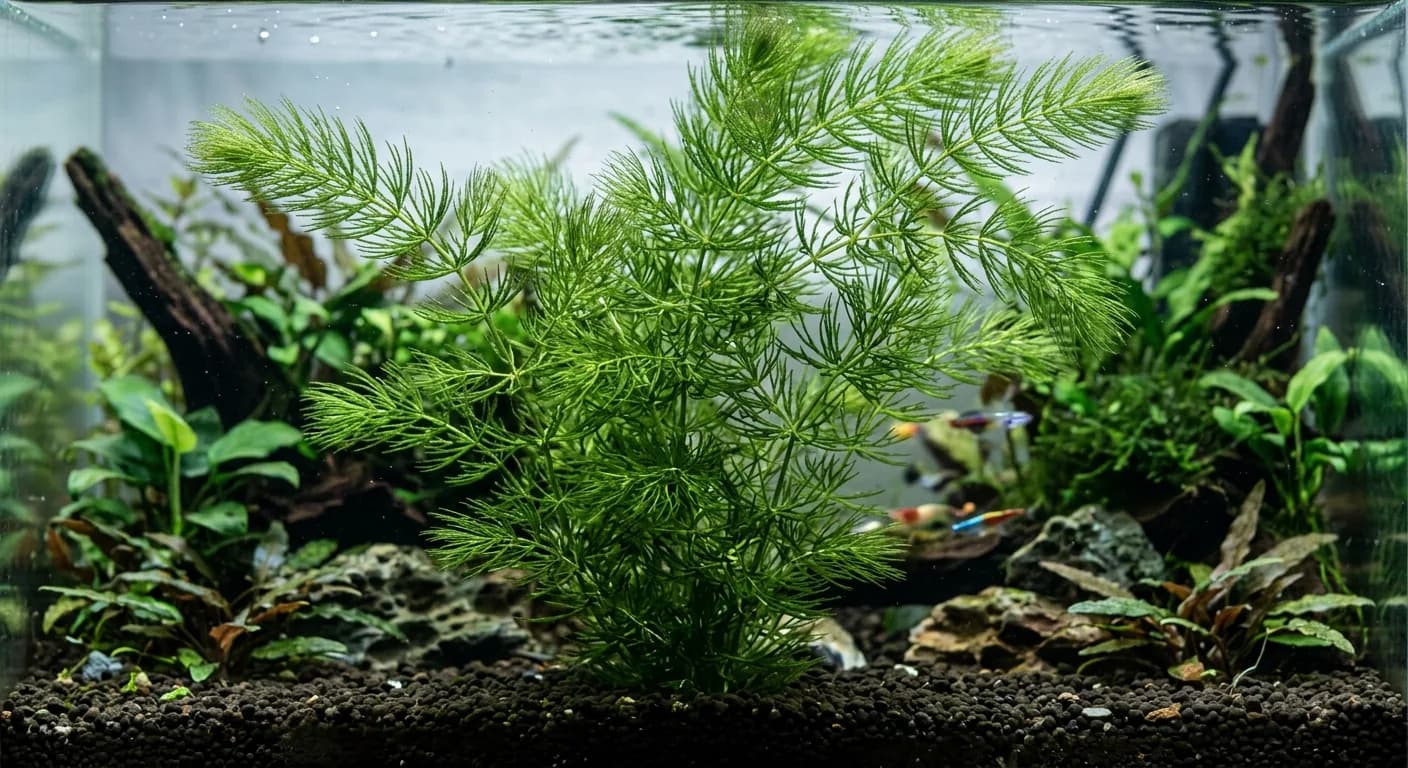
Hornwort
Ceratophyllum demersum
Difficulty
1 / 5
Light
low
CO₂
none
Growth
fast
Placement
floating, background
Max Height
24+ inches
Tank Min
10 gal
Temp
60–82°F
Overview
Hornwort is one of the most forgiving aquarium plants available. This rootless stem plant absorbs ammonia and nitrates directly from the water column, making it exceptionally effective for biological filtration. It grows rapidly under low light conditions and requires no CO2 injection. Hornwort provides dense, natural cover that fry and shy fish species naturally seek out for security. During the cycling phase of a new tank, it can jumpstart the process by consuming ammonia before it builds to toxic levels. The feathery, dark green foliage creates a natural, wild appearance that fish find comforting. Whether left floating or weighted down, hornwort adapts to various planting arrangements.
Planting
Plant hornwort by simply floating it in the water column or by anchoring stems with plant weights. This species does not produce true roots and instead absorbs nutrients directly through its foliage. If you prefer a more structured look, use plant weights or gentle tie-wraps to hold the stems in place. Hornwort does not require substrate and will grow in bare bottom tanks without issue. This flexibility makes it an excellent choice for breeding tanks where substrate may interfere with spawning. When first adding hornwort to your tank, expect some needle shedding as the plant adjusts to your water parameters. This is normal and typically subsides within 2 to 3 weeks.
Water Parameters
Hornwort tolerates a broad temperature range from 60 to 82 degrees Fahrenheit, with 74 degrees being the ideal middle point for most community tanks. The pH can fall anywhere between 6.0 and 7.5, which covers most freshwater setups. Hardness is not a significant factor, and the plant thrives in both soft and moderately hard water. The plant prefers still to slow-moving water, as strong currents can damage the delicate foliage. Weekly water changes of 20 to 30 percent help maintain water clarity and prevent the accumulation of organics that can lead to algae issues on the plant itself.
Care & Maintenance
Hornwort requires regular trimming to prevent it from overtaking your tank. Under good conditions, it can add 1 to 2 inches of growth per week, so plan on thinning it out every 1 to 2 weeks during active growth periods. When trimming, cut the stem at your desired height and remove the cut portion to prevent debris accumulation. The plant naturally sheds fine needle-like foliage, particularly during the initial acclimation period and in response to environmental changes. Siphon out these shed needles during your regular water changes to prevent them from accumulating on the substrate. Liquid fertilizer dosing is optional but can boost growth if your tank is low on nutrients. If you notice pale or stunted growth, a balanced liquid fertilizer at half strength can make a noticeable difference.
Propagation
Propagate hornwort by cutting healthy stem sections at least 3 inches long. Use clean, sharp scissors to make a clean cut between stem nodes. The cutting can be left to float freely or anchored with a plant weight. The severed section will begin growing new foliage within days and can reach full establishment within 2 to 3 weeks. The parent plant will branch from the cut point, often growing two new growing tips where you made the single cut. This branching behavior makes each trimming session an opportunity to multiply your hornwort population significantly. Save the trimmings and share them with other hobbyists, trade them at local aquarium society meetings, or use them as natural filtration in other tanks.
Common Problems
Needle shedding is the most common issue, and it occurs during the first few weeks of introduction as the plant acclimates to your water chemistry. This is normal behavior and not a sign of poor health. Once the plant settles in, shedding decreases substantially. Growth stagnation typically indicates nutrient depletion, which is common in tanks where hornwort has been growing for several months without supplementation. Dose liquid fertilizer or add root tabs nearby to restore growth vigor. Algae growth on hornwort usually signals an imbalance in the tank, often excessive nutrients or too much light exposure. Reduce feeding schedules and increase water change frequency to 40 percent weekly until algae clears. In severe cases, remove heavily affected sections and allow the plant to regrow clean.
What You Need for Hornwort
Gear that works well for this species, based on what experienced keepers actually use.
Aquarium Co-Op Easy Green All-in-One Fertilizerwater-care
Hornwort is a rootless column feeder that pulls everything from the water, so an all-in-one liquid fertilizer is the main way to feed it.
NICREW ClassicLED Aquarium LightLight
A fast grower under medium light, which is exactly why it outcompetes algae so well. A budget LED is plenty.