Dwarf Sagittaria
Sagittaria subulata
Difficulty
2 / 5
Light
medium
CO₂
none
Growth
medium
Placement
foreground, carpet
Max Height
4-6 inches
Tank Min
10 gal
Temp
68–82°F
Overview
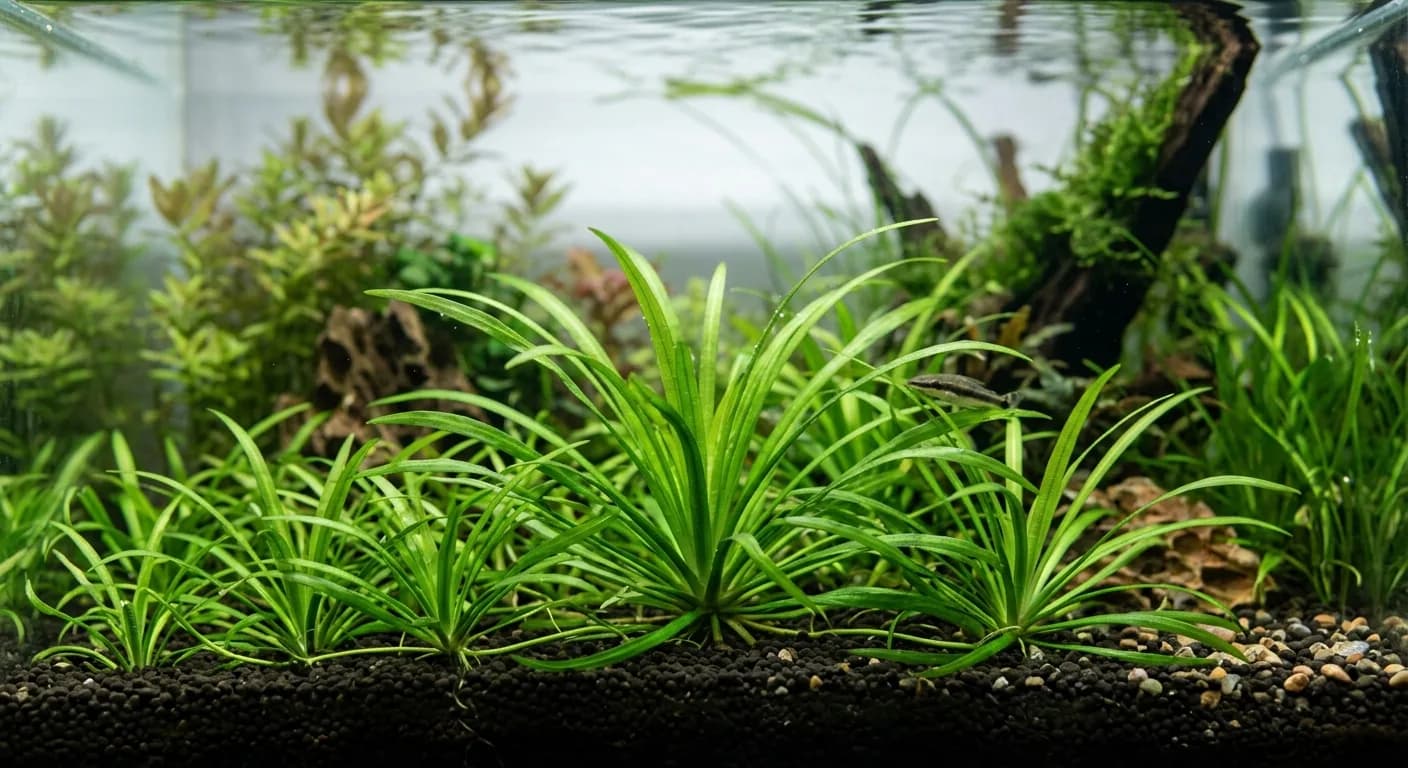
Dwarf Sagittaria is one of the most reliable carpeting plants for low-tech setups. Sagittaria subulata spreads through runners, sending up new plantlets 1 to 3 inches from the mother plant. It tolerates a wide temperature range from 68 to 82 degrees and adapts to pH between 6.5 and 7.5. The plant stays low when it receives medium light and adequate nutrients, creating a dense green foreground. Unlike many carpeting species, it does not require CO2 injection, making it a solid choice for low-maintenance tanks. In ideal conditions with richer substrate, growth becomes more vigorous and coverage fills in faster over several months.
Planting
Separate your bunch into individual plantlets, keeping the roots intact. Each plantlet should have a small root mass to anchor properly. Space them approximately 1 inch apart across your substrate. Bury only the roots, not the crown where leaves emerge. If you bury the crown, the plant will likely melt. After planting, press the substrate gently around each root to eliminate air pockets. Give the plants 2 to 3 weeks to establish before expecting visible runner growth. They settle in faster with stable parameters and medium light.
Water Parameters
Temperature between 68 and 82 degrees Fahrenheit suits this species well. pH range of 6.5 to 7.5 is acceptable with 7.0 being a comfortable middle ground. Water hardness does not seem to matter much, though very soft water can slow growth noticeably. Weekly water changes of 30 to 50 percent help maintain consistency. Avoid sudden swings in temperature or chemistry during the first month after planting. The plant tolerates cooler water better than most tropical species, making it suitable for unheated tanks housing coldwater fish.
Care & Maintenance
Root tabs every 3 months supply the nutrients this species needs to stay dense and low. If blades start reaching toward the surface, trim them back to the substrate level with sharp scissors to encourage horizontal growth instead. Runners that extend beyond your desired carpet zone can be snipped and removed or replanted elsewhere. Thinning every 4 to 6 months prevents overcrowding in tightly packed areas. The plant tolerates trimming well and bounces back within 2 to 3 weeks when conditions remain stable. Watch for any dead or yellowing leaves at the base and remove them promptly to prevent decomposition issues.
Propagation
Sagittaria subulata sends out runners horizontally through the substrate, producing new plantlets at nodes along each runner. These new plants appear 1 to 3 inches from the mother plant and develop their own root systems within 2 to 4 weeks. You can leave the runners intact for natural carpeting or cut them to control spread. Sever the runner connection once the new plant establishes its own roots. Replanting separated plantlets is straightforward: bury only the roots, keep the crown above substrate level. A single plant can produce 5 to 10 new plantlets per year under good conditions.
Common Problems
Growing tall instead of carpeting is the most frequent complaint with this species. The cause is almost always low light levels, not CO2. Increase your photoperiod or switch to higher-output fixtures to bring it back down to carpet height. Runners failing to spread typically stems from nutrient-poor substrate. Root tabs or nutrient-rich soil underneath your gravel layer solves this within 3 to 4 weeks. Melt during transition happens when plants move from submersed to immersed conditions or when water parameters shift dramatically. Maintain consistency and remove melted portions immediately. Slow growth in otherwise healthy plants usually indicates a nutrient deficiency that root tabs address within a month.
What You Need for Dwarf Sagittaria
Gear that works well for this species, based on what experienced keepers actually use.
Seachem Flourish Tabswater-care
Dwarf Sag spreads by runners and feeds through the substrate. Root tabs help it carpet faster and root cleanly.
Fluval Plant and Shrimp StratumSubstrate
A nutrient base lets the runners spread and root across the foreground.
Fluval Plant 3.0 LED LightLight
Carpets need more light reaching the substrate than background plants. This LED keeps a low carpet tight.