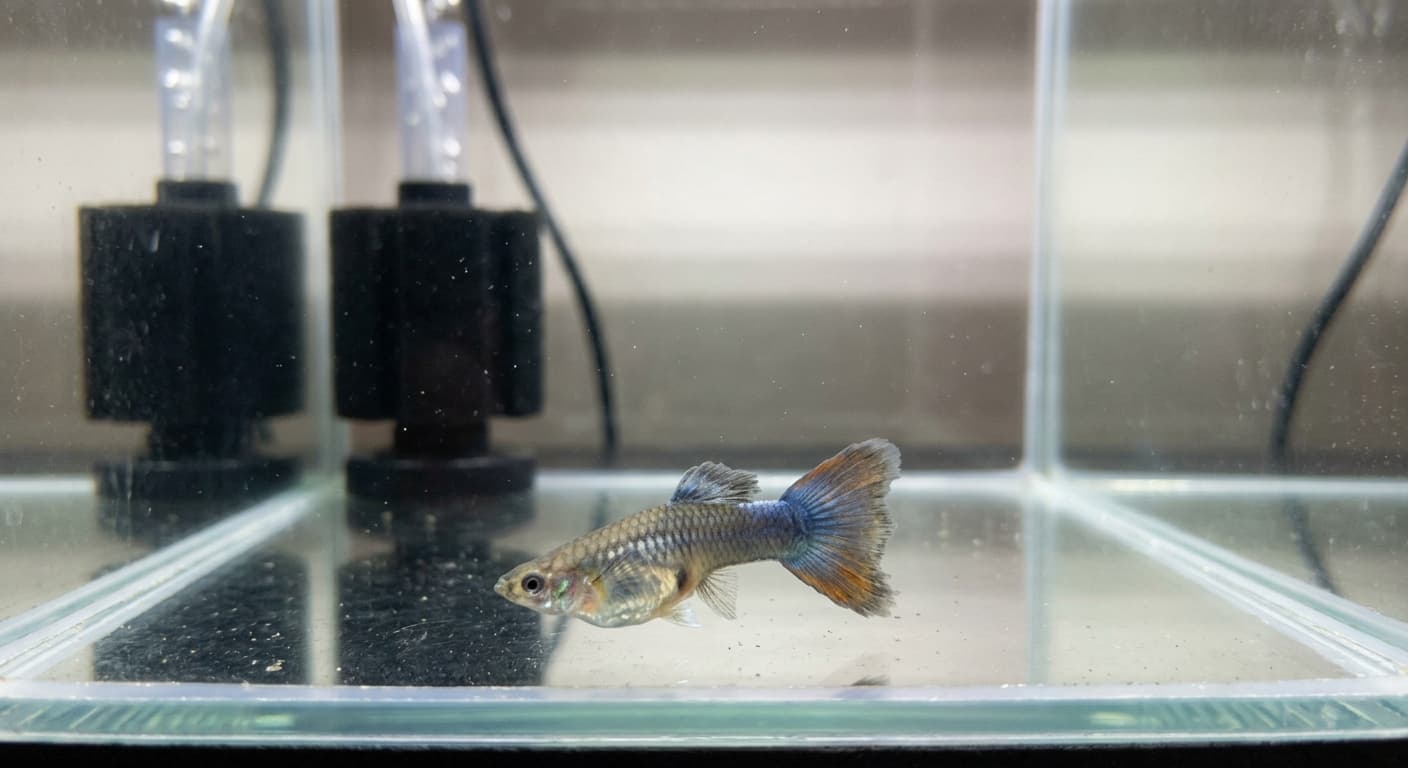
Camallanus Worms in Fish: How to Treat and Eliminate Them
You saw red or orange thread-like worms sticking out of your fish's vent. That's camallanus. It's one of the nastiest internal parasites in the freshwater hobby, but it's beatable if you act fast and finish the full treatment. Here's exactly what to do.
01
What Are Camallanus Worms?
Camallanus cotti is the most common species found in home aquariums. These are internal nematode (roundworm) parasites that live in the fish's intestines and hindgut, feeding on blood and tissue. The most visible sign is thin red or orange worm threads between 1 and 10mm long protruding from the fish's anal vent, especially noticeable when the fish is resting or still.
Do not confuse camallanus with anchor worms. Anchor worms attach externally to the body wall and look like larger, thicker appendages on the flanks or fins. Camallanus emerge from the vent specifically, and they will not respond to external parasite medications or salt treatments.
Livebearers are the most commonly affected group. Guppies, platies, mollies, swordtails, and endlers are all high-risk, though camallanus can infect any freshwater fish. The parasite spreads primarily through infected fish introductions, but it can also arrive through live or frozen foods that carried copepods, or on shared equipment moved between tanks without sterilizing.
Copepods are the intermediate host in the camallanus lifecycle. A fish eats an infected copepod, and the larvae develop into adult worms over weeks. This is why outdoor-collected water and certain live foods (daphnia, cyclops, blackworms from wild sources) can introduce the parasite even if no infected fish were added to the tank.
02
Symptoms to Watch For
The obvious sign is worms visible at the vent, often appearing as thin red or reddish-orange threads that retract when the fish moves and extend when it is still. Some fish expel worms into the water column, where they appear as free-floating thread-like structures not attached to the fish.
The problem is that camallanus is silent for months before it reaches that stage. Fish can carry a substantial worm burden internally while showing no visible symptoms at all. By the time worms are protruding, the infection is advanced.
What to watch for in earlier stages: unexplained weight loss despite normal feeding behavior, a pinched or hollow belly on a fish that is still eating, lethargy and clamped fins, and gradual disinterest in food. These signs are nonspecific and easy to attribute to other causes, which is why camallanus often goes undetected until it is severe.
Once you spot worms on one fish, assume every fish in the tank has been exposed. The parasite spreads readily in a closed system, and fish that look healthy may be carrying early-stage infections.
Salt, ParaGuard, and most over-the-counter parasite treatments will do nothing for camallanus. These are internal worms protected by fish tissue. You need an anthelmintic medication that works systemically.
03
Treatment: Levamisole Protocol
Levamisole hydrochloride is the consensus first-line treatment for camallanus in the hobby. It is sold as livestock drench, not as a branded fish product, and that is completely normal. The active ingredient is the same regardless of the label.
Levamisole works by paralyzing the worms rather than killing them outright. The fish's body then expels the paralyzed worms through the vent. Because the worms are paralyzed but not dead, they can potentially recover if they remain in the tank water and get re-ingested. This is why vacuuming immediately after each dose is not optional.
Because levamisole only affects worms that are in an adult or late-stage larval form at the time of treatment, multiple rounds are needed to catch the full population as younger stages mature.
Standard protocol: - 3 treatment rounds, each spaced 3 days apart - Dose at approximately 10mg/L of tank water. The 52g drench powder is highly concentrated; a small amount treats a large volume, so weigh carefully and calculate based on your actual tank volume, not the listed tank size - After each dose, do heavy gravel vacuuming within 24 to 48 hours to remove expelled worms before fish can re-ingest them. Vacuum the bottom thoroughly, not just a quick pass - Do a 50% water change before each re-dose - Remove activated carbon from filters during treatment; carbon absorbs the medication and makes it ineffective
Expect fish to look worse before they look better. Expelling worms is physically stressful, and you may see fish sitting at the bottom or looking lethargic for a day or two after each dose. This is expected. Monitor closely but do not stop the treatment unless a fish is in acute distress.
Fenbendazole, sold as Safe-Guard or Thomas Labs Fish Bendazole, is an alternative that kills worms directly rather than paralyzing them, which eliminates the re-ingestion risk. It is slower to produce visible results, however, and some hobbyists use both medications in sequence for infections that do not respond to levamisole alone. Fenbendazole is not a substitute for vacuuming either, since dead worms still decompose in the tank.
Levamisole Hydrochloride Soluble Drench Powder
The standard camallanus treatment in the hobby. Livestock drench with the correct active ingredient -- this is what fishkeepers actually use.
04
Setting Up a Hospital Tank
A hospital tank is strongly recommended for camallanus treatment. Unlike ich, where you treat the main tank directly, camallanus requires you to vacuum expelled worms multiple times per day. Doing that in a heavily planted, decorated main tank is impractical, and disturbing the main tank substrate repeatedly during treatment will spike ammonia and stress the fish further.
Minimum hospital tank setup: bare bottom (no gravel or sand whatsoever), a sponge filter seeded from your main tank so the nitrogen cycle is already established, a heater, and a few simple hides so fish have somewhere to retreat. The bare bottom is non-negotiable. Worms that fall into gravel become almost impossible to remove, and fish will find and eat them.
Vacuum the bare bottom at minimum twice daily during treatment, and more often if you are home and can manage it. The goal is to remove expelled worms before the fish have any opportunity to re-ingest them.
Move every fish from the main tank to the hospital tank, not just the ones showing visible symptoms. Every fish in the system has been exposed, and treating only symptomatic fish leaves a reservoir of infection that will reinfect treated fish. Keep all fish in the hospital tank for the full 3-round treatment cycle, which runs roughly 2 weeks start to finish.
05
Resetting the Main Tank
Your main tank is contaminated even after all fish have been removed. Camallanus larvae and infective stages persist in the substrate, on equipment surfaces, and in the water column. Moving treated fish back too soon restarts the infection from scratch.
Run the main tank fishless for 4 to 6 weeks minimum after removing all fish. Without a fish host, infective larvae cannot complete their lifecycle and will die off. This timeframe is the consensus recommendation from hobbyists who have dealt with persistent camallanus infections. Shorter fishless periods have produced reinfection in enough cases that 4 weeks should be considered the floor, not the target.
During the fishless period, keep the tank at its normal temperature. Warmer water speeds up larval development and die-off, so do not let the tank run cold. Keep the filter running normally to preserve your beneficial bacteria. Vacuum the substrate thoroughly 2 to 3 times during this period to physically remove as much material as possible.
Do a 50% water change and a thorough gravel vac immediately before returning treated fish to the main tank. Do not skip this step just because the fishless period is complete.
06
Preventing Camallanus From Coming Back
Quarantine is the single most effective prevention measure. Every new fish should spend at minimum 4 weeks in a separate quarantine tank before entering your main system. Camallanus can be present without visible symptoms for months, so a fish that looks perfectly healthy at the store can already be infected. Four weeks gives time for the infection to progress to a visible stage in most cases, though it is not a guarantee.
If you buy from a source that has had documented camallanus problems, or if you are adding livebearers from a high-volume breeder or auction where many fish from different origins are mixed, extend quarantine to 6 weeks.
Freeze live foods for 48 hours before feeding. This kills most parasites, including infective camallanus larvae that may be present in copepods inside daphnia or other live food cultures. This applies to wild-caught live food, not commercially raised frozen food, which is already processed.
Never move nets, siphons, or other equipment between tanks without rinsing with a diluted bleach solution or allowing them to dry completely. Wet equipment can transfer infective larvae directly.
Once you have had a camallanus outbreak, livebearers should be your highest-vigilance quarantine group going forward. The species that are most commonly affected are also the most commonly traded, and they move through the hobby in high numbers with variable health history.
Table of Contents
Related Content
Popular Fish Species
Frequently Asked Questions
Not sure what you're treating?
Match what you're seeing on the fish to the most likely cause before reaching for medication.
Open the fish symptom guide →A note on fish health advice
TankMinded shares guidance based on common hobbyist practice and published aquarium literature. We're not veterinarians. Individual cases vary, medications can interact with water chemistry in unpredictable ways, and advanced or persistent illness calls for an aquatic vet — the AAFV directory is a good place to start. Follow any treatment at your own discretion.
Sources & Further Reading
- Camallanus -- Wikipedia
Parasite lifecycle, intermediate host (copepods), and species information.
- r/Aquariums Camallanus Community Guide
Community treatment protocols including levamisole dosing, hospital tank vacuuming, and main tank reset procedures.