Best Betta Fish Tank Setup
The pet store will try to sell you a half-gallon bowl with some gravel and a plastic plant. That is not a proper setup. Bettas are tropical fish that need a heater, a filter, and at least 5 gallons. The good news is you can build a proper setup very affordably, and something impressive without spending a fortune. Here are three complete builds with actual products linked.
Our Picks
Budget Build
Best ValueEverything your betta needs, nothing more. A standard 10 gallon tank (grab one at Petco's dollar-per-gallon sale for a great price), an Aquaneat sponge filter that is gentle on long fins, and a Hitop adjustable heater to keep the water tropical. Simple and affordable.
Pros
- • Very budget-friendly total cost depending on sales
- • 10 gallon standard tank (great value at dollar-per-gallon sales)
- • Aquaneat biosponge filter + basic air pump (affordable combo), gentle enough for betta fins
- • Hitop adjustable heater (budget-friendly), adjustable so you can treat ich if needed
Cons
- • No lid included with most standard tanks, you will need to buy or DIY one
- • Basic look without a stand or background
- • Sponge filter takes up visible space in the tank
Mid-Range Build
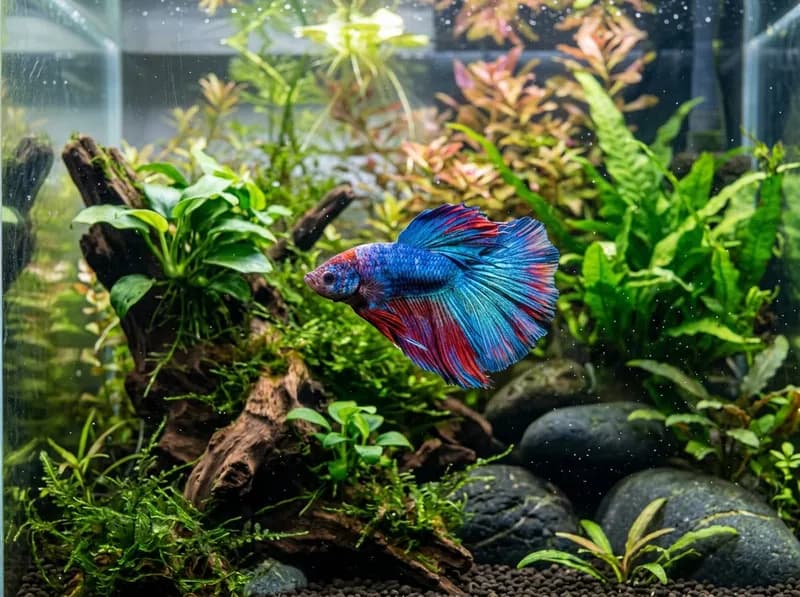
Best for Most PeopleThis is the sweet spot for most hobbyists. A 10 gallon tank with a Marineland Penguin Bio-Wheel filter (baffled to reduce flow for your betta), a Hitop adjustable heater, and some easy live plants in Flourite Black Sand or CaribSea Eco-Complete. Live plants make a real difference to water quality and your betta will actually use them as resting spots.
Pros
- • Marineland Penguin filter with Bio-Wheel for strong biological filtration
- • Hitop adjustable heater for precise temperature control
- • Planted substrate (Flourite Black Sand or Eco-Complete) supports java fern and anubias
- • Live plants reduce nitrates and give your betta places to rest near the surface
Cons
- • HOB filter flow may need a sponge baffle or pre-filter sponge to slow it down for bettas
- • Live plants add a small learning curve for beginners
- • Total cost creeps up when you add plants and substrate
Premium Build
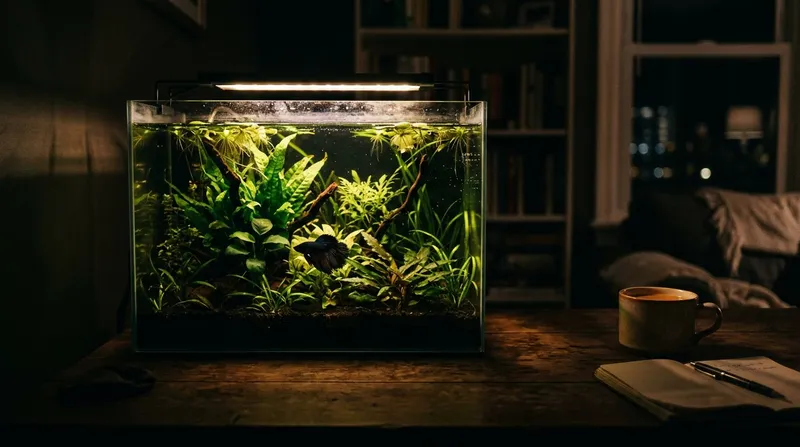
Dream SetupFor a proper aquascape, a rimless tank (UNS 5N or similar), Fluval Stratum or CaribSea Eco-Complete substrate for a lush planted look, a Hitop heater, and an Aquaneat sponge filter tucked behind hardscape. Add a proper plant light and you can grow carpet plants. This build looks great in any room.
Pros
- • Rimless tank with ultra-clear glass for a stunning display
- • Fluval Stratum substrate for serious planted tank growth
- • Aquaneat sponge filter hidden behind driftwood or rocks keeps things clean and quiet
- • Room in the budget for quality hardscape and a proper plant light
Cons
- • Higher investment depending on tank and plant choices
- • Rimless tanks have no lid, and bettas jump, so you need a DIY mesh cover
- • Aquascaping takes patience and some trial and error
Hikari Betta Bio-Gold Pellets
Best Betta FoodNo matter your setup, good food matters. Hikari Betta Bio-Gold is the go-to betta pellet. They are the right size for betta mouths, high in protein to match their carnivore diet, and include color-enhancing ingredients. Feed 2-3 pellets twice daily and supplement with frozen bloodworms or brine shrimp once or twice a week.
Pros
- • Properly sized pellets that bettas can eat without spitting out
- • High protein content matches a betta's natural carnivore diet
- • Color-enhancing formula brings out reds and blues noticeably
- • Floats so your betta feeds naturally at the surface
Cons
- • Small container runs out quickly if you keep multiple bettas
- • Should be supplemented with frozen or freeze-dried foods for variety
What Every Betta Tank Needs
Strip away the marketing and a betta needs five things: a tank (5 gallons minimum, 10 is better), a heater (adjustable, 25-50W for 5-10 gallons), a filter (gentle flow, sponge filters are ideal), a light (any basic LED works, upgrade if you want live plants), and a lid or cover (bettas jump, period).
For filtration, sponge filters like the Aquaneat biosponge are the safest bet for bettas. The flow is gentle, there is zero intake risk for long fins, and they provide excellent biological filtration. If you go with an HOB like the Marineland Penguin, stick a pre-filter sponge on the intake and consider baffling the output to reduce flow.
Substrate is optional but makes the tank look better and supports live plants. Pool filter sand is a great cheap option for a clean look. Flourite Black Sand or CaribSea Eco-Complete are better if you want to grow rooted plants. Fluval Stratum is the premium choice for serious planted tanks.
Live plants are a huge upgrade. Java fern, anubias, and java moss are nearly impossible to kill, grow in low light, and do not need CO2. They give your betta resting spots near the surface, absorb nitrates, and make the tank look like an actual habitat.
Water conditioner is mandatory. Seachem Prime is the standard. Use it with every water change.
Skip the betta mirrors, exercise toys, and colored gravel. Your betta needs clean, warm water and places to hide. That is the whole list.