Fish Diseases: Identify What Is Wrong and Fix It Fast
Your fish is acting wrong. Maybe it is covered in white spots. Maybe its fins are disintegrating. Maybe it is floating sideways at the surface. Something is clearly off, and you need to figure out what it is and how to fix it before it spreads to the rest of your tank. Most common fish diseases are treatable if you catch them early, but the wrong treatment wastes time and can make things worse. This page is the overview: the common diseases, what they look like, and how to think about treatment. If you are not sure what disease you are dealing with, the [fish symptom guide](/symptoms) matches visible signs to likely causes. For step-by-step treatment protocols on the big three, jump to the dedicated guides linked in each section below.
01
Ich (White Spot Disease)
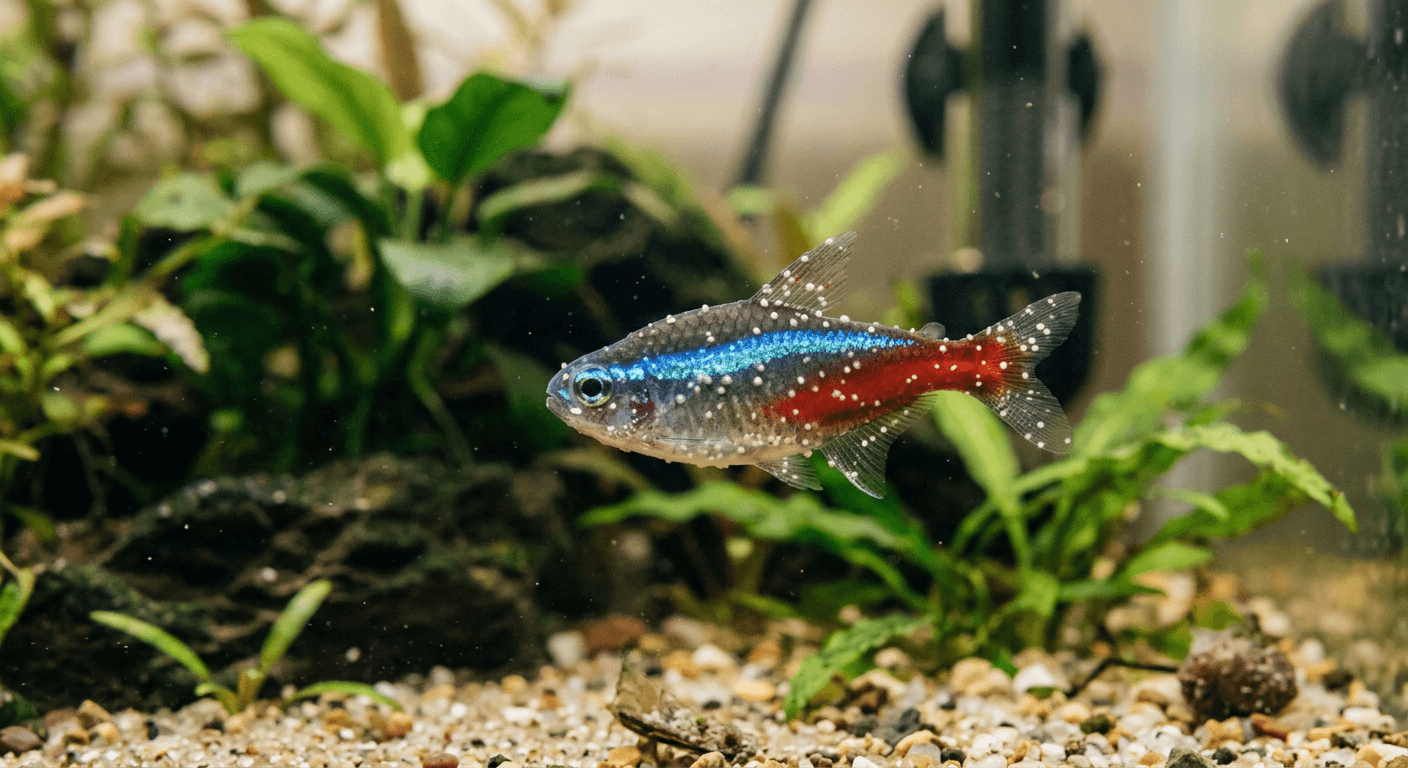
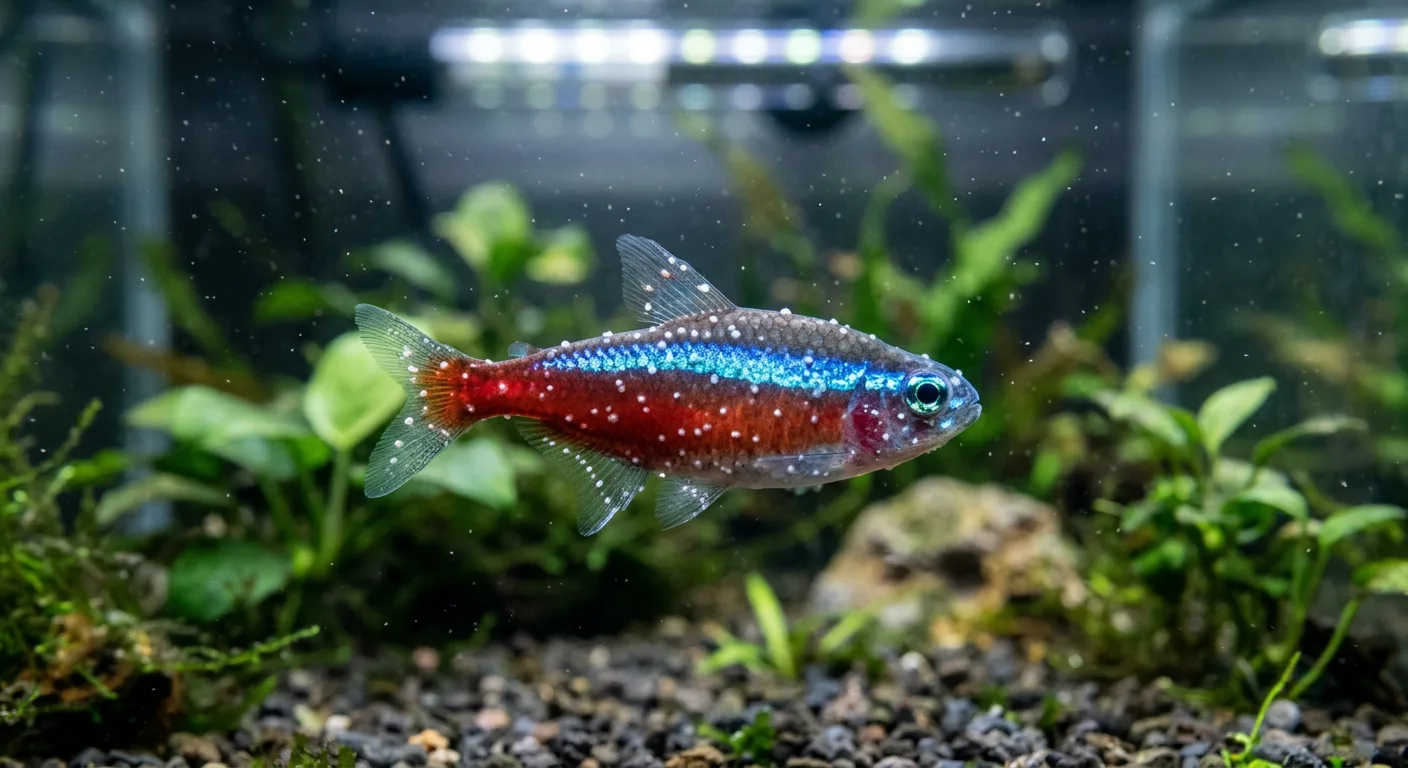
Ich appears as distinct salt-grain-sized white spots scattered across the body, fins, and gills.
Ich is the most common fish disease in the hobby and the one most beginners encounter first. It looks exactly like its name: small white spots covering the fish's body, fins, and gills. Each spot is about the size of a grain of salt. Fish with ich scratch against surfaces (called "flashing"), clamp their fins, breathe rapidly, and lose their appetite.
Ich is caused by the parasite Ichthyophthirius multifiliis, which has a lifecycle that matters for treatment. The white spots you see are the parasite feeding on the fish. When it drops off, it encysts in the substrate and releases hundreds of free-swimming parasites. That free-swimming stage is the only point where medication can kill it, which is why short treatment courses fail. The two standard approaches are heat (raise to 86F for 10-14 days, if your species tolerates it) or ich-specific medication (ParaGuard, Ich-X, or Super Ick Cure) dosed for the full 7-14 days. Treat the whole tank, not just the affected fish, and pull carbon from the filter during treatment.
Full treatment guide: How to Treat Ich - step-by-step protocols for heat and medication, species-specific notes, and a day-by-day timeline.
02
Fin Rot
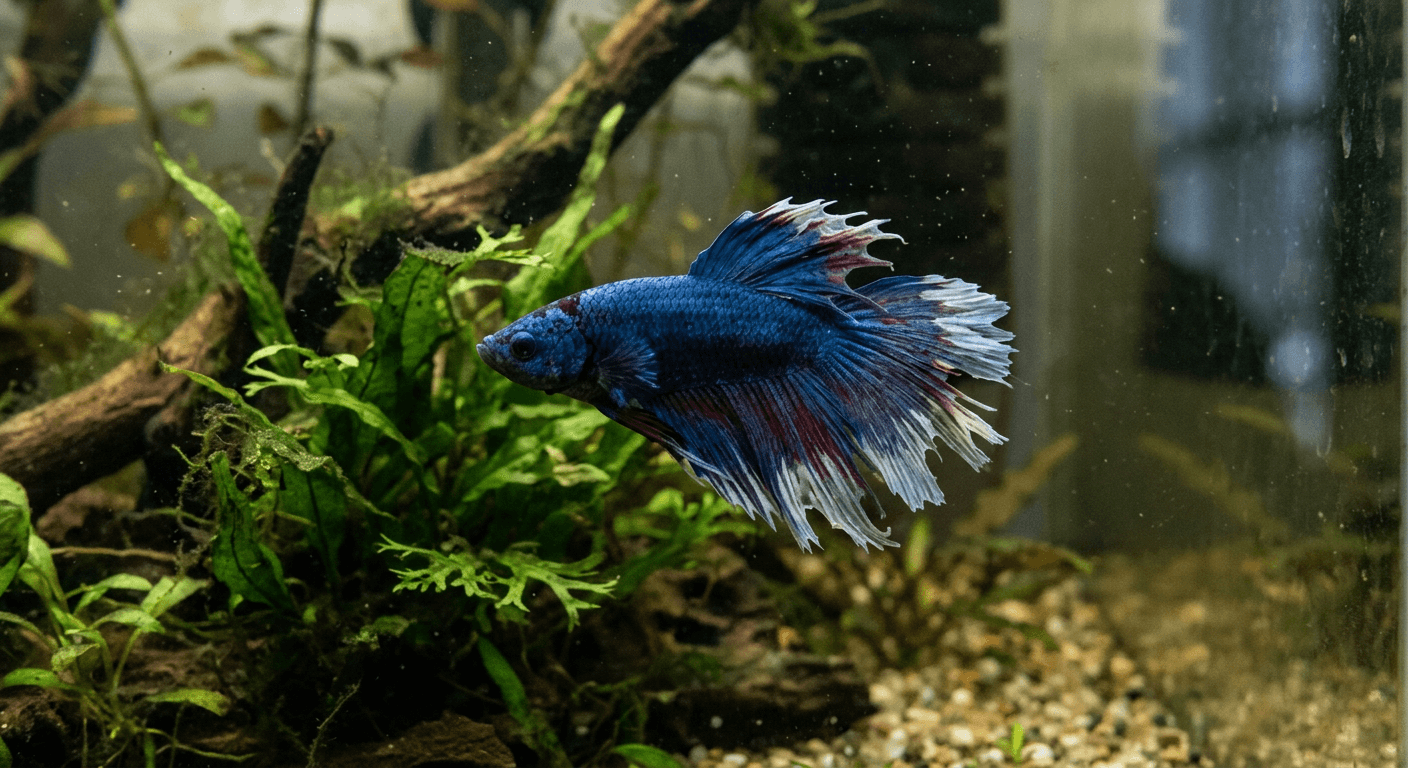
Fin rot causes ragged, frayed edges on fins and tail, often with milky-white or reddish borders.
Fin rot starts at the edges of fins and works inward. Early fin rot looks like ragged or uneven fin edges, sometimes with a white or opaque rim. Advanced fin rot shows significant fin loss with red, inflamed tissue at the base. Once the rot reaches the body, recovery gets difficult.
Fin rot is almost always a water quality problem. High ammonia, nitrite, or chronically elevated nitrate weakens the immune system and opportunistic bacteria (Aeromonas, Pseudomonas) attack fin tissue. The standard treatment escalates in stages: clean water first (50% change + parameter fix), aquarium salt if it is not improving after a week, and antibiotics (Kanaplex or Furan-2) only if salt and clean water fail. Most mild cases resolve on clean water alone.
Full treatment guide: How to Treat Fin Rot - staged protocol, salt dosing, when to escalate to antibiotics, and how to regrow shredded fins.
03
Velvet Disease
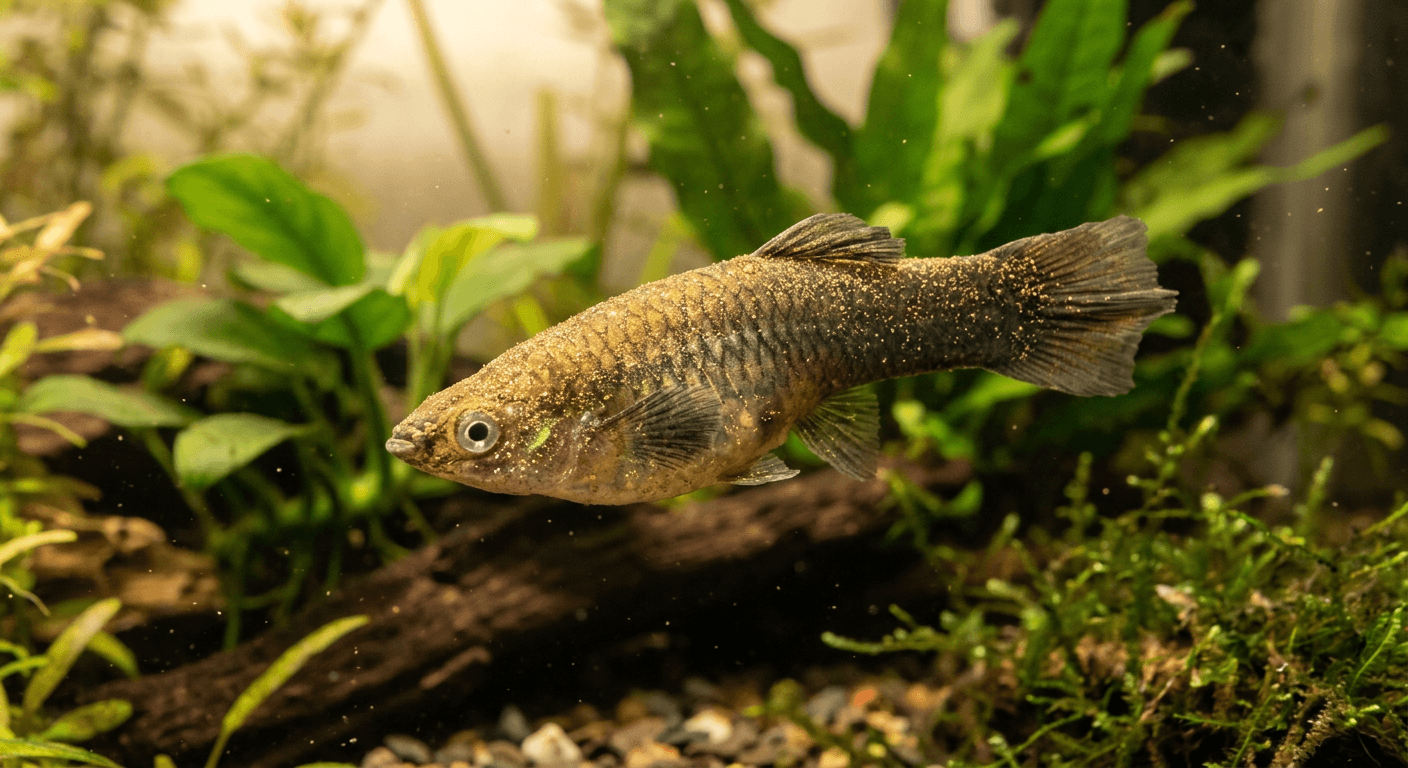
Velvet produces a fine gold or rust-colored dust on the skin, best visible under angled light.
Velvet is sneaky because it is harder to spot than ich. Instead of distinct white dots, velvet produces a fine gold or rust-colored dust on the fish's body. It is easiest to see by shining a flashlight on the fish in a dark room - the gold shimmer across the skin is unmistakable once you know what to look for. Fish with velvet clamp fins tightly, breathe rapidly, and become lethargic.
Velvet is caused by the dinoflagellate Piscinoodinium and is more aggressive than ich. It attacks the gills first and can kill within days if untreated. Treatment uses total darkness (the parasite is partly photosynthetic) combined with copper-based medication like Seachem Cupramine, dosed for 14 days. Copper is lethal to shrimp and snails, so invertebrate tanks require a hospital tank for the sick fish.
Full treatment guide: How to Treat Velvet - blackout protocol, copper dosing with a test kit, and how to protect inverts in a shared tank.
04
Swim Bladder Disorder
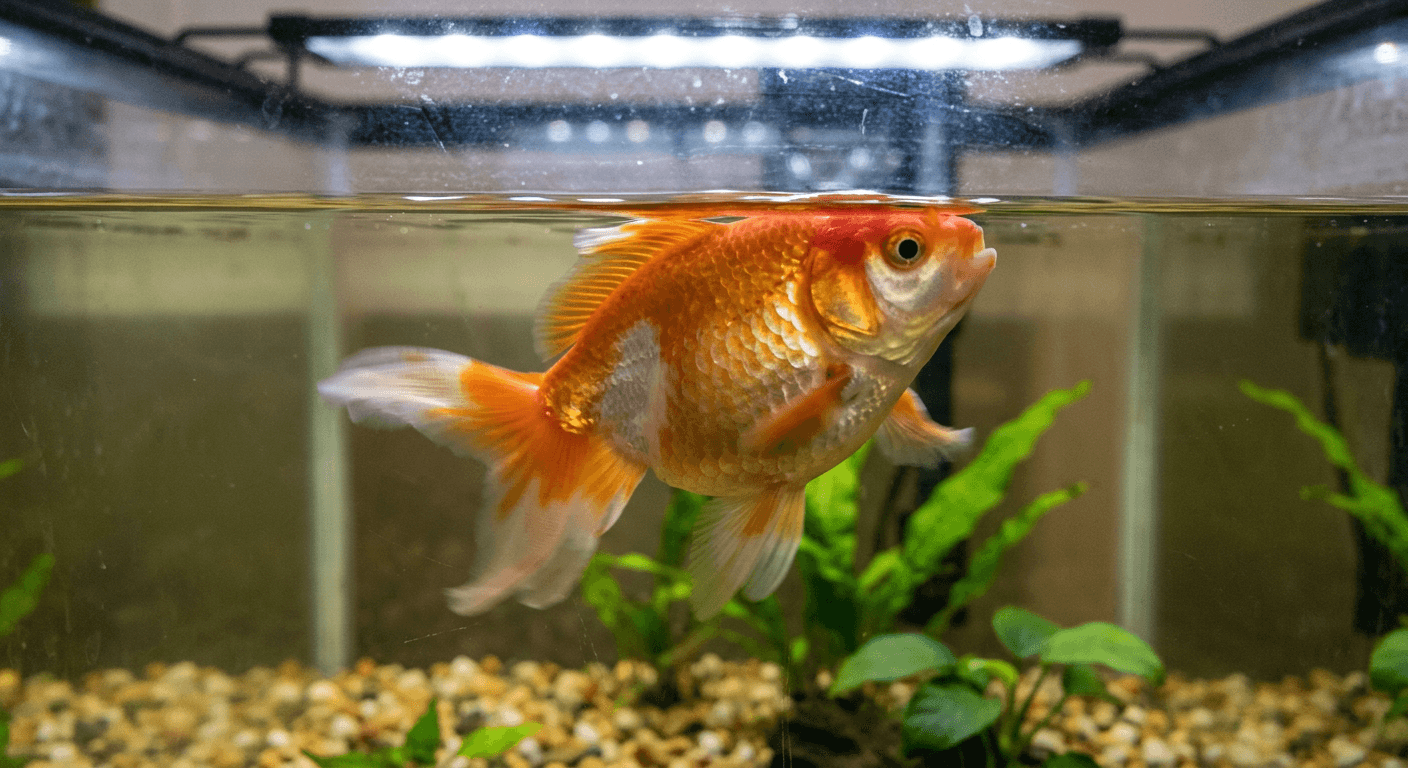
Swim bladder disorder causes fish to float sideways, upside down, or sink, often with a bloated abdomen.
Swim bladder disorder is not actually a disease but a symptom. The fish cannot control its buoyancy and either floats at the surface, sinks to the bottom, or swims at odd angles. Bettas and fancy goldfish are especially prone to this because of their compressed body shapes.
The most common cause in well-maintained tanks is overfeeding or constipation. Dried foods expand in the gut and press on the swim bladder. Feeding too much at once has the same effect.
Treatment for constipation-related swim bladder issues: fast the fish for 2-3 days. No food at all. On day 3 or 4, offer a small piece of blanched, deshelled pea (about the size of the fish's eye). The fiber helps move things through the digestive system. For bettas, frozen daphnia works better than peas since bettas are carnivores and peas are not part of their natural diet.
If fasting does not help, the cause may be bacterial infection of the swim bladder. This is harder to treat. Kanaplex (kanamycin) in a hospital tank is worth trying, but bacterial swim bladder infections have a lower recovery rate.
Other causes include physical injury (the fish hit something or was dropped during netting), genetic deformity (common in inbred fancy goldfish and bettas), or organ damage from chronic poor water quality. These are usually permanent.
Prevention: soak dried pellets in tank water for 5 minutes before feeding so they expand outside the fish. Feed small amounts twice a day instead of one large feeding. Include frozen or live foods (bloodworms, brine shrimp, daphnia) in the rotation since they do not expand like dry foods.
05
Dropsy
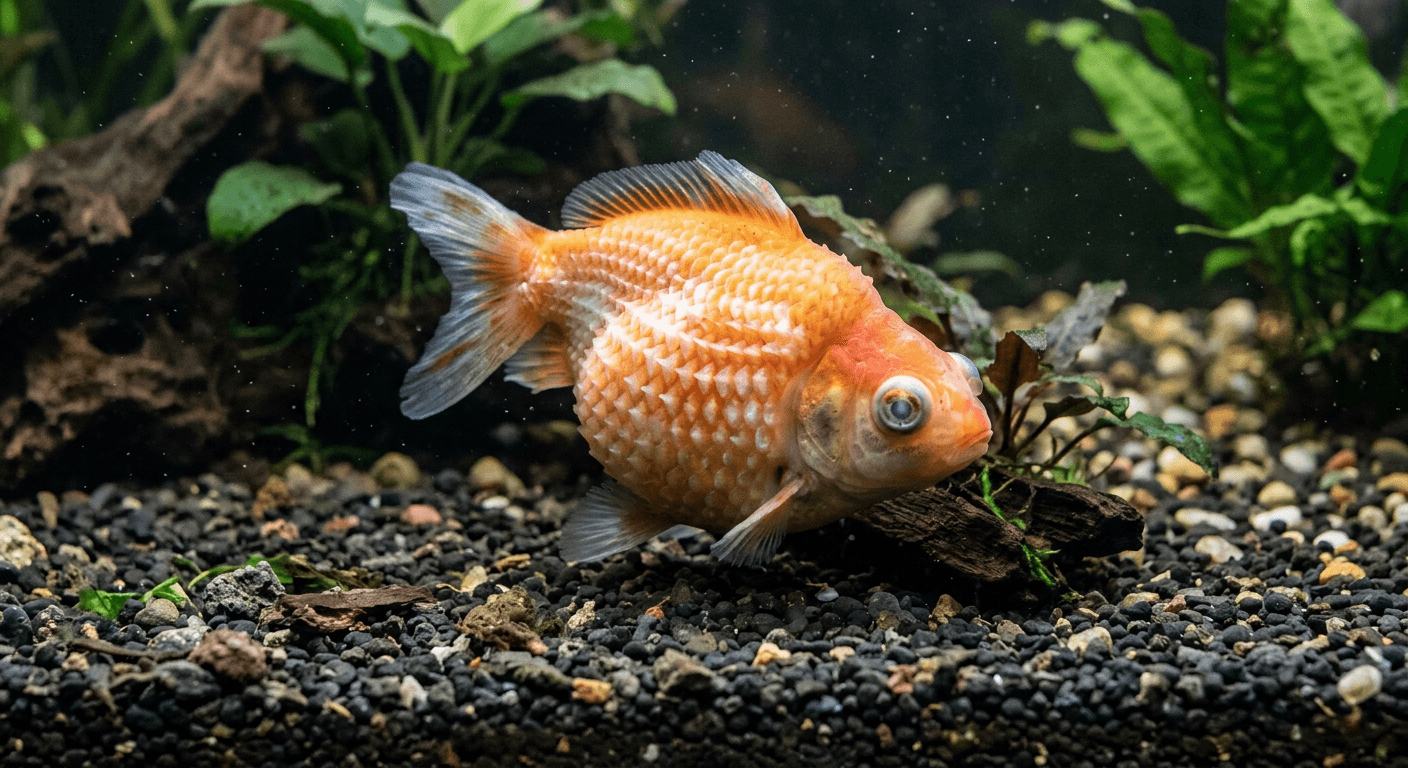
Dropsy causes dramatic swelling and the telltale 'pinecone' appearance where scales protrude outward.
Dropsy is the one diagnosis nobody wants. The telltale sign is "pineconing," where scales stand out from the body at a visible angle, making the fish look like a pinecone when viewed from above. The fish's body swells with fluid, eyes may bulge (popeye), and it becomes lethargic and stops eating.
Dropsy is not a disease itself but a symptom of organ failure, usually kidney failure. By the time a fish is visibly pineconing, internal damage is severe. The underlying causes include bacterial infection (Aeromonas is the most common culprit), chronic stress, poor water quality over time, and internal parasites.
Treatment is possible but has a low success rate. Move the fish to a hospital tank immediately. Add Epsom salt (magnesium sulfate, not aquarium salt) at 1 tablespoon per 5 gallons to help draw out fluid. Dose Kanaplex and Metroplex together in food (use Seachem Focus as a binding agent to make medicated food). This combination covers bacterial and parasitic causes.
Maintain pristine water quality in the hospital tank with daily 50% water changes. Keep the temperature at 78-80F and the tank dimly lit to reduce stress.
The hard truth: if a fish is fully pineconed, eating nothing, and listless, recovery is unlikely. Most experienced fishkeepers consider humane euthanasia at this point. The clove oil method is the most humane approach: add 2-3 drops of pure clove oil to a small container of tank water, place the fish in it, and gradually add more clove oil (up to 10-12 drops) over 10 minutes. The fish is anesthetized and passes painlessly.
Dropsy is not typically contagious, but the conditions that caused it (poor water quality, bacteria) affect all fish in the tank. Test your water and do a large water change after removing the affected fish.
06
Columnaris and Other Bacterial Infections
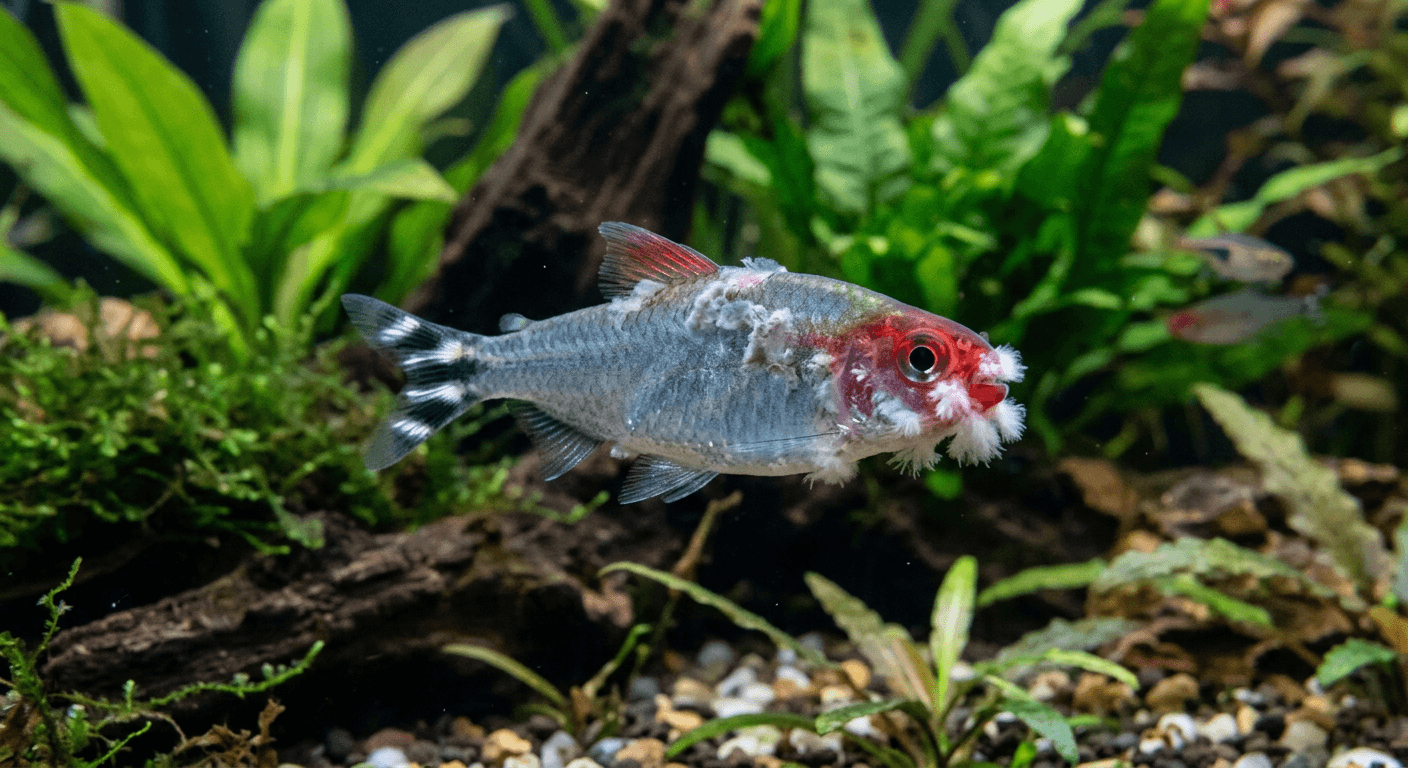
Columnaris produces cotton-like white patches, typically starting around the mouth and gill area.
Columnaris looks like white or grey cotton-like patches on the body, fins, or mouth. It is sometimes mistaken for fungal infection, but it is bacterial (Flavobacterium columnare). It spreads fast, especially in warm water above 80F, and can kill within 24-72 hours in its acute form.
The slower form produces the cotton-like growths that expand gradually over days. The fast form can kill fish that looked healthy yesterday. Columnaris typically starts at the mouth ("mouth rot" or "cotton mouth"), gills, or around wounds.
Treatment must be aggressive and immediate. Move affected fish to a hospital tank. Lower the temperature to 75F (columnaris thrives in warmth, unlike ich). Dose Kanaplex (kanamycin) or Furan-2 (nitrofurazone) following package instructions. Some fishkeepers combine Kanaplex with Furan-2 for stubborn cases, and this combination is generally safe to use together.
Aquarium salt at 1 tablespoon per 3 gallons helps slow the bacteria but is not sufficient alone. Do not use salt in tanks with corydoras, loaches, or live plants.
Columnaris is highly contagious. Quarantine affected fish immediately and observe the remaining tank inhabitants closely. Sterilize any nets, siphons, or equipment used on the infected tank before using them elsewhere.
Other bacterial infections (septicemia, ulcers, popeye) follow similar treatment protocols: clean water, antibiotics, and isolation. Red streaks in fins (septicemia) and open sores (ulcers) both indicate systemic bacterial infection and respond to Kanaplex or Maracyn 2.
07
Setting Up a Hospital Tank
Every fishkeeper needs a hospital tank. You do not need anything fancy. A basic quarantine and treatment setup keeps your main tank safe and gives sick fish the best chance of recovery.
Use a 10 gallon tank with a bare bottom (no substrate). Bare bottom is easier to keep clean and lets you see uneaten food and waste immediately. Substrate harbors bacteria and makes medicating accurately harder.
Run a sponge filter for biological filtration. Keep a spare sponge filter running in your main tank at all times so it stays colonized with beneficial bacteria. When you need the hospital tank, move the seeded sponge filter over and you have instant biological filtration. Without this, you are doing an emergency fish-in cycle on top of treating a disease.
Add an adjustable heater. Many treatments require specific temperatures, so you need to control this precisely. A 50W heater is sufficient for a 10 gallon.
Include a few hiding spots: a PVC pipe, a terracotta pot on its side, or a handful of fake plants. Sick fish are stressed, and hiding spots reduce stress significantly. Do not use real plants because many medications harm them.
No activated carbon in the filter during treatment. Carbon removes medication from the water. Use carbon only after treatment is complete to clear residual meds.
Keep the hospital tank dimly lit or covered. Bright lights stress sick fish and some parasites (like velvet) use light as part of their lifecycle.
Do daily 50% water changes during treatment, redosing medication after each change to maintain therapeutic levels. Test ammonia daily because a hospital tank with a new or small biofilm can spike quickly with a sick, heavily-medicated fish.
Seachem Kanaplex
The antibiotic to reach for first with bacterial infections: fin rot, columnaris, popeye, dropsy. Can be dosed in water or mixed into food with Seachem Focus for internal infections.
Hitop Adjustable Aquarium Heater
Precise temperature control matters during treatment. A reliable adjustable heater for the hospital tank means you can hit the exact temp a protocol calls for.
08
Prevention and Medication Overview
Most fish diseases are preventable. The fish that get sick are almost always fish in poor conditions, newly purchased without quarantine, or chronically stressed.
Quarantine every new fish for 2-4 weeks before adding it to your main tank. This single practice prevents the vast majority of disease introductions. Run the quarantine tank exactly like a hospital tank. Observe the fish for signs of illness, treat anything that appears, and only move it to the main tank when it has been healthy and eating well for the full quarantine period.
Maintain clean water. Ammonia and nitrite should always be 0. Nitrate under 20 ppm. Weekly 20-25% water changes. This is the single most effective disease prevention measure. Fish in clean water with strong immune systems fight off pathogens that would kill stressed fish.
Feed a varied diet. Pellets, frozen foods (bloodworms, brine shrimp, daphnia), and occasional live foods keep fish healthy and their immune systems strong. Cheap flake food as the sole diet leads to nutritional deficiencies over time.
Medications to keep on hand:
Seachem ParaGuard: broad-spectrum treatment for ich, velvet, and external parasites. Safer than many alternatives and does not stain. Good first-line treatment.
API General Cure: treats internal parasites (worms, hexamita). Contains metronidazole and praziquantel. Useful for bloating, white stringy feces, and wasting.
Seachem Kanaplex: kanamycin antibiotic for bacterial infections including fin rot, columnaris, popeye, and dropsy. Can be dosed in water or mixed into food with Focus.
Aquarium salt (sodium chloride, not table salt): supports slime coat, mild antimicrobial, helps with osmotic stress. Useful for mild fin rot and as a supportive treatment alongside medications. Do not use with scaleless fish, snails, or live plants.
Seachem Metroplex: metronidazole for internal parasites and some bacterial infections. Often combined with Kanaplex for severe cases.
Having these on hand means you can start treatment the same day you notice symptoms instead of waiting 2-3 days for an online order to arrive. In fast-moving diseases like columnaris, those days matter.
Table of Contents
Related Content
Popular Fish Species
Essential Gear
Best Filter for a 20 Gallon Tank
Aquaneat 3-Pack Biosponge Filter
Best Aquarium Heater for Fish Tanks
Hitop Adjustable Aquarium Heater
Frequently Asked Questions
Not sure what you're treating?
Match what you're seeing on the fish to the most likely cause before reaching for medication.
Open the fish symptom guide →A note on fish health advice
TankMinded shares guidance based on common hobbyist practice and published aquarium literature. We're not veterinarians. Individual cases vary, medications can interact with water chemistry in unpredictable ways, and advanced or persistent illness calls for an aquatic vet — the AAFV directory is a good place to start. Follow any treatment at your own discretion.