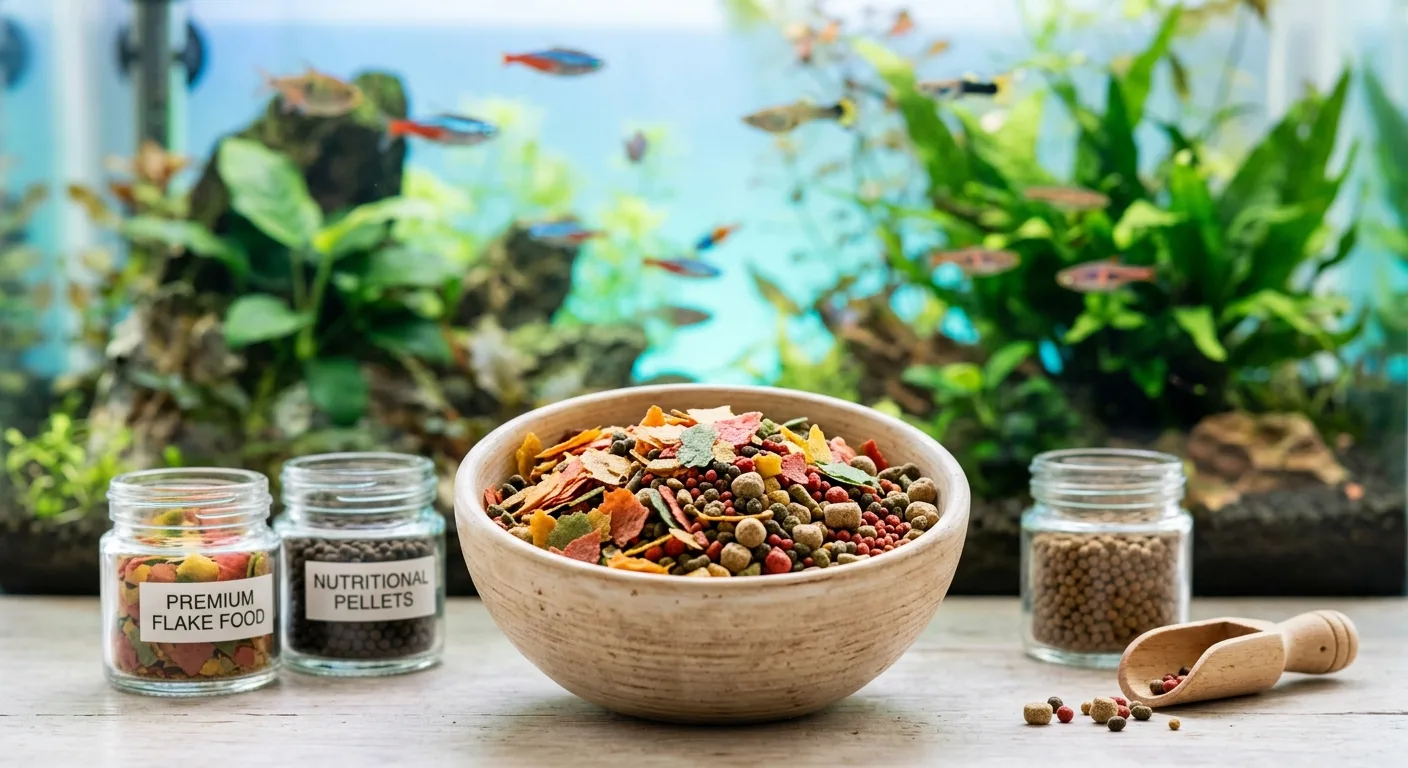
Best Food for Freshwater Fish
Most fish food sold at pet stores is mediocre at best. Cheap flakes are the fish equivalent of eating cereal every day: technically alive, but not thriving. The good news is that quality fish food is not expensive, and switching to it is one of the fastest ways to see better color, less disease, and longer lifespans in your tank. This guide covers what to feed, what to skip, and which specific products consistently deliver results.
01
Flakes vs Pellets: Which to Use
Pellets are better than flakes for most fish. Flakes break apart and cloud the water before fish can eat them, and they lose nutritional value quickly once the container is opened. Pellets sink slower, stay intact longer, and are easier for fish to target individually.
The main exception is very small fish. Neon tetras, ember tetras, and other nano species cannot eat standard pellets. For those fish, micro pellets (1mm or smaller) or a quality flake works fine. For anything larger than 1.5 inches, pellets are the better default.
Floating vs sinking depends on where your fish feed. Bettas and most surface feeders do well with floating pellets. Mid-water fish can handle either. Bottom dwellers like corydoras and plecos need sinking wafers or pellets that reach the substrate.
Hikari Micro Pellets
Small enough for neon tetras and other nano fish, but substantial enough that mid-sized community fish like it too. A reliable all-around tropical food.
02
Best Foods for Community Tanks
For a mixed community tank with tetras, rasboras, barbs, and similar species, two products stand out:
Fluval Bug Bites uses black soldier fly larvae as the main ingredient rather than cheap fillers like wheat and soy. Fish eat it aggressively and the ingredient list reflects what they'd actually eat in the wild. Available in flake and granule form depending on your fish size.
Omega One Freshwater Flakes are worth keeping as a secondary food. Omega One uses salmon as the first ingredient, and the flakes hold together better than most brands. Good for rotating with pellets to give fish variety.
Rotating two or three different foods is better than feeding the same thing every day. Fish get more complete nutrition and stay more engaged at feeding time.
Fluval Bug Bites Tropical Fish Food
Black soldier fly larvae as the main protein source. Fish eat it more eagerly than standard flake food, and the granules sink slowly so mid-water fish can intercept them.
Omega One Freshwater Flakes
Salmon-based flakes that hold together better than most brands. Good rotation food alongside pellets.
03
Best Foods for Bottom Feeders
Bottom-dwelling fish, corydoras, loaches, and plecos, need food that actually reaches the substrate. Surface flakes and floating pellets get eaten by other fish before they have a chance.
Hikari Sinking Wafers are the go-to for corydoras and most bottom feeders. They sink immediately, stay intact rather than dissolving into mush, and are sized right for cories to pick apart. Drop them in after the lights go down if other fish are competitive at feeding time.
Hikari Algae Wafers are specifically for plecos and other algae grazers. They contain spirulina and plant matter. A bristlenose pleco that isn't getting supplemental wafers will graze your plants and driftwood more aggressively.
One wafer per 3-4 cories is roughly right. They will cluster around it and pick at it over several hours.
Hikari Sinking Wafers
Stay intact on the substrate long enough for cories and loaches to find them. Sized right for bottom feeders to pick apart without cloudiness.
Hikari Algae Wafers
Plant-heavy formula for plecos and other algae grazers. Prevents them from over-grazing plants when their natural food source is limited.
04
Frozen and Live Foods: When They're Worth It
Frozen bloodworms, brine shrimp, and daphnia are not necessary for most fish, but they are worth keeping on hand for a few reasons. Feeding frozen food 2-3 times per week produces noticeably better color in fish that respond to it, bettas, tetras, and rainbowfish especially. It also triggers natural feeding behavior that dry food does not.
Bloodworms are high in protein and most freshwater fish eat them eagerly. Feed them sparingly for bettas, once or twice per week at most, because they are rich enough to cause digestive issues if overfed. For community fish, bloodworms work well as a weekly treat.
Brine shrimp are a better staple frozen food. Lower in protein than bloodworms, higher in natural vitamins, and accepted by almost every freshwater species. Frozen brine shrimp cubes are widely available and inexpensive.
Live food is optional. Live brine shrimp and daphnia are excellent for conditioning fish before breeding, but frozen is a reasonable substitute for everyday feeding.
05
How Much and How Often to Feed
Feed only what fish consume in 2-3 minutes, once or twice daily. This is the actual standard, not "feed a small amount" which means nothing in practice.
For pellets: 2-3 pellets per small fish (tetras, rasboras), 4-5 for medium fish (angels, gouramis). Watch them eat and adjust. If food hits the substrate uneaten after 3 minutes, you are feeding too much.
One feeding per day is enough for most adult fish. Juveniles and fry need 2-3 feedings. Bettas do fine with one feeding but many keepers do two smaller feedings for engagement.
Fast fish one day per week. Skipping a day of feeding reduces waste, prevents bloating, and keeps fish more active hunters. It also lets you check that everyone is eating normally.
06
Foods to Skip
Cheap store-brand flakes almost always use wheat, corn, or soy as the first ingredient. Fish get calories but not much nutrition. Tetra Min and similar budget flakes are fine occasionally but should not be the primary diet.
Freeze-dried food sounds good but the freeze-drying process destroys most of the nutritional value. Freeze-dried bloodworms are a popular treat but significantly inferior to frozen. If you have the option, frozen beats freeze-dried.
Goldfish food for tropical fish or vice versa is not toxic but it's not optimized. Goldfish food is lower in protein than most tropical fish need. Tropical fish food is higher in protein than goldfish need long-term. Use species-appropriate food.
Overfeeding in general. Uneaten food decays into ammonia and drives nitrate up. Every extra pinch you drop in costs you in water quality. When in doubt, feed less.
Table of Contents
Related Content
Popular Fish Species
Essential Gear
Best Fish Food for Freshwater Aquariums
Fluval Bug Bites Tropical Fish Food
Best Aquarium Test Kit for Freshwater Tanks
API Freshwater Master Test Kit
Frequently Asked Questions
Sources & Further Reading
- Nutritional Requirements of Fish — FAO
FAO technical paper on protein, fat, and micronutrient requirements for cultured fish species.
- FishBase — Global Species Database
Species-level diet and feeding data referenced for natural dietary preferences of common aquarium fish.