Best Sponge Filter for Aquariums
Sponge filters are the most underrated piece of equipment in freshwater fishkeeping. They cost almost nothing to run, provide excellent biological filtration, create safe gentle flow for shrimp and fry, and serve as a pre-seeded backup if your main filter ever fails. Every tank should have at least one. Here are the two best options — one for single-tank setups and one for anyone running multiple tanks who wants to save money and always have a spare ready.
Our Picks
AQUANEAT Double Bio Sponge Filter
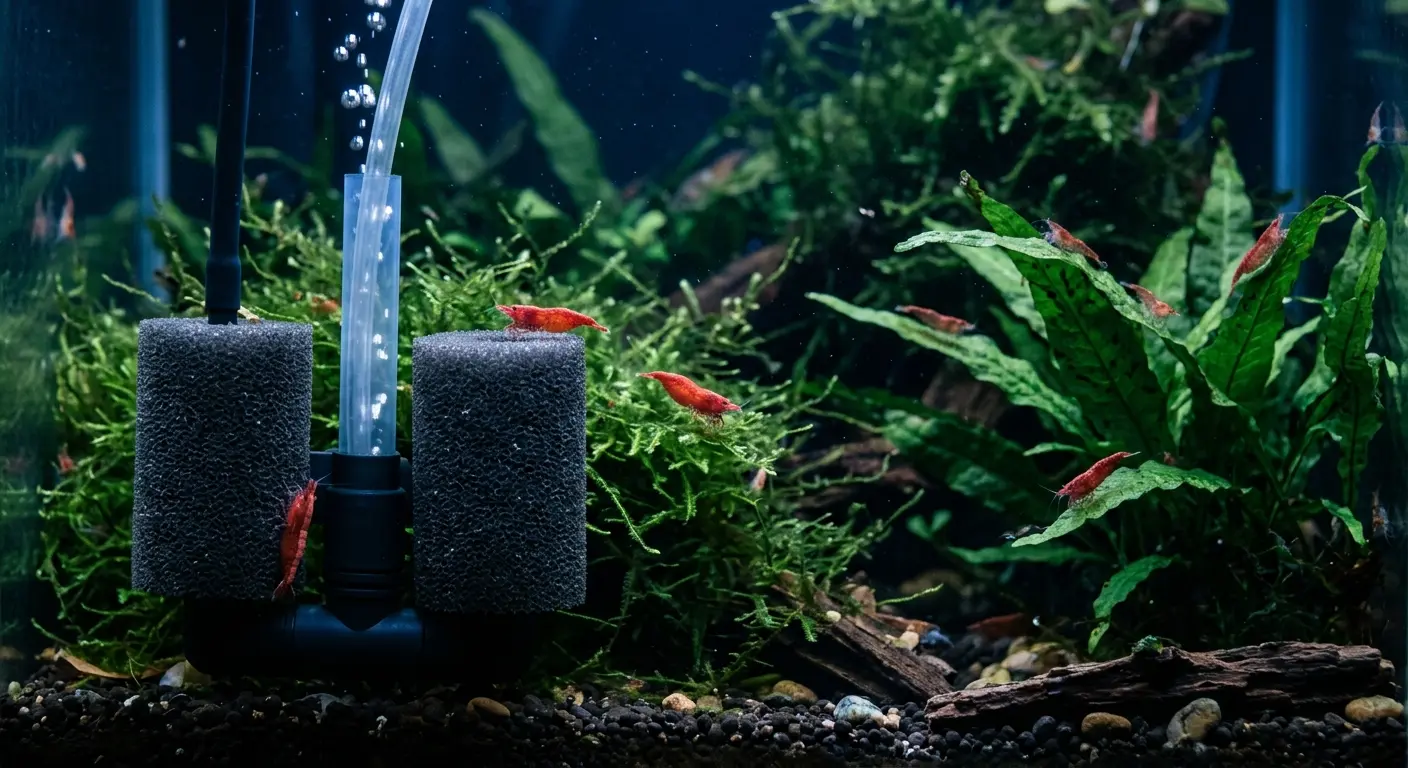
Best OverallThe AQUANEAT double-sponge design splits filtration across two sponge chambers, giving you more surface area for beneficial bacteria colonization than single-sponge models. More importantly, you can clean one side at a time — leaving the other sponge undisturbed preserves the bacterial colony while you rinse debris out. For a 10 gallon shrimp tank, a quarantine setup, or a secondary filter on a larger build, this is the most practical sponge filter available.
Pros
- • Dual sponge design — clean one side at a time without disrupting bacteria
- • More biological filtration surface area than single-sponge competitors
- • Rated to 10 gallons; appropriate for small to medium tanks
- • Quiet operation; shrimp graze on the sponge surface
Cons
- • Requires a separate air pump and airline tubing to run
- • Takes up visible interior space in smaller tanks
- • Mechanical filtration is weaker than an HOB — needs more frequent gravel vac
Aquaneat Aquarium Bio Sponge Filter (3-Pack)
Best ValueThree sponge filters for the price most brands charge for one. For anyone running multiple tanks — a main display, a quarantine tank, and a breeding or grow-out setup — this pack means every tank gets filtration without the cost of individual units. They run identically to standard sponge filters, just in quantity. The third filter also serves as a backup; pre-seed it in your main tank so it is colonized and ready when you need it.
Pros
- • Three filters in the pack — covers multiple tanks or provides spares
- • Pre-seeding the spare in your main tank means instant backup if a filter fails
- • Inexpensive per-unit cost compared to buying individually
- • Suitable for tanks up to 40 gallons with adequate air pump flow
Cons
- • Single-sponge design on each unit (versus dual-sponge on the AQUANEAT double)
- • Requires air pump and tubing for each filter running simultaneously
- • No adjustability — flow depends entirely on the air pump output
What to Know Before Buying a Sponge Filter
Sponge filters are driven by an air pump — the bubbles create a gentle upward current that pulls water through the sponge. The amount of flow you get depends entirely on how much air your pump delivers, not on the sponge filter itself. A stronger air pump means more flow. Most sponge filters include a lift tube and airstone; you supply the pump, airline tubing, and check valve.
The check valve is important. It sits in the airline tubing between the pump and the filter and prevents water from back-siphoning into the air pump if the power goes out. Cheap ones are included with some pumps; if yours did not come with one, pick up a few — they cost almost nothing and save pumps.
Sponge filters work best in three situations:
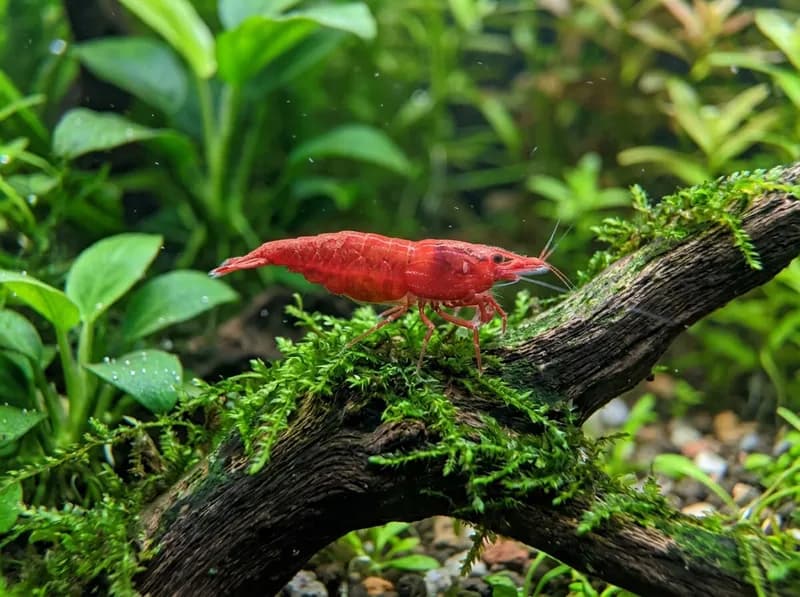
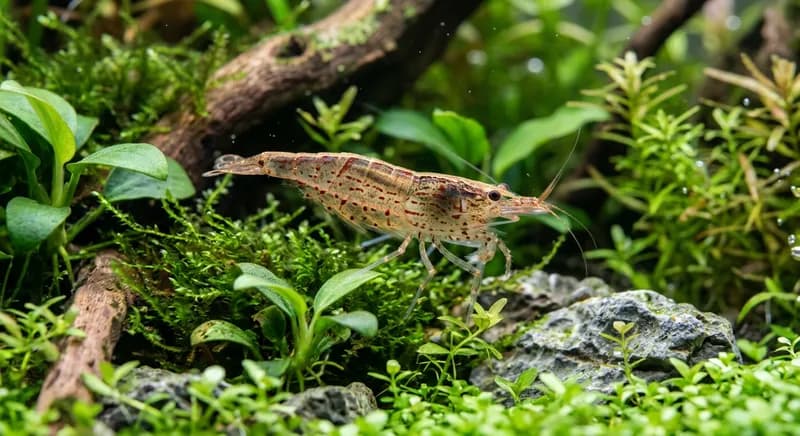
1. Shrimp and fry tanks where standard filter intakes create suction risk. Shrimp investigate every surface in the tank, and HOB intakes can pull juvenile shrimp in. Sponge filters eliminate that risk entirely. Shrimp also graze biofilm from the sponge surface, making the filter double as a food source.
2. Quarantine and hospital tanks. A pre-seeded sponge filter you have been running in your main tank for a few weeks contains an established bacterial colony. Move it to your hospital tank and you have instant cycled filtration without waiting weeks for ammonia processing to stabilize.
3. Secondary biological filtration on heavily stocked tanks. Running a sponge filter alongside an HOB or canister adds biological surface area and creates a redundancy system. If your main filter fails, the sponge buys you time.
For tanks over 40 gallons, sponge filters typically run as supplemental rather than primary filtration. You can run multiple sponge filters in a large tank — one at each end of the tank improves circulation significantly.