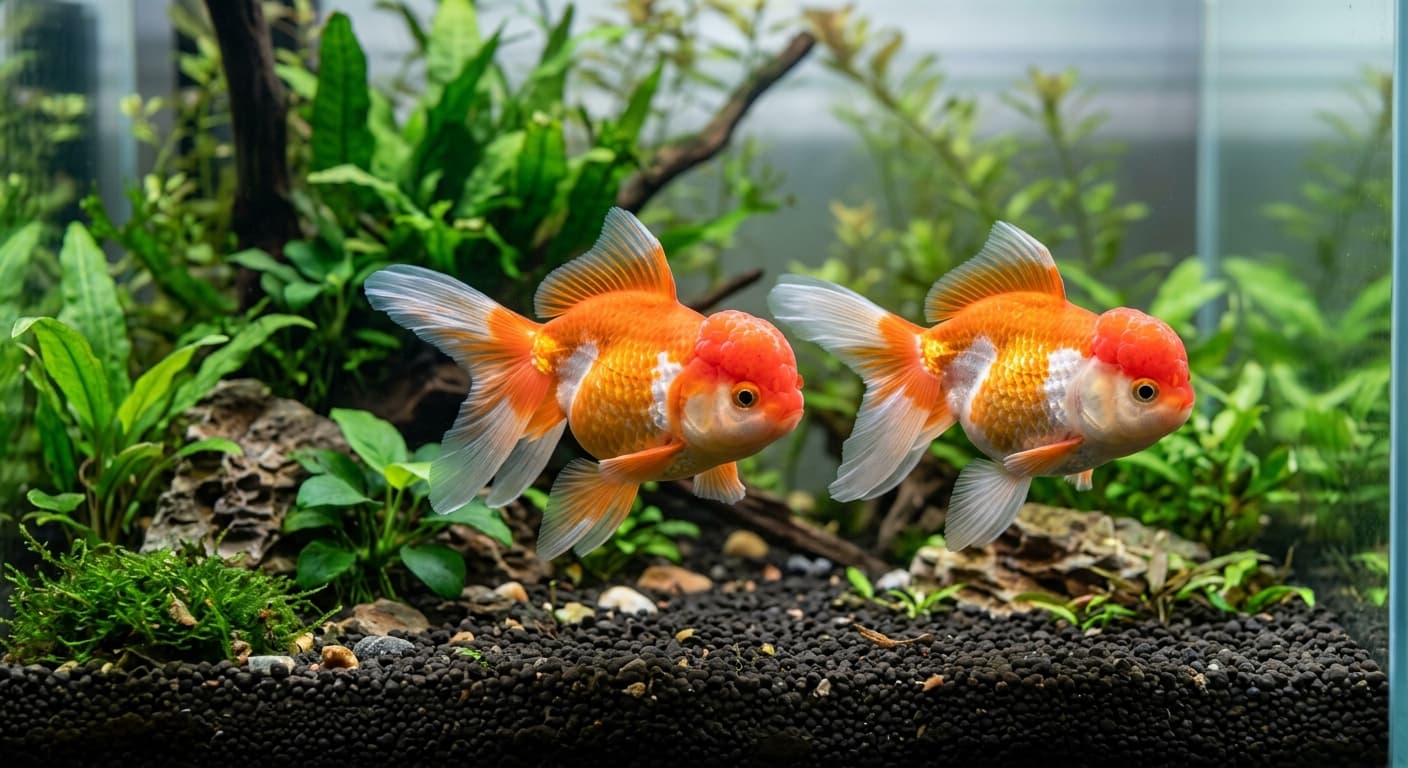
Goldfish Care Guide: Tank Size, Filtration, and Common Mistakes
Goldfish are sold as beginner fish and often treated as disposable pets, but they can live 10-20 years in proper conditions. The fish that die within months in bowls and small tanks are not demonstrating that goldfish have short lives. They are demonstrating that goldfish have enormous waste output and are being kept in conditions that cannot support them. Get the tank size and filtration right and goldfish are genuinely hardy, long-lived, and interesting to keep.
01
Fancy vs. Common Goldfish
The first question is which type of goldfish you have, because the two groups have different requirements.
Common goldfish, comet goldfish, and shubunkin are single-tailed, torpedo-shaped fish. They are fast swimmers, grow large (12-14 inches for commons, 6-10 inches for comets), and are best suited for ponds or very large tanks. A single adult common goldfish needs 50+ gallons and grows quickly, making a 20-gallon tank inadequate. These fish are cold-tolerant and can survive outdoors in most US climates.
Fancy goldfish (ryukin, oranda, ranchu, telescope, butterfly tail, and dozens of other varieties) are double-tailed with rounded bodies. They are slower swimmers, stay smaller (4-8 inches typically), and are better suited to aquariums. They are more temperature-sensitive than commons and less equipped to compete for food.
Never mix commons and fancies in the same tank. Commons outswim fancies for food and may bully or injure them.
02
Tank Size and Filtration
Goldfish are among the highest-bioload fish in the hobby. They eat constantly, digest food inefficiently, and excrete enormous amounts of ammonia. The filtration requirement is proportionally higher than for most tropical fish.
Tank size for fancy goldfish: 20-30 gallons for the first fish, 10 gallons per additional fish. This is a genuine minimum: goldfish kept in smaller tanks stunt in growth (the external body stops growing but internal organs continue to grow, causing health problems), and water quality deteriorates rapidly. A single fancy goldfish in a 10-gallon tank will outgrow it within a year.
Filtration: Run a filter rated for 2-3 times the tank volume. A 30-gallon goldfish tank should run a filter rated for 60-90 gallons. Goldfish produce ammonia fast enough to overwhelm standard stocking recommendations. A hang-on-back filter rated for the tank will cycle, but it will struggle to keep up during feeding periods and growth spurts.
Flow: Unlike bettas, goldfish do fine in moderate flow. Strong water movement also increases oxygenation, which goldfish benefit from.
Temperature: Fancy goldfish do best at 65-72°F. They are cold-water fish and do not need a heater if your home stays in that range. At temperatures above 75°F, oxygen levels drop and their metabolism increases their waste output further. Both factors together stress the system. Avoid pairing goldfish with tropical fish that need 78-80°F.
AquaClear 70 Power Filter
For goldfish tanks, run a filter rated above your tank volume. The 70 handles tanks up to 70 gallons and moves enough water to handle goldfish bioload without constant emergency water changes.
03
Water Parameters and Maintenance
pH: 7.0-8.0. Goldfish tolerate and actually prefer slightly alkaline water. Most tap water in the 7.2-7.8 range is fine without adjustment.
Temperature: 65-72°F for fancy goldfish, 50-72°F for common goldfish. Avoid temperatures above 75°F for extended periods.
Ammonia and nitrite: 0 ppm, always. Goldfish produce so much ammonia that an uncycled tank becomes toxic within days of adding fish. Cycle the tank before adding any goldfish.
Nitrates: Below 20-40 ppm. Goldfish accumulate nitrates faster than almost any other aquarium fish. In a properly stocked goldfish tank, 25-30% water changes twice weekly (or 50% weekly) are often necessary to keep nitrates manageable. Most goldfish health problems, including fin damage, ulcers, and swim bladder issues, are linked to high nitrate over time.
Oxygen: Goldfish need well-oxygenated water. An air stone and powerhead, or a filter with a strong surface agitation, prevents oxygen depletion especially at warmer temperatures.
API Freshwater Master Test Kit
Test ammonia, nitrite, nitrate, and pH before diagnosing any goldfish problem. High nitrates are the root cause of most chronic goldfish health issues.
04
Feeding
Goldfish eat constantly and will eat past the point of discomfort if given the chance. Overfeeding drives water quality problems and swim bladder issues in goldfish.
Food type: Use a goldfish-specific sinking pellet rather than floating pellets or flakes. Floating foods cause goldfish to gulp air at the surface, which contributes to swim bladder problems. This is especially common in fancy goldfish with their compressed body shape. Sinking pellets let them feed more naturally.
Amount: Feed twice daily, only what they consume in 2-3 minutes. Remove any uneaten food. In a 30-gallon goldfish tank, one overfeeding session can spike ammonia enough to cause visible distress within 24 hours.
Vegetables: Goldfish benefit from vegetable supplementation. Blanched zucchini, peas (shelled, to prevent gas), and spinach provide fiber that helps prevent constipation and swim bladder problems. Fancy goldfish with rounded body shapes are particularly prone to buoyancy issues when on a pure pellet diet.
Sinking pellets for fancy goldfish: This bears repeating because it is frequently skipped. Fancy goldfish (orandas, ryukins, ranchus) are prone to swim bladder disorders linked to air ingestion. Sinking pellets eliminate the primary cause.
Ultra Fresh Sinking Goldfish Food
Sinking pellet format prevents air ingestion and the swim bladder issues common in fancy goldfish. Higher protein content than most goldfish foods.
05
Common Health Problems
Swim bladder disorder is the most common fancy goldfish problem. Affected fish float upside down, sink to the bottom, or have difficulty maintaining their position. Causes include air ingestion from surface feeding, constipation, bacterial infection, and anatomy (rounded body fancy goldfish have compressed organs that can impinge the swim bladder). Try fasting for 2-3 days, then feeding peas. Switch to sinking pellets permanently if floating food is the cause.
Ich presents as white salt-grain spots and clamped fins. Raise temperature gradually to 72-74°F (the upper limit for goldfish; do not push higher) and treat with Hikari Ich-X. See the ich treatment guide for full protocol.
Fin rot and ulcers are usually water quality driven. High ammonia, high nitrates, and temperature stress all contribute. Test water first before medicating. See the fin rot guide.
Dropsy (pineconing: scales stick out from the body like a pinecone) indicates serious internal infection or organ failure. It is very difficult to treat successfully. Isolate the fish immediately to prevent spreading to the tank. Kanamycin antibiotics give the best chance of treatment but success rates are low once full pineconing is visible.
Pop-eye (one or both eyes protruding abnormally) is usually bacterial. Isolate and treat with Seachem Kanaplex.
Table of Contents
Related Content
Popular Fish Species
Essential Gear
Best Filter for a 20 Gallon Tank
Aquaneat 3-Pack Biosponge Filter
Best Aquarium Test Kit for Freshwater Tanks
API Freshwater Master Test Kit
Best Aquarium Gravel Vacuum
Python No Spill Clean and Fill (25 ft)
Frequently Asked Questions
Sources & Further Reading
- Carassius auratus — FishBase
Species data for goldfish including native habitat, water parameter requirements, and maximum size data.
- Goldfish — Wikipedia
History of goldfish domestication, biological characteristics, and documented longevity records.
- FishBase — Global Species Database
Species-level water quality data used to verify temperature and parameter ranges cited in this guide.